


Midnight Man
-
Posts
2,389 -
Joined
-
Last visited
-
Days Won
2
Content Type
Profiles
Articles
Calendars
module__media_media
Everything posted by Midnight Man
-
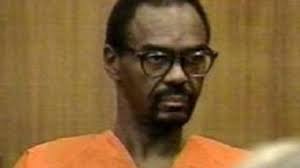 Carl Eugene Watts, also known by his nickname Coral, was an American serial killer dubbed "The Sunday Morning Slasher". Watts is now suspected to have killed more than 100 women, which would make him the most prolific serial killer in American history. He obtained immunity for a dozen murders as a result of a plea bargain with prosecutors in 1982; at one point it appeared that he could be released in 2006. He died of prostate cancer while serving two sentences of life without parole in a Michigan prison for the murders of Helen Dutcher and Gloria Steele. Carl Eugene Watts was born in Killeen, Texas to Richard Eugene Watts and Dorothy Mae Young. His father was a private first class in the Army, and his mother was a kindergarten art teacher. When Watts was less than two years of age, his parents separated and he was raised by his mother. Watts and his mother moved to Inkster, Michigan, and in 1962, Dorothy Mae married a mechanic named Norman Caesar with whom she had two daughters. As a child, Watts was described as being strange. Around the age of twelve, Watts claimed that this was when he started to fantasize about torturing and killing girls and young women. During adolescence, Watts began to stalk girls and is believed to have killed his first victim before the age of 15. When Watts was 13, he was infected with meningitis which caused him to be held back in the eighth grade. Upon his return to school, Watts had difficulty keeping up with other students. At school, he would often receive failing grades, and was reading at a third grade level by age 16. He also suffered severe bullying at school. On June 29, 1969, Watts was arrested for sexually assaulting 26-year-old Joan Gave. When Watts was tried, he was sentenced to the Lafayette Clinic, a mental hospital in Detroit. According to a psychiatric assessment, Watts was revealed to suffer from mild mental retardation, with a full scale I.Q. of 68, and to have a delusional thought process, though a police officer interrogating Watts after his arrest later stated that he appeared to be "very, very intelligent" with an "excellent memory". He was released from the Lafayette Clinic on November 9, 1969. Despite his poor grades, Watts graduated from high school in 1973, and received a football scholarship to Lane College in Jackson, Tennessee. He was expelled from Lane College after only three months because he was accused of stalking and assaulting women. Another reason he was expelled was because many people at Lane College believed Watts was a suspect in the brutal murder of a female student; however, there was not enough evidence to convict him of the murder. After his expulsion he moved to Houston, Texas. Watts' career as a serial killer began when he was 20 years old in 1974, by kidnapping his victims from their homes, torturing them, and then murdering them. On October 30, 1974, Watts tortured and brutally murdered 20-year-old Gloria Steele, who was believed to be his second victim. Watts, who was African American, almost always killed young white women. Watts killed females between the ages of 14 and 44 using methods such as strangulation, stabbing, bludgeoning, and drowning. Watts had murdered dozens of women between 1974 and 1982, and despite the many women he murdered, Watts was not discovered as a serial killer for almost eight years. There were several reasons for this. He attacked in several different jurisdictions and even different states. Even with the advent of DNA testing it was still nearly impossible because he rarely performed sexual acts on his victims, unlike most serial killers of women and girls, and his crimes were not thought to be sexually motivated. Watts was also not suspected to be involved with any of the murders by the people who knew him, and was not a police suspect in any of the murders until his arrest in 1982. On May 23, 1982, Watts was arrested for breaking into the home of two young women in Houston, and attempting to kill them. While in custody, police began to link Watts with the recent murders of a number of women. Until early 1981, he had lived in Michigan, where authorities suspected him of being responsible for the murders of at least 10 women and girls there. Watts was previously questioned about the murders in 1975, but there had not been enough evidence to convict him. At that time, Watts had spent a year in prison for attacking a woman, who survived. Prosecutors in Texas did not feel they had enough evidence to convict Watts of murder, so in 1982 they arranged a plea bargain. If Watts gave full details and confessions to his crimes, they would give him immunity from the murder charges and he would, instead, face just a charge of burglary with intent to murder. This charge carried a 60-year sentence. He agreed with the deal and promptly confessed in detail to 12 murders in Texas. However, Michigan authorities refused to go in on the deal so the cases in that state remained open. Watts later claimed that he had killed 40 women, and has also implied that there were more than 80 victims in total. He would not confess outright to having committed these murders, however, because he did not want to be seen as a "mass murderer". Police still consider Watts a suspect in 90 unsolved murders. Watts was sentenced to the agreed 60 years. However, shortly after he began serving time, the Texas Court of Appeals ruled that he had not been informed that the bathtub and water he attempted to drown Lori Lister in was considered a deadly weapon. The ruling reclassified him as a nonviolent felon, making him eligible for early release. At the time, Texas law allowed nonviolent felons to have three days deducted from their sentences for every one day served as long as they were well behaved. Watts was a model prisoner, and had enough time deducted from his sentence that he could have been released as early as May 9, 2006. The law allowing early release was abolished after public outcry, but could not be applied retroactively according to the Texas Constitution. In 2004, Michigan Attorney General Mike Cox went on national TV asking for anyone to come forward with information in order to try and convict Watts of murder to ensure he was not released. Joseph Foy of Westland, Michigan, came forward to say that he had seen a man fitting Watts' description murder Helen Dutcher, a 36-year-old woman who died after being stabbed twelve times in December 1979. Foy identified Watts by his eyes, which he described as being "evil" and devoid of emotion. Although Watts had immunity from prosecution for the 12 killings he had admitted to in Texas, he had no immunity agreement in Michigan. Before his 2004 trial, law enforcement officials asked the trial judge to allow the Texas confessions into evidence, which he agreed to. Watts was promptly charged with the murder of Helen Dutcher. A Michigan jury convicted him on November 17, 2004, after hearing eyewitness testimony from Joseph Foy. On December 7, he was sentenced to life imprisonment. Two days later, authorities in Michigan started making moves to try him for the murder of Western Michigan University student Gloria Steele, who was stabbed to death in 1974. Watts' trial for the Steele murder began in Kalamazoo, Michigan on July 25, 2007; closing arguments concluded July 26. The following day the jury returned a guilty verdict. Watts was sentenced to life imprisonment without parole on September 13. He was incarcerated at a maximum security prison in Ionia, Michigan. He died of prostate cancer on September 21 in a Jackson, Michigan hospital. The case is featured in episodes of Cold Case Files and truTV series The Investigators. Childhood Years: Carl Eugene Watts was born in Fort Hood, Texas on November 7, 1953, to Richard and Dorothy Watts. His parents divorced in 1955 and Carl began spending a lot of his time with his grandmother. When his mother relocated to Detroit, Carl remained with his grandmother for awhile. She told the Houston Chronicle that even as a young child, Carl enjoyed hunting and skinning rabbits. During his childhood, he developed meningitis and suffered high fevers, resulting in learning disabilities. By the 1960s, Watts was described as a polite and soft-spoken young man. He had athletic ability and participated in the Golden Gloves boxing program, although academically he was considered below average. By the age of 15, he demonstrated violent behavior. While doing his paper route, he knocked on the apartment door of a woman and attacked her when she opened the door. When arrested he told police, "He just felt like beating someone up." In September 1969, prompted by his lawyer, Watts was institutionalized in a hospital in Detroit. Within three months, he was evaluated and placed on outpatient treatment by Dr. Gary Ainsworth. In his final review of Watts, Dr. Ainsworth stated, "This patient is a paranoid young man who is struggling for control of strong homicidal impulses. His behavior controls are faulty, and there is a high potential for violent acting out. This individual is considered dangerous." Watts continued high school after his release from the hospital. He was involved in sports but continued to decline academically. He was a drug user, a loner, and was often disciplined by school officials for his volatile behavior with female classmates. He graduated at age 19. During this time, he rarely attended outpatient treatment. He was accepted to Lane College on a football scholarship, but due to injuries he was unable to complete his first year, and returned home to Detroit. Watts returned to college after being accepted into a special scholarship and mentoring program sponsored by Western Michigan University in Kalamazoo. Prior to attending the program, Watts was again evaluated at the outpatient facility, where it was determined that he was still a danger and had a "strong impulse to beat up women," yet due to the right to confidentiality policies, staffers were unable to alert authorities or the college Watts was attending. On October 25, 1974, Lenore Knizacky answered her door and was attacked by a man who said he was looking for Charles. She fought back and survived. On October 30, Gloria Steel, 19, was found dead with 33 stab wounds to her chest. A witness reported speaking with a man at Steele’s complex, who said he was looking for Charles. Diane Williams reported being attacked on November 12, under the same circumstances. She survived and managed to see the attacker's car and make a report to the police. Watts was picked out in a line-up by Knizacky and Williams and arrested on assault and battery charges. He admitted to attacking 15 females, but refused to talk about the Steele murder. His attorney arranged for Watts to commit himself into the Kalamazo State Hospital. The hospital psychiatrist investigated Watts' background and learned that at the previous institution, Watts was said to have possibly killed two women by choking them. He diagnosed Watts with an anti-social personality disorder. Prior to Watts' trial, he had a court ordered evaluation at the Center for Forensic Psychiatry in Ann Arbor. The examining doctor described Watts as dangerous and felt he would most likely attack again and was found competent to stand trial. Carl, or Coral as he now called himself, pled 'no contest,' and received a one year sentence on the assault and battery charges but was never charged in the murder of Steel. In June, 1976, he was out of jail and back home in Detroit with his mother. Ann Arbor is 40 miles west of Detroit and the home of the University of Michigan. In April 1980, the Ann Arbor police were called to the home of 17-year-old Shirley Small. She had been attacked and repeatedly cut with an instrument resembling a scalpel. She bled to death on the sidewalk where she fell. Glenda Richmond, 26, was the next victim. She was found by her doorway, dead from over 28 stab wounds. Rebecca Greer, 20, was next. She died outside her door after being stabbed 54 times. A task force was formed, led by Detective Paul Bunten, to investigate the murders that occurred within five months of each other. The task force was dealing with no evidence and no witnesses. Sergeant James Arthurs contacted the task force after reading about the murders. He told them of his past experience with Watts and the similarities of Watts' previous crimes to those now under investigation. By this time, Watts was working with his stepfather at a trucking company, had a child, then later met another woman who he married. In October, 1979, Watts was arrested for prowling around in Southfield, Detroit suburb. The charges were later dropped. Investigators did note, however, that during the previous year, five women in the same suburb were assaulted on separate occasions, but with similar circumstances. None were killed, nor could any of them identify their attacker. By 1979 and 1980, attacks on women in Detroit and surrounding areas became more frequent and violent and similar in style. By May 1980, Watts was divorced. His wife stated that it was due to his strange behavior, which included his habit of leaving their home for hours, immediately after they engaged in sex. Within months, attacks in neighboring Wisteria, Ontario were being reported that were of the same nature as those in Ann Arbor and Detroit.
 -
 Bai Baoshan was a Chinese serial killer and robber who was executed for killing 15 people. Described in official dispatches as China’s most prolific serial killer to date, with 15 known victims, Bai Baoshan apparently committed his first murder in the early 1980’s, during a poorly planned holdup. Convicted of murder and robbery in that case, he served 13 years in prison and emerged with a brooding desire for revenge against society at large. His payback rampage began in March 1996, when he attacked a police sentry in Beijing and stole a semi-automatic weapon, later used to kill one person and wound 6 others ( including 4 patrolman ). Authorities believe he robbed and killed a Beijing cigarette vendor before leaving town and traveling to the northern Chinese province of Hebei. There, Bai killed another policeman and stole his automatic rifle, moving on to Urumqi, the capital of Xinjiang province. In Urumqi, authorities say Bai and 2 accomplices murdered 10 persons - including police officers, security guards, and civilians - while stealing 1.5 million yuan (about $180,000). Unhappy with the prospect of sharing his loot, Bai killed one of his cohorts and kept the money for himself. By that time, Bai had earned the dubious honor of being labeled China’s Public Enemy Number 1. Returning to Beijing in October 1997, the 39-year-old gunman was traced by police and arrested on October 16, charged with 14 homicides and various related felonies. A local newspaper reported his confession, and he was returned to Xinjiang province for trial, where most of his victims were slain. Convicted on all counts and sentenced to death, Bai Baoshan was executed on May 6, 1998.
 -
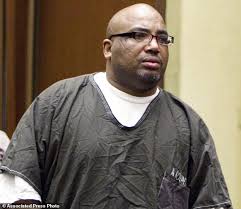 Chester D. Turner is no stranger to murder or the punishment that comes with it. He squeezed the life out of more than a dozen women during a decade of terror, and two juries decided he should die for his crimes. So it was merely a formality Friday that Turner, already on death row for 10 murders, was given four more death sentences for what a prosecutor called the city's most prolific serial killing. Turner, 47, looked straight at Judge Robert Perry as he handed down the penalty for the string of inner-city killings during the crack cocaine epidemic. As Turner was led from court, he cursed at the prosecution and said, "I'll be back." Turner is one of at least three men blamed for a series of killings once thought to be the work of a solo killer dubbed the "Southside Slayer." More than 100 women in South Los Angeles were killed during the violent era when highly addictive crack made people desperate enough to turn to prostitution to support their habit or led to other crimes. Turner was convicted of 14 of those slayings, plus the killing of a pregnant victim's fetus, from 1987 and 1998, making him the city's most prolific killer, prosecutor Robert Grace said. Family members of the victims were relieved the case was closed. They joked and laughed as they rode the courthouse elevator with prosecutors after the brief hearing. "It's judgment day," said Gwendolyn Cameron, whose sister Cynthia Johnson was a victim in the most recent case. "He got what he had coming. The sooner they execute him, the better we'll all be. He's a menace to society." Turner was serving time for rape when genetic evidence connected him to 10 killings in South Los Angeles. The victims had been sexually assaulted and strangled. Their bodies were dumped in alleys, a burned-out garage and a portable toilet. Most were suspected prostitutes, some were crack users and some were just snatched off the streets. A grainy surveillance tape played at his first trial showed the 6-foot-3, 260-pound Turner in the act of killing Paula Vance, whose body was found at a vacant office building in February 1998. Turner was convicted and sentenced in 2007 to death in those 10 cases, plus an additional term of 15 years-to-life for the death of the viable fetus. Evidence emerged later that linked him to the killings of Elandra Bunn, 33, in June 1987; Deborah Williams, 28, in November 1992; Mary Edwards, 42, in December 1992; and Cynthia Annette Johnson, 30, in February 1997. All were choked to death, mostly by hand. Another man, David Allen Jones, served 11 years for three of those killings. Jones, a former janitor with the mental capacity of an 8-year-old, was freed after DNA evidence pointed to Turner and prosecutors determined Jones' confessions were coerced by police. Defense lawyers acknowledged that Turner had sex with women in exchange for drugs, but they argued he wasn't a killer. "He denies to this day that he killed anybody," defense lawyer Kieran Patrick Brown said. After the death sentences were delivered Friday, Turner asked the judge why prosecutors had insisted on capital punishment after they once offered him the chance of life in prison without parole for the four murders. The judge didn't answer. Outside court, Deputy District Attorney Beth Silverman explained that prosecutors had offered the plea deal before trial, but Turner rejected it. "He's never taken responsibility for any of these crimes. So what are we going to do, give him four freebies? Those are four lives," Silverman said. "He's a remorseless animal." Whether Turner is ever executed is another question. There are 745 inmates on death row at San Quentin State Prison. More than 160 have been sentenced to die since executions were put on hold in 2006 because of court challenges over the lethal injection method. Turner has been sentenced to die twice since then.
 -
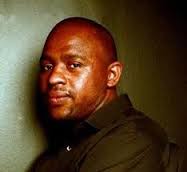 Known as South Africa's "Axe Killer", Elifasi Msomi, was hanged in Pretoria in January 1956 after being convicted of hacking 15 people to death. Msomi blamed his victims' deaths on the "tokoloshe" which, he said, would appear on his shoulder and order him to kill. He killed mostly in the Unkomaas and Umzimkuku valleys in Natal. Posing as a doctor, Elifasi charmed his victims into willingly going off with him. A Zulu man, Msomi was an unsuccessful young sangoma (shaman). Seeking professional assistance, he consulted with another sangoma. Msomi claims that during this exchange he was co-opted by an evil sprite, a tokoloshe. In August 1953, under the instruction of the tokoloshe, Msomi began an 18 month killing spree in the southern KwaZulu-Natal valleys of South Africa. He initially raped and murdered a young woman in the presence of his mistress, whose blood he kept in a bottle. Unimpressed with his 'new' powers, his mistress alerted the police who arrested Msomi. He escaped shortly afterwards, giving credit for his escape to the all-powerful tokoloshe, he returned to his murderous ways, killing 5 children before being re-arrested. He duly escaped again. Msomi was arrested a month later for petty theft. The stolen items turned out to belong to his victims and he was soon fingered as the murderous culprit. Msomi readily assisted the police in finding some of his victims remains, including a missing skull. Whether he gained further satisfaction from revisiting his crime scenes or felt diminished responsibility in light of the tokoloshe's influence is unclear. During his trial, Msomi claimed that he was merely a conduit for the evil tokoloshe. Two psychologists disagreed, stating that Msomi was in fact of much higher than average intelligence and further that he derived sexual pleasure from inflicting pain. Msomi was sentenced to death by hanging at Pretoria Central Prison.
 -
 Dennis Nilsen was born November 23, 1945 in Fraserburgh, Scotland. Though Nilsen recognized his homosexual desires, he was never comfortable with them and began acting on them through murder and dismemberment. Nilsen's first victim was in 1978, he went on to kill, upon his confession, twelve young men and dissect their bodies. Dennis Nilsen killed, defiled and dismembered 15 young men between December 1978 and February 1983, practically under the noses of his neighbors. When police finally arrested him in 1983, it quickly became apparent that, had they linked a series of reported incidents from lucky escapees over the previous five years, they might well have halted his ghoulish killing spree considerably sooner. His parents' marriage was an unhappy one and, as a result he lived (along with his mother and siblings) with his maternal grandfather, whom Nilsen adored. Nilsen claimed that his beloved grandfather's unexpected death, when he was just six years old, and the traumatizing viewing of his corpse at the funeral, led to his later behavioral psychopathology. His mother went on to remarry and have four more children, leaving Nilsen a withdrawn and lonely child. Aware of his homosexual attractions, he claimed no sexual encounters as an adolescent, and at 16 he enlisted in the army. He became a cook, serving as a butcher in the Army Catering Corps, learning the skills that served him so well during his five-year killing spree. Upon leaving the army in 1972 he took up police training, where he discovered a fascination with morgue visits and autopsied bodies. Despite the obvious advantages that police work gave to develop his morbid tastes, he resigned and went on to become a recruitment interviewer. Nilsen's first official brush with the police came in 1973. David Painter, a young man whom Nilsen had met through his work, claimed that Nilsen had taken pictures of him while he was asleep. Painter was so incensed that he required hospitalization as a result of their confrontation. Nilsen was brought in for questioning about the incident, but was subsequently released without charge. In 1975, he took up cohabitation with David Gallichan in a garden apartment situated at 195 Melrose Avenue, in North London, although Gallichan denied that they had a homosexual relationship This lasted two years and, when Gallichan left, Nilsen's life began a downward spiral into alcohol and loneliness, that culminated in the first murder 18 months later. Nilsen became increasingly disturbed by his sexual encounters, which only seemed to reinforce his loneliness when they were over. He met his first young victim in a pub on December 29, 1978, and invited him home, as he had on previous occasions. The next morning, overcome by a desire to prevent the man from leaving, he first strangled him with a tie, before drowning him in a bucket of water. Taking the corpse to his bathroom to wash it, he then placed it back in his bed, later remarking that he found the corpse beautiful. He attempted to have sex, unsuccessfully, then spent the night sleeping next to the dead man. He finally hid the corpse under his floorboards for seven months, before removing it and burning the decaying remains in his back garden. His second brush with the police came in October 1979, when a young student accused Nilsen of trying to strangle him during a bondage-play session. Despite the student's claims, no charges were pressed against Nilsen. He encountered his second victim, Canadian tourist Kenneth Ockendon, at a pub on December 3, 1979. Following a day of sightseeing and drinking, which ended at Nilsen's apartment, Nilsen again succumbed to his fears of abandonment and strangled Ockenden to death with an electrical cable, before cleaning up the corpse as before, and sharing a bed overnight. He took photos, engaged in sex and finally deposited the corpse under the floorboards, removing it frequently and engaging in conversation, as if Ockenden were still alive. His third victim, some five months later, was Martyn Duffey, a homeless sixteen year old, who was invited to spend the night on May 13, 1980. As with his first victim, Nilsen strangled then drowned him, before bringing him back to bed and masturbating over the teenager's corpse. Duffey was kept in a wardrobe for two weeks, before joining Ockenden under the floorboards. His next victim was prostitute Billy Sutherland, 27, who had the misfortune of following Nilsen home one night. He too was strangled. Malcolm Barlow, 24, was an orphan with learning disabilities, who was soon dispatched by strangulation. By 1981, Nilsen had killed 12 men in the apartment, of whom only the above four could be identified. Given his penchant for preying on the homeless and the unemployed in a large city, this is probably less surprising than it might be in a smaller community. Nilsen claimed he went into a killing trance and on seven occasions, actually freed the men rather than complete the act, because he was able to snap out of it. The majority of his victims were not so lucky. By the time Malcolm Barlow was killed, Nilsen was forced to stuff him under the kitchen sink, as he was rapidly running out of storage space, what with half a dozen bodies hidden around the apartment. He was forced to spray his rooms twice a day, to be rid of the flies that were hatched from the decomposing bodies. When neighbors complained about the smell, he convinced them they stemmed from structural problems with the building. To get rid of the corpses, he would remove his clothing and dismember them on the stone kitchen floor with a large kitchen knife, sometimes also boiling the skulls to remove the flesh, also placing organs and viscera in plastic bags for disposal. He buried limbs in the garden and in the shed, and stuffed torsos into suitcases until he could burn the remains in a bonfire at the end of his garden. On occasions he would burn fires all day, without raising any suspicion from neighbors. He generally crushed the bones once the fire had consumed the flesh, and police found thousands of bone fragments in the garden during later forensic examinations. In 1982, in a desperate attempt to stifle his homicidal behavior, Nilsen moved into a top-floor apartment at 23 Cranley Gardens, Muswell Hill, also in North London, which had no garden and no convenient floorboards. Still unable to quell his impulses, a further three victims were killed in this apartment between his arrival and February 1983. These victims were identified as John Howlett, Archibald Graham Allan and Steven Sinclair, and presented Nilsen with much greater disposal challenges, given the apartment's lack of direct access outdoor space. He overcame these obstacles by boiling the heads, feet and hands, and dissecting the bodies into small pieces that could be flushed down the toilet, and disposed of in plastic bags. There were five other tenants at Cranley Gardens, none of whom knew Nilsen very well and, in early February 1983, one of them called out drain specialists Dyno-Rod to investigate a drain blockage. In the presence of the tenants, including Nilsen, the technician discovered rotting human remains when he descended via the outdoor manhole, and it was decided that a full inspection would be conducted the next day, after which the police would be called in to investigate. Nilsen, increasingly aware of the prospect of capture, tried to cover his tracks by removing the human tissue from the drains that night, but was spotted by the downstairs tenant, who became suspicious of his actions. It was reported that, on the morning of February 9, 1983, he told a work colleague laughingly, "If I'm not in tomorrow, I'll either be ill, dead or in jail." Nilsen was met on the evening of February 9 by Detective Chief Inspector Jay, who informed him that they wished to question him in relation to the human remains that had been discovered in the drains. On entering the apartment, Jay noticed the pervasive foul odor, and asked Nilsen what it was, at which point he calmly confessed that what they were looking for was stored in bags around the apartment, which included two dismembered heads and other larger body parts.
 -
Serial Killer: Ángel Maturino Reséndiz (The Railroad Killer)
Midnight Man posted a article in Celebrity
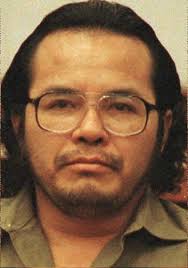 Ángel Maturino Reséndiz a.k.a. "The Railroad Killer", was a serial killer and rapist active in several U.S. states, all of which he entered through stowing away on trains. Reséndiz in Izúcar de Matamoros, Mexico in 1960 and was very physically small. His mother, Virginia Resendiz de Maturino, never married his father and frequently abused him physically. At the age of six he was sent to live with his maternal uncle, who raped him, and was also sexually assaulted by a local pedophile. At the age of eleven, he ran away from home and spent some time living on the street, where he took up glue sniffing. At the age of 16, he tried to enter Texas, but was deported. It became the first of his many entries into the United States. In 1988, he spent some time living in St. Louis, where he worked for a temp agency. In adulthood, he spent a total of 11 years in American prisons for crimes such as assault, auto theft, firearm possession and burglary. After finishing each sentence he would be deported back to Mexico, only to return every time. At the time of his arrest he was married to a woman named Julieta Dominguez Reyes, with whom he had a daughter, Liria. Reséndiz's first known murder was in 1986, when he killed a homeless woman and her boyfriend. In 1991, he committed his first known murder on U.S. soil, killing 33-year-old Michael White in Kentucky by beating him to death with a brick. Over the course of the following eight years, he continued traveling by train in the U.S., during which time he killed at least a dozen people. When the crimes were connected forensically and by VICAP, a manhunt started. He was nicknamed "The Railroad Killer" because all the killings occured near train tracks. In June of 1999, after being identified as the killer, he was placed in the Top Ten of the FBI's Most Wanted list and a reward of $50,000, which just some days later was raised to $125,000. The same month, a Texas Ranger, Drew Carter, contacted Manuela, Reséndiz's sister who lived in Albuquerque, New Mexico and to whom he was close. He promised her that Reséndiz would be granted personal safety in jail, regular visitation rights for his family and a psychological evaluation. At the time, he had been tracked down to Mexico. After the promised deal was put into writing, the sister convinced him to turn himself in to U.S. authorities. On July 13, Reséndiz met with Drew Carter and surrendered himself. He was tried for first-degree murder with damning evidence to back the charges up, found guilty and sentenced to death. On June 27, 2006, he was executed by lethal injection in Huntsville, Texas. His last words were: "I want to ask if it is in your heart to forgive me. You don't have to. I know I allowed the Devil to rule my life. I just ask you to forgive me and ask the Lord to forgive me for allowing the devil to deceive me. I thank God for having patience in me. I don't deserve to cause you pain. You do not deserve this. I deserve what I am getting." He found his victims, all of whom were randomly picked, while travelling by train. They were attacked, sometimes through burglaries, near the railways and were usually bludgeoned to death with some incidental object. A few female victims were also raped, though it was usually only a secondary intent. After the murders he would spend some time in their houses. He also took jewelry, cash, valuables and other items and gave them to his wife in Mexico. Most victims were found covered with something or obscured from view in some other way.
 -
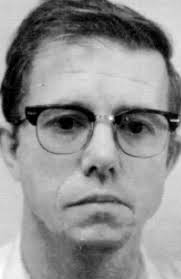 Hansen was born in Estherville, Iowa, in 1939. His parents were Christian, a Danish immigrant, and Edna Hansen. His father, with whom he had a difficult relationship, was very strict and often made him work long hours at the family-owned bakery. During his childhood, he was often bullied for his stutter and severe acne. In school, he had no close friends. After graduating high school in 1957, he enlisted in the U.S. Army Reserve, where he became a skilled marksman, serving one weekend a month and working at the bakery the rest of the time, sometimes volunteering as an assistant drill sergeant at the police academy in the town of Pocahontas. In 1960, he fell in love with and married a local girl. On December 7 the same year, he burned down the school bus garage of the local high school, but was caught when a friend turned him in. During his three-year sentence in prison, he divorced. After only 20 months, Hansen was paroled even though he had been diagnosed as having an "infantile personality". In 1963, he remarried a woman with whom he had two children. In 1967, after several jail sentences for petty theft, he moved to Anchorage, Alaska with his family. Well-liked by people who knew him, he became an avid hunter, breaking several hunting records (his records were nullified after his conviction). His weapons of choice were rifles or bow and arrow. The year after his last record breaking, he was convicted of raping a prostitute and attempting to rape a housewife, but only served six months in prison. In 1977, he was imprisoned again for stealing a chainsaw and was diagnosed with bipolar disorder. He was prescribed lithium, but wasn't required by law to actually take it. He was released after only a year. In the early 1980s, he reported a burglary on his home, which he had actually staged. With the money he got from the insurance company, he opened up a bakery of his own and established himself as a well-liked family man. In January 1982, he bought himself a Piper Super Cub bush plane, even though he had been denied a license due to his medication. During later questioning, Hansen claimed that starting in 1973, after finishing his rape sentence, he became a serial rapist, picking up prostitutes from Anchorage's tenderloin district and taking them by his bush plane to the wilderness, where he would rape and torture them. He later claimed that the ones who complied, he would return to Anchorage alive, and those who didn't, he would kill. From 1973 to 1983, he abducted and raped at least 30 women that way and let them go. At least 17 women picked up during the years 1980-1983 were less fortunate. After raping them, he released them in the woods and hunted them with a hunting rifle. His crimes first became known in 1982, when the body of exotic dancer Sherry Morrow was found near the Knik River by two off-duty police officers. It took two weeks to identify her. A spent .223 shell casing was found in the dirt near the body. Two years prior to that, two other women had been found in similar circumstances. The first was found by construction workers near Eklutna Road and has never been identified; the investigating officer nicknamed her "Eklutna Annie". The second was topless dancer Joanne Messina. On June 13, 1983, a young prostitute named Cindy Paulson was spotted with a handcuff on her wrist by a trucker. He gave her a ride to a motel, where she waited for her pimp, and called the police. When an Anchorage Police Officer, Gregg Baker, arrived, Paulson told him how a man (Hansen) had offered her $200 for oral sex, handcuffed her and forced her at gunpoint into his car. He then drove her to his house (Hansen's wife and children were vacationing in Europe at the time) and brutally raped and tortured her. Afterwards, he drove her to an airport and put her in his bush plane, presumably to take her to the wilderness and kill her as well. While he was loading it with supplies, she fled. Paulson made a formal statement to the police and not only identified the make and color of the plane, but also remembered its tail number. Hansen turned out to be the owner and was identified by Paulson as her attacker, but two of Hansen's friends gave him a false alibi for the night of the attack, so no formal charges were filed. On September 2, the body of another victim of Hansen, Paula Golding, turned up and the case was brought up again. The Alaskan investigators began looking into Hansen again and contacted the FBI, who sent in their profiler, John Douglas (some sources say it was Roy Hazelwood). He profiled the killer as having low self-esteem, a history of rejection by women, and being an experienced hunter. He also correctly predicted that he would take souvenirs from his victims and would have a stutter. When the two men who gave Hansen an alibi for the night he attacked Cindy Paulson confessed that they had been lying, the investigators focused on him. They brought him in for questioning while executing search warrants on his house, plane and cars. In his house, they found a collection of weapons, including the .223 Ruger Mini-14 he had used to commit his murders, IDs and jewelry taken from his victims and an aviation map with several marked locations. When an FBI forensic lab matched the shell casings found near the victims to the Mini-14 found in Hansen's house, he made a plea bargain. He was charged with the four murders whose victims had been found and with the abduction and rape of Cindy Paulson and agreed to confess to all of them, give details about his victims and show the burial sites marked on his map in exchange for serving his sentence in a federal prison and avoiding media publicity. He showed the police 17 of his burial sites, but refused to help them with the other four; it has been theorized that he wouldn't confess to killing them because they were neither prostitutes nor strippers and he couldn't justify their murders to himself. The victims that were found were exhumed and returned to their families. On February 18, 1984, Hansen was convicted of murder and sentenced to life in prison plus 461 years. He was initially incarcerated at the United States Penitentiary in Lewisburg, Pennsylvania, before being moved back to Alaska and jailed at Lemon Creek Correctional Center, then Spring Creek Correctional Center. On May 11, 2014, he was moved to the Anchorage Correctional Center to receive medical attention for undisclosed, lingering health conditions. Hansen died on August 22 of the same year at Alaska Regional Hospital. Hansen had a "do not resuscitate" order on his file. Hansen targeted prostitutes and topless dancers. After soliciting them, he would abduct them and take them to a meat shack by bush plane. He later stated that he would let them live if they submitted to his sexual fantasies. The ones who didn't, he would rape anyway, strip naked and then set loose in the wilderness and hunt with a .223 hunting rifle. After finally killing them, he would take pieces of jewelry from them as souvenirs and bury the bodies in the area, marking the burial sites on a map.
 -
 On July 1, 1911, a 20-year-old woman named Emma Lou Sharpe sat in her house on Hanover Street in Atlanta and waited for her mother to come home. It was a Saturday evening, and Emma Lou was worried. Her mother had left an hour before to fetch some groceries and still had not returned. Usually, this wouldn't be a cause for concern, but these were unusual times. Just two weeks before, a neighbor of the Sharpes named Addie Watts was hit on the head with a brick. Then, as the local papers described in a mysterious understatement, "a coupling pin was brought into play." Watts' attacker then dragged her into a clump of bushes and slit her throat. Watts' murder had been just the latest in a string of attacks that left the local African-American population on edge. All the victims had been of black or mixed race. All had been young, around 20 years old. All had been women. Emma Lou Sharpe fit that description almost exactly, but she was more concerned about her mother, whose name was Lena. Frantic with worry, Emma Lou set out in search of her mother. At the market, she learned that Lena had never showed up. Emma Lou started back for home. In the area that now separates Inman Park from Reynoldstown, she was approached by a stranger, who she described later, according to The Atlanta Constitution, as "tall, black, broad-shouldered and wearing a broad-brimmed black hat."
 -
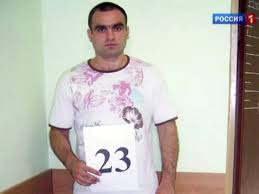 Vladimir Mirgorod was born in 1979 in Moscow, Russia. In 2005-2010 he was in prison for a robbery & rape. Mirgorod was rearrested after investigators checked his fingerprints and discovered they were identical to those that were left at the crime scenes of 4 murders. From 2002 to 2004, Mirgorod strangled 15 women and one teenage boy to death. Several of the victims had been raped. He had been imprisoned from January 2005 to July 2010 for the rape and robbery of a woman. He was later rearrested after his fingerprints matched those that were found at the crimes scenes. He was sentenced to life imprisonment on January 30, 2012.
 -
 When the drought ended and the rains came, Saeed Hanaei believed that it was a sign from God that his killing spree had divine approval. "I realised God looked favourably on me. That he had taken notice of my work," Hanaei said. With 12 prostitutes already dead by his hands, Hanaei carried on his "work" and strangled at least four more women after luring them to his house in the Iranian city of Mashhad. And Along Came a Spider, which had its UK premiere at the Edinburgh festivalyesterday, tells the disturbing tale of a murderous psychopath who found an alarming degree of ideological sympathy among Islamic militants in Iran. The serial killer and his trial attracted a media frenzy in Iran and exposed deep divisions in a society where a conservative-minded minority feels threatened by social change. The director of the documentary, Maziar Bahari, says he believes Hanaei was a murderer by nature who was catapulted to folk-hero status by religious extremists. "Hanaei was living in a very claustrophobic environment and he could somehow justify his killings through ideological slogans that are acceptable in that environment," Bahari says. "He is basically a terrorist. He's not as technologically advanced as some, but the result is the same." Bahari's documentary provides an extraordinary glimpse into the attitudes of a working-class district in Mashhad and the desperate world of prostitutes entrapped by drug addiction, poverty and patriarchal cruelty. Newspapers dubbed the murders the "spider killings" because of the way victims were drawn into Hanaei's home and then strangled with a scarf. He then dumped the bodies by the roadside or in open sewers, wrapping them in their chadors, the long, flowing black garments that cover a woman from head to toe. Hanaei confessed to the killings, smiled for news photographers and proudly told the court that he was fighting a crusade against moral corruption and vice. He and his lawyer cited an ambiguous provision in Iranian and Islamic law that refers to sinners as a "waste of blood", arguing that Hanaei deserved lenient treatment. The case provoked a debate between reformers who condemned the authorities for failing to catch him earlier and some conservatives who shared the killer's disgust with a rise in prostitution. "Who is to be judged?" wrote the conservative newspaper Jomhuri Islami. "Those who look to eradicate the sickness or those who stand at the root of the corruption?" Such sentiments are expressed by the killer's merchant friends at the Mashhad bazaar, one of whom says with a laugh: "He did the right thing. He should have continued." The argument over the spider killings represented a kind of microcosm of a wider battle still being waged in Iran over the proper role of Islam in society. Reformists in parliament and government have tried to push for a relaxation of the country's theocratic system, advocating what they call a "democratic interpretation of Islam". Their opponents fear the reformists will only undermine Islam and open the floodgates to secular, western influences. The most disturbing defence of Hanaei comes from his own 14-year-old son, Ali, who says his father was cleansing the Islamic republic of the "corrupt of the Earth". "If they kill him tomorrow, dozens will replace him," Ali says. "Since his arrest, 10 or 20 people have asked me to continue what my Dad was doing. I say, 'Let's wait and see.' " Those who sympathise with Hanaei remain powerful and vocal, but the majority of Iranians want to see a more tolerant, less ideological society, according to Bahari. "I think they are in the minority, and their numbers are decreasing," he said. Between the scenes of Hanaei recounting his crimes in a matter-of-fact tone, we see haunting photos of the victims before and after they were killed and we meet two children whose mothers were murdered. Interviews with 10-year-old Sahar and eight-year-old Sara provide some of the documentary's most powerful moments. Firoozeh, the 14th victim, went out to buy opium one day at about 5.30pm, says her daughter, Sahar. "We were all waiting for her but she never came home." We see a drawing in crayon from Sara, with a bearded Hanaei in handcuffs, her mother lying dead and a little girl kneeling in despair. Sahar looks away from the camera and says she hasn't spoken to anyone at school about what has happened. She says she wants to be a journalist when she grows up because she hopes to document what happened to her mother. Hanaei served as a volunteer in the 1980-88 Iran-Iraq war, and described his murders as a "continuation of the war effort". He first became obsessed with "street women" after his wife was mistaken for a prostitute by a taxi driver. We learn from a journalist that Hanaei went looking for men who were soliciting prostitutes and got beaten up. "So he turns to the people who don't have the power to fight back," says the journalist, Roya Karimi. Hanaei had plenty of opportunities to prey on the powerless in Mashhad, a city with all the ingredients for a thriving prostitution trade. While millions of pilgrims visit the city's holy Shia shrine every year, massive amounts of opium pour over the border from neighbouring Afghanistan and are transported through the city. Growing levels of poverty and unemployment, with rural families migrating to cities, have fed the increase in "street women". The spider case forced the invisible world of prostitution into the public arena and government officials can no longer pretend otherwise. But prostitution remains a sensitive issue and Bahari's documentary, which has been shown throughout Europe, has yet to be broadcast in Iran. The criminal code's vague reference to victims deemed to be a "waste of blood" has come under increasing scrutiny from lawyers. Despite Hanaei's confession in prison that he had "improper relations" with his victims, some ideologues still sympathise with the spider killer. This month a hardline paramilitary group, Ansar-e Hizbollah, warned in its weekly publication that declining morality among women could lead to more such killings: "It is likely that what happened in Mashhad and Kerman could be repeated in Tehran." Although Hanaei was sentenced to death, he was shocked and angry when the moment came for his hanging in April last year. Unlike at his highly publicised trial, there were no cameras around to record how he screamed in protest, baffled that his ideological allies never came to his rescue. "Even until the last second before his execution, Hanaei thought someone in the government would come to save him," Bahari says. Hanaei's case had sparked debate and morbid fascination but not much mourning for the death of the 16 "street women". And Along Came a Spider commemorates these women and grants them a degree of dignity they never received while they were alive.
 -
Serial Killer: Jose Antonio Rodriguez Vega (The Old Lady Killer)
Midnight Man posted a article in Celebrity
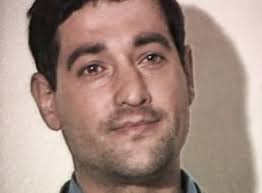 Known as El Mataviejas" (The Old Lady Killer), Jose Antonio Rodriguez Vega is Spain's most prolific killer. As the name suggests, this heartless brute preyed on elderly women, raping and strangling 16 victims over a period of just nine months. Vega’s usual M.O. was to befriend his victims by offering to help carry groceries or do work at their homes. Once inside, he’d turn on the helpless woman, fondle and rape her and then strangle her to death. Sometimes he’d commit postmortem rape with a broomstick handle or other object. Then, before leaving the scene, he’d tuck the victim up in bed. Because of this many of the early victims were thought to have died of natural causes. It was the murder of 82-year-old Margarita Gonzalez that first alerted the police to the presence of a serial killer. However, Vega would commit two more murders before an anonymous tip off brought the police to his apartment. There, they found an elaborate shrine, containing trophies taken from his many victims. When pictures of the shrine were shown on TV, relatives of several victims came forward to identify their possessions. It was only then that the scale of Vega’s killing spree became apparent. Tried in 1991, Vega was sentenced to 440 years, although that meant in effect that he’d only serve 20. However, fate had other plans for the notorious granny killer. On October 25, 2002, he was stabbed to death by two fellow prisoners in the courtyard of the Topas prison in Salamanca province.
 -
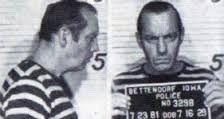 Charles Ray Hatcher also known as "Crazy Charlie, A one-man crime wave, and Mr. Prince;" was born in the small town of Mount City, Missouri at 4:00 p.m. He was the youngest sibling having three older brothers; Arthur Allen Hatcher, Jesse Hatcher Jr., and Floyd Hatcher. His parents where Jesse and Lula Hatcher. Charles did have trauma in his childhood. At the young age of six years old he watched his oldest brother Arthur die of electrocution while they were flying a kite. His mother left the home and was married at least three times. At the age of 16 he moved to Saint Joseph, Missouri to live with his mother and her third husband. Then at the age of 18 he got a job but had trouble keeping a job. He first worked at the bowling alley in Saint Joseph. He then got a job in the fall of 1947 at Iowa-Missouri Walnut Co. driving a truck. By October 9th, 1947 he had stolen a company truck and returned it the next morning intoxicated. This is where his crimes started. He received a two year suspended sentence and was fired from his job. On February 5th, 1948 Charles got a job at the St. Francis Hotel in Saint Joseph washing dishes. Just a couple of days later he received his first prison sentence. Hatcher was released from the Missouri prison system just a little over a year on June 8th, 1949 serving only 3/4 of his time. On October 10th, 1949 Charles was convicted of forgery for a ten dollar check at a gas station in Maryville, Missouri. For this crime Hatcher received three years in the Missouri State Penitentiary. It was just a couple of years later on March 18th, 1951 when Hatcher escaped from the prison but was caught but not before he had time to attempt yet another crime; burglary; for this he got two years added to his sentence. He was released from prison after serving his additional time on July 14th, 1954 and almost made it a year before committing his next crime. On February 5th, 1955 at the age of 25 he stole a 1951 Ford in the small town of Orrick, Missouri. He was sentenced to four years for auto theft and served his time in the Ray County Jail in the small town of Richmond, Missouri. He still had not changed his pattern. He again attempted to escape and received another additional sentence of two years. He was released from prison on March 18th, 1959 from his fifth and sixth sentence of his criminal career. On June 26th, 1959 Hatcher moved his criminal activity from steeling cars to making his first known attempt to abduct a 16 year old paper boy of Saint Joseph, Missouri named Steven Pellham. Hatcher was sentenced to five years for the attempted abduction and car theft on November 20th, 1959. Staying true to his nature the very next day Hatcher attempted to escape the Buchanan County Jail with no success. Unsure if he received any additional time for the escape attempt. Charles Hatcher arrived at the Missouri State Penitentiary on November 25th, 1959. It was at this time he started taking pride in his criminal career claiming to be the most notorious criminal in northwest Missouri since the great Jesse James. On July 2nd, 1961 inmate Jerry Tharrington was found raped and stabbed to death on the kitchen loading dock of the Missouri State Penitentiary. It is believed that Hatcher killing started here. The only punishment that Charles Hatcher received this murder was solitary confinement due to a lack of evidence to take further action. On January 18th, 1962 Hatcher was still in solitary confinement for the murder of his fellow inmate. At this time he wrote a letter to the Major of the penitentiary making the claim that he realized he needed psychological treatment. This is where the system made a huge mistake in thinking it was just a scheme to get out of solitary and possible out of prison early and refused to get Hatcher any kind of treatment. The question that many ask is if he have gone to treatment at this point in his life would things have turned out differently? With no treatment he was released to the general population October of 1962, and with the release from prison on August 24th, 1963 still receiving no psychological treatment. August 1969 was a busy month for Charles Ray Hatcher. He confessed to the abduction of a boy in Antioch, California on the 27th of August. Hatcher asked the boy to take a ride with him. Hatcher drove to a creek and strangled the boy to death with his hands. Then just two days later on the 29th of August a six year old Hispanic boy was reported missing in San Francisco, California. A little girl the boy had been playing with reported that he walked away with a man that offered him ice cream. A man walking his dog came across them in the middle of a sexual assault and beating. The young boy did survive the horrifying encounter. When police arrested the man committing the crime he would not answer any question just claimed his name was Albert Ralph Price. However he was caring an identification with the name Hobert Prater. It was not til later that the FBI finally identified him as Charles Ray Hatcher. On September 12th, 1969 Hatcher was brought before a judge in California for this assault, attempted murder, and kidnapping. At this time he was still claiming his name was Albert Price causing the judge to order a psychiatric evaluation. Hatcher was in the California State Hospital for a 90-day evaluation. During the first part of his stay Hatcher was completely unresponsive. Later claiming to hear voices, having delusions of persecution, being confused, and suicide attempts, was the first time Hatcher claimed a mental illness and avoided prison time. On September 30th, 1969 Hatcher began the first of five tours in the California State Hospital. On December of 1971, Hatcher was 41 years old and the California State Hospital repeatedly sent him back to court declaring him competent to stand trial but every time was sent back to the hospital. Charles Hatcher was identified as a passive-aggressive personality with sexual deviation and murder. On January 21st of 1971, the first psychiatrist declared Hatcher insane and incompetent to stand trial. Then the very next day on the 22nd the second psychiatrist who referred to Hatcher as Mr. Prince, concluded that Hatcher was insane and incompetent to stand trial. This is when he was sent back to the hospital. On May 24th 1971 Charles was finally sent to trial and pleaded guilty by reason of insanity. Hacher was ordered another evaluation this time by a different hospital and was again found incompetent to stand trial. The actual evaluation took place on May 27th, 1971 with Dr. Carl Drake Jr. At this time Charles Hatcher still claiming to be Albert Price lied about his life history to the doctor. The next month Charles Hatcher keeping true to his natural pattern escaped for that California State Hospital on June 2nd, 1971. He was picked up in Colusa, California 90 miles from the hospital a week later. He was arrested for auto theft giving the police the name of Richard Lee Grady. When taken to the hospital on July 15th, 1971 for evaluation the hospital staff know who he was. It was not until April 4th, 1972 that the hospital staff and doctors decided that Charles Ray Hatcher's treatment was not going any where and he was a danger to the other patients. These is when he was finally sent to the prison state hospital at Vacaville, California. It was just a few months later that he was transferred to the San Quentin Prison in August of 1972. This is where Hatcher was finally forced to stand trial for his crimes. It had been three years since he had committed these crimes when this happened. October 24th, 1972 Hatcher was ordered to have two more evaluations. The first one was to determine if he was competent to stand trail and the second was to determine if he was sane at the time he committed the crimes. On December 12th, 1972 Charles Hatcher was tried for the abduction of Gilbert Martinez; the six year old Hispanic boy; he was convicted of the charges. Hatcher was sentences to the California State Hospital. He entered the hospital on January 9th, 1973 as a mentally disordered sexual offender. Hatcher could not help himself her on March 28th, 1973 he tried yet another escape attempt. This time unsuccessful. A security guard found him hiding in a cooler in the main courtyard. Hatcher had two sheets stuffed into his paints for some reason. He later confessed that this wad an escape attempt. This made the doctors feel that it was time for Hatcher to go back to court because he was a threat to society. In May of 1973 Hatcher received yet another evaluation by psychologist W.D Lewis who declared that Hatcher was "manipulative institutionalized sociopath." Then on June 15th, 1973 Hatcher was recommended for a transfer to a maximum security prison. Due to this recommendation Charles cut his wrists because he did not want to go. After this out burst he was concluded to be paranoia and schizophrenia and this saved him from the maximum security prison. On May 20th, 1977 Hatcher was released to the Home Care Services Center; which is a halfway house in San Francisco, California. This early release happened due to a bill being pasted giving inmates credit for time served in mental health facilities as well as time in jail. He also had received very good reviews at the parole board hearings. Less than a month later Hatcher was on the run declared a parolee at large. At the age of 47, on May 25h 1977 Hatcher was supposed to report back to the half-way house every night at 9:00pm and take a total of nine prescribed pills. Five days later, Hatcher violated the terms of his parole and was on the run. He was considered a walk-away.” Then on June 13th 1977, Hatcher was declared a “parolee at large” and besides a sighting in Wilmar, Minnesota, was not seen for about a year. This is when Hatcher began killing again. On May 27th, 1978 Charles Ray Hatcher had returned to Saint Joseph, Missouri where he had began his criminal career. He kidnapped four year old Eric Christgen. Eric was abducted from a park in downtown Saint Joseph, Missouri. Eric's babysitter had left him at the park to run into the store to buy a flag. When she returned Eric was gone. Melvin Reynolds was falsely accused of Eric's assault and sentences to life in prison on February 14th, 1979. Later Buchanan County Police would find out that due to a rush to close this case the had convicted the wrong man it should have been Charles Ray Hatcher. Then a few months later 150 miles north of Saint Joseph, Missouri on September 4th, 1978 Hatcher was arrested in Omaha, Nebraska. He had sexually attacked a 16 year old boy. Victims name is unknown. Hatcher was released from the Douglas County Mental Hospital in Omaha, Nebraska on January 31st, 1979. This is where he had served his time for the 1978 sexual attack that happened in September. When arrested Charles gave police yet another fake name this time claiming to be Richard Clark. Do to the staff never taking fingerprints the police and staff may never have known who Hatcher really was. On May 3rd, 1979 Hatcher was arrested yet again in Omaha for the assault and attempt to kill seven year old Thomas Morton. Some how the charges where dropped and Charles was sent to another mental hospital for this crime. Hatcher was released from the hospital on May 21st, 1980 but returned just two months later because of another assault charge. At the age of 51 Charles Ray Hatcher still had not changed he again escaped this time from Norfolk Regional Center. Hatcher was arrested in Lincoln, Nebraska under the name Richard Clark on October 9th, 1980. Hatcher has attempted to assault and murder on a 17 year old boy. He was discharged from a mental facility just 21 days later. Charles Hatcher had moved his crime wave to Des Moines, Iowa. On January 13th, 1981 he was arrested again under the the name of Richard Clark. This time he had been a knife fight. He spent a short time in another mental facility. On April 10th, 1981 he was discharged from the Iowa Mental Hospital to the care of the Salvation Army shelter in Davenport, Iowa. On June 20th, 1981 a man by the name of James Churchill was stabbed to death on the Missouri River banks near Rock Island, Illinois. It was not until later that Charles confused that he and Churchill had been drinking together and Hatchers impulse to kill was growing in him. Charles has stabbed Churchill 10 to 12 times with a knife that had been embedded in a bone in Churchill's right chest near the heart. Arrested in Bettendorf, Iowa forattempting to abduct an 11 year old boy named Todd Peers from a grocery store.The boy was able to run Ironically this was Hatcher’s 52nd birthday. Arrested on his 52nd birthday(July 16th, 1981) for attempting to abduct an 11 year old boy named Todd Peers. Hatcher using the name Richard Clark when the police picked him up. On March 18th, 1982 again for some reason the charges where dropped against Hatcher and he spent only 49 days in a mental hospital in Mount Pleasant, Iowa before being released on May 7th, 1982. On July 27th 1982 Charles Hatcher had made his way back to Saint Joseph, Missouri. A woman by the name of Stephanie Richie was approached by a strange man wanting to take her for coffee. Something about the man frightened her so she requested that he leave her alone. This strange encounter took place only a half a block from where Eric Christgen had been abducted only four years earlier. The next day Hatcher abducted a ten year old boy; Kerry Heiss, outside the Saint Joseph Mall. Hatcher claiming to be a security guard grabbed the boy and began to pull him away from the record store. Kerry was able to get away and told his grandmother but Hatcher was gone by the time that the police got to the scene. On July 29th, 1982 Hatcher abducted and murdered an 11 year old girl; Michelle Steele. Michelle had gone to a dentist appointment at 10:30 a.m she left the dentist office at 11:30 a.m. It was not until her mother Annette Steele got home at 3:15p.m that Michelle was noticed missing and the police where called. It was not until July 30th, 1982 that Michelle was found by her uncle dead between two logs. Michelle Steele's body was found less than a mile downstream from where Eric Christgen's body had been found. This was the same day that Charles Hatcher checked himself into the St. Joseph State Hospital under the name of Richard Clark. On August 3rd, 1982 Charles Hatcher was charged under the name Richard Clark for the murder of Michelle Steele. The charge this time was first degree murder. His bond was set at $250,000.00. With the identification by an eye witnesses that Hatcher was the man down by the river, the teeth marks matched the bite marks on the girls body, shoe imprints matching, his knapsack, nylon cords, as well as the photo identifications from the two attempted abductions the police had sufficient evidence to charge Charles Ray Hatcher. On August 13th, 1982 Hatcher received his first mental evaluation in this case and it was concluded that he could understand the charges but need to be sent to another mental facility. It was not until April 19th, 1983 that Hatcher was declared competent to stand trial for first degree murder in the death of Michelle Steele. On May 3rd, 1983 Hatcher was sent to the Buchanan County Jail to await trial. This is when he gave the deputy a peace of paper that said, "Please call the FBI and tell them I would like to see them today. Very important case." FBI agent Joe Holtstag met with Hatcher. This is when Hatcher gave them a map to Churchill's body but still did not admit to killing him. Charles also told Joe Holtstag that there where 16 bodies, 13 adults, and all where male. This is how they got the information to know that they had convicted the wrong man of Eric Christgen's murder. Charles made it clear to Holtstag that he would trade information about the murders for taking the death penalty off the table. On June 20th, 1983 attorneys Dahms and Morrey had obtained a charge for Hatcher and trial date was set for August 22nd, 1983. Just five days later Holtstag received the letter that Hatcher wrote with a detailed account of the murder of four year old Eric Christgen's. This letter contained details that no body else could have know. Taking his time confessing to all his murders he confused to the Churchill murder on August 3rd, 1983. He also confessed to the William Freeman murder in 1969. By the end of the interview on August 3rd he had filled in all the details about his criminal career from auto theft on October 27th, 1947 all the way through and up to the murder of Michelle Steele on July 29th, 1982. On September 12th, 1983 Hatcher plead not guilty and another trial was set for January 9th, 1984. The on October 13th, 1983 Hatcher was sentenced to life in prison in the MIssouri State Penitentiary for the murder of Eric Christgen. This was also the day that the man wrongfully convicted was released for the crime he did not commit. On January 9th, 1984 the trial was set to start but Hatcher had abused is attorney Dahms so much that he dropped the case. Due to this the trial was moved to Warrensburg, Kansas. The trial started on September 17th, 1984. The jury was picked in one day their were 9 men and 4 women picked to judge this case. The trial lasted five days from 9:00 a.m to 9:00 p.m. On the 22nd of September Hatcher was convicted of capital murder of Michelle Steele. He received 50 years without possibility of parole. In November of 1984 Holtstag met with Hatcher for the last time. Then on December 3rd, 1984 Hatchers motion was denied. Just a few days later on December 7th, 1984 Charles Ray Hatcher was found during morning rounds hanging in his cell. He was hanging from a piece of electrical wire that had been to brace the heavy metal ventilation grate in his cell. Hatchers hang had been tied behind his back with shoelaces. The officer did try to revive Hatcher but he was already dead.
 -
 A death wish, once in custody, is not unusual among compulsive killers. Carroll Edward Cole, admitted murderer of thirteen persons, was securely serving out a term of life in Texas, with parole a possibility in seven years, when he elected voluntarily to face a pair of murder charges in Nevada, fully conscious of the fact that he would be condemned to die upon conviction. Once the sentence had been passed, facilitated by his guilty plea, Cole staunchly fended off appeals and efforts of assorted liberal groups to interpose themselves on his behalf. His execution, in December 1985, immediately paved the way for others in the Western states, but Cole's significance lies elsewhere -- in the man himself, and in "the system's" failure to prevent his crimes. When Cole was five years old his mother forced him to accompany her on extramarital excursions in his father's absence, using torture to extract a pledge of silence, making him a bruised accomplice to her own adultery. As he grew older, Cole was forced to dress in frilly skirts and petticoats for the amusement of his mother's friends, dispensing tea and coffee at sadistic "parties" where the women gathered to make sport of "mama's little girl." Enrolled in elementary school two years behind his peers, Cole grew up fearing for his masculinity, intensely sensitive to jokes about his "sissy" given name. At nine, he drowned a playmate who made fun of him, avoiding punishment when careless officers dismissed the murder as an accident. He had begun to fight habitually at school, and once contrived to maim the winner of a yo-yo contest in which Cole had come out second-best: while playing on a piece of road equipment, he engaged the gears and crushed his rival's hand inside the dozer's massive treads. In adolescence , Cole accumulated numerous arrests for drunkenness and petty theft. He joined the Navy after dropping out of high school, but was discharged for the theft of pistols, which he used to fire at cars along the San Diego highways. Back at home in Richmond, California, during 1960, he attacked two couples with a hammer as they parked along a darkened lover's lane. Increasingly, he cherished fantasies of strangling girls and women who reminded him of his adulterous mother. Finally, alarmed by violent fantasies which would not let him rest, Cole flagged a squad car down in Richmond and confessed his urges to police. On the advice of a police lieutenant, Cole surrendered voluntarily to mental health authorities, and spent the next three years in institutions where he was regarded as an "anti-social personality" who posed no threat to others. Finally discharged in 1963, he moved to Dallas, Texas, and exacerbated matters by immediately marrying an alcoholic prostitute. The grim relationship was doomed to failure, filled with screaming battles, beatings, the occasional resort to weapons. Finally, in 1965, persuaded that his wife was servicing the tenants of a motel where they lived, Cole torched the place and was imprisoned on an arson charge. Upon release, he drifted northward, through Missouri, and was jailed again for the attempted murder of Virginia Rowden, age eleven. Cole had chosen her at random, crept inside her room while she was sleeping, and had tried to strangle her in bed; her screams had driven him away, and he was readily identified by witnesses as her assailant when police arrived. Missouri offered Cole more psychiatric treatment through assorted inmate programs, but it didn't take. In 1970, he once again surrendered to authorities -- this time in Reno, Nevada -- confessing his desire to rape and strangle women. Learned doctors wrote him off as a malingerer and set him free, on the condition that he leave the state. Cole's file contains the telling evidence of psychiatric failure: "Prognosis: Poor. Condition on release: Same as on admittance. Treatment: Express bus ticket to San Diego, California." The problem was exported, but it would not go away. Within six months of his return to San Diego, Cole would kill at least three women. (On the day before his execution in Nevada, he suggested that there might have been two others in this period, the details of their murders blurred by massive quantities of alcohol.) His victims , then and later, shared the common trait of infidelity to husbands, fiancees, or boyfriends; each approached Cole in a bar, accompanied him to lonely roads for sex, and laughed about the skill with which they "put one over" on their regular companions. Moving eastward, Cole picked off another victim in Casper, Wyoming, during August 1975. Assorted jail terms often interfered with hunting, but he surfaced in Las Vegas during 1977, staying long enough to kill a prostitute and get himself arrested on a charge of auto theft, which was dismissed. A few weeks later, after days of drinking, Cole awoke in Oklahoma City to discover the remains of yet another woman in his bathtub; bloo.‹¤ œ.¥ h‰¤ dy slices of her buttocks rested in a skillet on the stove. Returning once again to San Diego, Cole remarried -- to another "drunken tramp" -- and sought the help of local counselors to curb his drinking. Given the conditions of his home life, it was hopeless, and the urge to murder was consuming him, inevitably fueled by alcohol, a ravenous obsession. During August 1979, he strangled Bonnie Stewart on the premises of his employer, dumping her nude body in an alleyway adjacent to the store. For weeks, he had been threatening to kill his wife -- the threats reported to an officer in charge of supervising his parole -- but when he finally succeeded in September, the authorities refused to rule her death a homicide. Despite discovery of her body, swaddled in a blanket and reposing in a closet of Cole's home, despite Cole's own arrest while drunkenly attempting to prepare a grave beneath a neighbor's house, detectives viewed the death of Diane Cole as "natural," related to her own abuse of drink. Taking no chances, Cole hit the road. He claimed another victim in Las Vegas, gravitating back to Dallas where, within eleven days in 1980, he would strangle three more victims. Though discovered at the final murder scene, the victim stretched out at his feet, he was again regarded merely as a "casual suspect" by detectives. Weary of the game at last, Cole startled them with his confession to a string of unsolved homicides; at trial, in 1981, his guilty plea insured a term of life with possible parole, and he was counting down the days to freedom when reports of a potential extradition to Nevada changed his mind. The case of Carroll Edward Cole deserves a place among the classics as a showcase of "the system's" abject failure. As a child, young Eddie Cole was failed by educators who ignored his late enrollment, failed to recognize the signs of chronic child abuse, and dealt with adolescent violence as a problem to be swept away, referred to other agencies. As a potential murderer who sought the help of mental institutions, he was failed by the psychologists and psychoanalysts of half a dozen states, repeatedly discharged as a malingerer, a harmless fake, "no danger to society." On two occasions, officers in San Diego literally caught Cole in the act of an attempted murder -- and, on each occasion, they accepted his ridiculous assertion of a lover's quarrel, offering the would-be killer transportation to his home. When violent fantasies became reality, investigators with the same department stubbornly ignored persuasive evidence, rejecting even Cole's confession, passing off two homicides as drunken accidents, dismissing others as the handiwork of angry pimps. In Texas, Cole might very well have slipped the net again, if he had not elected to confess in cases where detectives were inclined to view his homicides as "accidental deaths." In such a case, the system fails not only Carroll Edward Cole. It fails us all.
 -
 The Monster of Florence was a killer who became notorious for his pattern; he always targeted amorous couples that were out alone, shot them at close range with a .22-caliber Beretta and mutilated the sexual organs of the female victim. The killer was responsible for 16 murders between 1968 and 1985. Four men have been arrested, but police suggest that the real killer has never been identified. Notorious Figure, serial killer. "Il Mostro di Firenze", or "The Monster of Florence", first came to prominence in 1981 in Florence, Italy. The killer became notorious for his homicidal pattern; he always targeted amorous couples that were out alone, shot them at close range with a .22-caliber Beretta, and then mutilated the sexual organs of the female victim with a sharp knife. Il Mostro earned notoriety on June 6, 1981, after the bodies of 30-year-old Giovanni Foggi and his fiancée, 21-year-old Carmela Di Nuccio, were found near their vehicle in the Scandicci area of Tuscany, Italy. The killer had shot Foggi and Di Nuccio with a .22-caliber Beretta while the couple was parked in their car near a local "lover's lane." He then stabbed them repeatedly. After they were both dead, the murderer pulled Di Nuccio's lifeless body approximately 30 feet from the car and carefully removed her reproductive organs with a serrated knife commonly used by S.C.U.B.A. divers. The near-surgical precision with which the genitals were cut from the victim's body suggested that the killer had a medical background. Investigators initially suspected ambulance driver—and secret voyeur—Enzo Spalleti, whose car had been parked near the scene of the crime. As law enforcement officers probed Spaletti further, he gave vague, conflicting alibis. More evidence revealed that the suspect had told his wife about the incident before it had been announced in the paper. With this evidence, Spalleti was charged with two counts of homicide and sent to prison to stand trial. Several months later, however, a new murder led police to believe they had apprehended the wrong man. Investigators, still unable to find any new leads, began pursuing other possibilities. They investigated more than 100,000 people in hopes of gathering new evidence. Their questioning led to the doorstep of farmer Pietro Pacciani, a former rapist and murderer who had been arrested in 1951 for killing the man he'd found sleeping with his fiancée. Pacciani had been released after serving 13 years for his crime, but investigators believed that the man was still committing murders. In a highly publicized 1994 trial, a judge and jury convicted Pacciani for 14 of the 16 counts of murder. But in 1996 an appeals court overturned the conviction, citing lack of evidence. The police, now desperate to find the murder or murderers, began developing a new theory. Acting on the belief that the killings were committed by a Satanic cult led by Pacciani, police concluded that two of Pacciani's friends Mario Vanni and Giancarlo Lotti were accomplices in the crimes. They were believed to have committed the murders in order to gain power from their victim's reproductive organs during bizarre cult rituals. Pacciani was was held in prison for a retrial, and in 1997 Lotti and Vanni were convicted to life in prison for the murders, with very little evidence to back the claims. Pacciani died of cardiac arrest in February 1998, before he was able to face his retrial. Lotti died in prison four years later. Investigators made another leap in January of 2004, when they accused pharmacist Francesco Calamandrei of leading the Satanic cult they believed was responsible for the murders. For the next three years, police built a case against Calamandrei, as well Mario Spezi, a journalist who had been following the murders and was an outspoken critic of the police investigation. An outraged public, who believed the police had gone too far, protested the arrest. They alleged that prosecutors wanted to silence Spezi's criticisms, and pressured police into letting Spezi go. Spezi was eventually absolved of the crimes, and the group in charge of the Il Mostro investigation was dissolved in 2006. Prosecutors Giuliano Mignini and Michele Giuttari were also charged with abuse of office for their arrest of Spezi. In 2007, Calamandrei stood trial, but was acquitted of all charges due to lack of evidence. Two years later, Vanni died in a nursing home. Whether or not he participated in the crimes, or was falsely accused, remains a mystery. The identity of the Monster of Florence remains a mystery.
 -
 A middle-aged father of 5, Robert L. Yates Jr., a decorated military helicopter pilot, and National Guardsman was convicted of 15 murders but suspected of as many as 18. The most prolific serial killer ever sentenced in Washington state, he now sits on death row. He came from a solid, lovinghome with encouraging Support , a moral upbringing and Christian teaching from the time he could walk. He was an obedient child, a dedicated student, and a team player on the Oak Harbor High Schoolfootball team. Yates was a car buff frequently seen washing the Corvette and his other vehicles. He liked to cruise through the red-light district in a white Corvette, where the Army veteran murdered women 8 of at least 13 of his victims. Washington state prosecutors suspect Yates is responsible for the slayings of as many as 18 women, many with a history of drugabuse and prostitution. Victims were shot in the head. The first body was found Feb. 22, 1990, and the killings continued for a decade. "Bobby is a loving, caring and sensitive son, a fun-lovingand giving brother, an understanding, generous and dedicated father, who enjoys playing ball, fishing and camping with his kids," the three-paragraph statement said. "We feel deeply for the families who have experienced loss," the statement said. "We ask that all judgments be reserved until the timely due process of law has been completed." Signed "the Robert L. Yates family members." In 2000, Yates, 50, pleaded guilty to the attempted murder of one woman and the killing 10 other women in Spokane County from 1996 to 1998. He's also admitted to two slayings in Walla Walla in 1975 and the killing of a woman whose body was found in 1988, in Skagit County. A judge sentenced him to 408 years in prison. Pierce County prosecutors then brought Yates to Tacoma to be tried on the aggravated murders of Connie LaFontaine Ellis and Melinda Mercer. During the 5 1/2-week trial, prosecutors told jurors this was Yates "his evil hobby." He killed for thrill of it and because he enjoyed sex with his dead victims. The death penalty was sought in this trial. Robert Lee Yates Sr. talked about his and his wife's joy at their son's birth, and his pride as Yates became a boy who never "sassed" him and always obeyed. Yates played baseball andfootball, and fished and hiked with his father. Attorneys showed photos of Yates as a baby, in a tiny suit, with his little sister, and through the years in a military uniform and later with his children. The elder Yates acknowledged that his son didn't confide in him and that he married his second wife before divorcing his first. Recently, Yates Sr. said, his son has returned to his Seventh-day Adventist faith. "He fell away from God," the father said. "He went to the depths. But he's come back, and I really feel it's sincere." Crying, he continued, "I love him so much, and I've told him a good many times. I abhor what he's done, but I love him just the same." Yates cried during his father's testimony and when his victims' parents described their pain. Melinda Mercer's mother, Karyl Bushell, recalled her oldest daughter as a child who loved anything extravagant and funny. "She loved to dance," Bushell said, in tears. "She loved children. She loved people." She avidly hiked, skied and skated. A troubled youth, Mercer spent her teen years in foster care but was at her mother's house for her birthday and holidays. She earned a GED, learned to hang drywall and had worked as a waitress in Seattle. In 1997, when she became aware of her daughters heroin addiction, Bushell found a hospital where she could receive drugtreatment, but she didn't showed up. Two months before her murder, she asked if she could move back home with her family in Centralia. Bushell declined out of fear herdrug use would affect the other children in the home. "She wanted to come home, and I told her she couldn't," Bushell said, crying hard. "I told her she had to start helping herself before I could help her anymore. She said, 'Mom, you're supposed to loveme,'" said Bushell. "I said, 'I do love you, but you have to help yourself.'" Emil LaFontaine of North Dakota called his daughter, Connie LaFontaine Ellis, a strong, independent girl who inspired his pride. She had 5 siblings and step-siblings, moved from the Chippewa reservation where her father lived to Spokane to be with her mother. At 17, she had her first child, Angel, later, she gave birth to 2 sons. The first son died in infancy. She married and moved to Tacoma. In 1996, her youngest son, Randy, couldn't get a transplant in time and died of heart problems. "That was one of the main factors in the way she continued her life," LaFontaine said. "Connie was devastated by his death." She tried numerous times to beat a heroin addiction. She was working on the streets when Yates killed her, in September 1998. Her death hurt her daughter the hardest, LaFontaine said. LaFontaine cried reading from a statement he wrote about his daughter. "Connie gave me strength and opened my life," he read. "I could not have asked for more. No wonder an eagle came down above her as she was buried, and came to hover over my own." Prior to reading the death sentence, Yates' attorneys moved for a retrial, saying prosecutors erred in the penalty phase closing arguments by making "passionate and prejudicial" statements to the jury. Defense attorneys also felt jurors committed misconduct by considering more evidence than allowed in sentencing, such as contemplating if Yates had undiscovered victims, as they reported to the media afterwards. Pierce County Judge John McCarthy rejected the arguments. The jury sentenced Yates to death after it convicted him of the aggravated murders of Connie LaFontaine Ellis and Melinda Mercer. Both bodies were found near Fort Lewis, where Yates served as a helicopter pilot in the Washington National Guard. "I'd like to thank the court for the courtesy accorded me and the professionalism shown me," Yates said quietly while looking down.
 -
 Jack Mogale because he lured, raped and killed women at a factory near his home, was found guilty in the Johannesburg High Court on 52 of 61 charges. Judge Frans Kgomo found Mogale guilty of nine kidnappings, 19 rapes, 16 murders, an attempted murder, three robberies with aggravating circumstances, a fraud or theft, an assault with intent to cause grievous bodily harm, a sexual assault and an escape from lawful custody. Mogale (42) had pleaded not guilty to all the charges. He continually testified that police, witnesses and his common-law wife Charlotte Manaka were conspiring against him. Kgomo dismissed this claim as “far-fetched” and “fallacious”. Dubbed the “West-End serial killer” by police before his identity was discovered, Mogale lured women to open areas where he raped and murdered them. The crimes were mainly committed at the West-End brick and clay factory near his home in Waterworks, Westonaria, and at various locations in Lenasia, south of Johannesburg. He attacked and murdered 15 women and a child between March 2008 to March 2009. He was arrested when police were given his car registration number after a teenager went missing. The only two women to have survived his attacks testified during his trial that when they met him for the first time he claimed to be a Zionist Christian Church preacher and a prophet. One woman was given a herbal “tea” for uterine problems. She said he put herbs into her vagina and said he needed to have sexual intercourse to exorcise evil spirits from her. He however said they were having an affair and the sex was consensual. One woman said he gave her a lift, claimed to be prophesying over her, then took her to a veld where he attacked her. When she regained consciousness 24 hours later, her jaw had been dislocated and maggots were on her wounds. Kgomo said the calm and sequential manner in which 41 state witnesses testified throughout the trial was key in building the prosecution. “The accused, however, was not a very good witness ... with his contradictions and new versions of events ... at times he wanted to shift blame onto his defence counsel,” Kgomo said. “I came to the conclusion that he was not telling the whole truth to the court. “The accused did also not bring in witnesses to back up statements made during cross-examination by the state.” The court’s judgment was assisted, to a large degree, by forensic analysis and expert advice from Professor Gerard Labuschagne, who headed the police’s investigative psychology unit. Many of Mogale’s victims were unidentified but linked to him through Labuschagne’s investigations. Nearly all the crimes had a similar modus operandi, circumstance, victimology and location. Most of Mogale’s victims were either strangled or killed with blunt force injury, and 14 were of a sexual nature, which Labuschagne, in his testimony, said was indicative of a serial killer. The professor also concluded that all the cases were “undoubtedly by the same offender”, Kgomo said.
 -
 Jimmy Maketta is a South African rapist and serial killer who in 2007 plead guilty and was convicted on 16 counts of murder, 19 counts of rape.A state psychologist described him as a psychopath. Maketta described how, from April to December 2005, he would attack farm labourers from a hill on Friday evenings near the township of Philippi, Cape Town.
 -
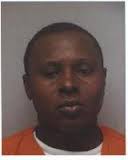 Elias Xitavhudzi murdered 16 women and men in Sunnyside and Magnolia Dale (Gauteng Province) in the 1960’s. As he murdered only white males and females in the strictly isolated “apartheid-era”, his murderous reign caused communal concern on both sides of the race spectrum. Waiting for his victims at various “lovers-lane” spots, he would accost the unsuspecting couple and brutally murder them. Shortly before his arrest, he acquired the nickname “Pangaman” (panga being a local word for the machete/long broad-bladed knife he used to hack his victims). Being swiftly tried and convicted of the murders in November of 1960 he was sentenced to death by hanging.
 -
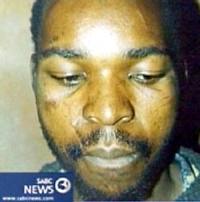 South Africa's alleged "Phoenix Strangler," Sipho Agmatir Thwala, is suspected of raping and strangling 19 victims with their underwear before burying them in shallow graves. On March 31, 1999, the Durban High Court found Thwala guilty of only 16 murders and 10 rapes, and he was sentenced to 506 years in prison. Thwala, 31, of KwaMashu, became the most wanted man in KwaZulu-Natal province, located in eastern South Africa along the Indian Ocean during an alleged year-long reign of terror. At the time of his murderous spree - between 1996 and 1997 - the Phoenix and KwaMashu communities were gripped with terror, not knowing who would be next or when he would strike again. Thwala, who was acquitted of rape and murder in 1994, was arrested for the serial killings at his Besters squatter camp home in a pre-dawn swoop by police in August 1997. His arrest came days after DNA samples taken from the suspect, who was released on the rape and murder charges in 1994, matched those taken from several crime scenes. The killer apparently lured his victims to the sugarcane fields fields of Mount Edgecombe, near Phoenix, by offering them employment. Thwala fitted the profile compiled by police forensic psychologist Micky Pistorius, who described him as "intelligent and charming to women, but extremely dangerous". Thwala speaks English, Afrikaans and Zulu and grew up as a labourer in the cane fields where he sold cane to local residents. His mother, Khathazile Ntanzi, described Twala as an intelligent man who could read and write even though he never received schooling beyond Grade 1. "He was a normal child, a gentleman and helpful around the house. He also bought us groceries when he had money. We are relieved he has been sent to jail. Who knows? He may have turned against us one day," said his sister, Zibekile. On March 31, 1999, a Dunbar judge sentenced Twala to 506 years in prison after he was found guilty of 16 slayings and other charges. Twala, 31, showed no remorse for his crimes. He was also found guilty of one charge of attempted murder, seven of indecent assault and three of rape. Shortly before his sentencing, a rumour spread around Inanda that Thwala had been seen at his family's home. An angry mob converged on the house, setting it alight after locking his mother, Khathazile 65, and his sister Zibekile, 41, inside as they prepared to go to church. A neighbour came to their rescue, dragging them from the blazing dwelling. Fearing for their lives, the family fled to the police station with Zibekile's six-month-old son, Mthandeni, and her daughters Fikile, 2, Ntombizakhona, 7, and Phumelele, 8. Both Thwala's mother and sister said that they believed he "got what was coming to him" when Judge Vivienne Niles-Duner imposed the 506-year sentence on him. At the time of his reign of terror, neither Thwala's mother nor his sister suspected that he was the killer. "He never changed his behaviour. He would even occasionally condemn the killings and said he hoped the killer would be caught soon," said his mother.
 -
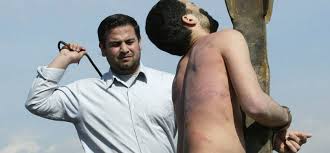 Mohammed Bijeh was an Iranian serial killer. He confessed in court to raping and killing 16 young boys between March and September 2004, and was sentenced to 100 lashes followed by execution. All the boys were between 8 and 15 years old. In addition, he killed two adults. On March 16, 2005, in Pakdasht, Iran, the town near the desert area where the killings occurred, in front of a crowd of about 5,000, Bijeh's shirt was removed and he was handcuffed to an iron post, where he received his lashings from different judicial officials. He fell to the ground more than once during the punishment but did not cry out. A relative of one of the victims managed to get past security and stab Bijeh. The mother of one of the victims put a blue nylon rope around his neck, and he was hoisted about 10 meters in the air by a crane until he died.
 -
 During the 1970s and 1980s, the victims of Kraft were among the many dead bodies found near highways in California. While the investigators believed the murders to be the work of a single serial killer, who was dubbed "The Highway Killer", there were two other perpetrators, William Bonin and Patrick Kearney, besides Kraft, who was the last of the three to be caught. In all cases, the victims were males who suffered some kind of sexual abuse and torture before being killed. Kraft's killings are believed to have started in 1971, the victim being Wayne Joseph Dukette, though Kraft was never convicted of his murder. He was first arrested on suspicion of murder when the severed head of one of his victims, Keith Crotwell, was found near the Long Beach Marina. Since he had been seen getting into a car revealed to be Kraft's, he was questioned as a suspect, but he claimed he let him ride along with him and then let him off at an all-night café. Kraft was released due to a lack of evidence. He was caught for the last time, just after 1:00 a.m. on May 14, 1983, when the California Highway Patrol pulled him over for driving under the influence. When the officers looked into his car, they saw a man who appeared to be sleeping in the back seat. When they opened it, they found him to be dead, with obvious signs of foul play. The man was Terry Gambrel, a 25-year-old U.S. Marine officer and Kraft's final victim, and had been strangled with his own belt. When a search warrant for the car was obtained and carried out, the police found tranquilizers and prescription drugs inside as well as an envelope containing 47 photographs of young men, most of them either dead or seemingly asleep, in pornographic poses. There was also a lot of blood on the passenger seat, even though Gambrel didn't have any lacerations on his body. Kraft's "score-card". When his home was searched as well, more evidence was found, including possessions of murder victims and Kraft's "score-card", on which he listed his victims by strange nicknames related to their locations or personal habits, such as "Deoderant", "New Year's Eve", and "Iowa". Kraft claimed the terms on the list referred to sexual encounters he'd had and other mundane things. In the end, Kraft was charged with 16 murders, among them a John Doe who was nicknamed as "Airplane Hill" on the "score-card" who wasn't identified until 1995, his real name being Kevin Clark Bailey. He was found guilty on all counts as well as some other related charges of sodomy and torture. At first, he was sentenced to death (for which he became briefly acquainted with William Bonin, another "Freeway Killer" on death row), but the sentence was upheld in 2000. He once pursued a lawsuit against a true crime writer who had written a book about his case, titled Angel of Darkness, as well as his publisher for $62 million in damages, claiming that the way he was portrayed in the book had smeared his "good name" and hurt his "prospects for future employment". Needless to say, the lawsuit was dismissed as frivolous. Kraft continues to serve his sentence at the San Quentin death row to this day.
 -
 Irina Gaidamachuk, a 41-year-old mother of two in the remote Urals region town of Krasnovfimsk, had a big thirst for vodka. But her husband Yury wouldn't give her money to buy the drink. So, Irina decided to earn it herself. From 2003 until June 2010, Gaidamachuk, by posing as a social worker, gained entry into the flats of women living on government pensions. Using this ruse, she used a hammer to smash the skulls of 17 women between the ages 61 and 89. Each murder brought a small amount of cash from the victims's purses. Following Gaidamachuk's arrest in June 2010, the accused serial killer confessed that she had murdered these women for vodka money. At her trial in western Russia's Yekaterinburg, the country's fourth largest city, three psychiatrists testified that the defendant was sane when she hammered her victims to death. Gaidamachuk was charged with 17 counts of murder and 1 attempted murder. Forensic psychiatric examination conducted in GNTSSSP Serbsky showed that Gaidamachuk, although she showed some variation in the mind, was legally sane at the time of the murders. In February 2012, the court case began. Gaidamachuk gave a confession to the indictment during the preliminary investigation; but, contested this throughout her trial. On June 12, 2012, Gaidamachuk was sentenced to 20 years in prison.
 -
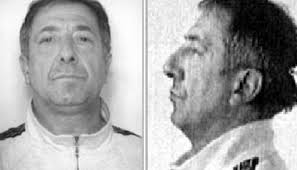 On May 15, 1998, Donato Bilancia, confessed to a string of slayings in the Italian Riviera, saying he was mentally ill, suddenly flipped and could not explain his 90-day long serial killing spree. He spent seven hours through the night smoking and confessing to the magistrate in charge of his case to the tune of 18 murders, 15 of them since October. "He expressly asked for treatment because he is not able to realise what he has done. He cannot explain to himself what happened: something suddenly went off in him," the lawyer said. The confessed killer, who was arrested May 6, added that he had acted alone and on his own initiative. Prosecutors in Genoa said they now have evidence linking a Donato Bilancia to the killing of two women on trains around the Italina Riviera. Sources close to investigation confirmed that prosecutors had found gunpowder on the clothes of the two women shot dead in the toilets of trains to the crime scenes of the six murdered prostitutes. Police said Bilancia was also under investigation for the murder of a money-changer near Ventimiglia on the French border in March and of a gas station attendant killed on the highway between Ventimiglia and the Mediterranean port city of Genoa in April. They have also reopened the case of a October 1997 shooting of a newlywed couple in their apartment in Genoa. A second official arrest warrant was issued for Bilancia in connection with the murder of two security guards shot dead last year when they went to the aid of a transvestite being attacked. The transvestite, called Julio Castro and known as "Lorena," pointed out Bilancia as the alleged assailant in an police lineup. Police revealed that one of the train murders took place on the same Genoa-Ventimiglia line where Bilancia's brother, Michele, threw himself and his small son into the path of an oncoming train 11 years ago. Bilancia, whose Genoa apartment was found to contain porn videos, syringes, and a statue of a phallus, said he bought a .38 Smith & Wesson revolver last year with 50 bullets and, "after firing a few practice rounds", set about killing a string of people after he was betrayed by people he knew in the local gambling world. In a lurid 14-page confession, the feared Riviera Serial Killer calmly recounted in detail how he had killed a gas station attendant, two goldsmiths, two bureau de change operators, two women in train lavatories, three security guards, four prostitutes, an underworld gambling figure and his wife, and a fellow gambler. He started his murderous rampage with the killings of the underworld gambling figure Maurizio Parenti and his wife Carla. Next came the fellow gambler, Giorgio Cenentaro, who he strangled with adhesive tape. Donato said he murdered a prostitute "for each nationality" that worked his city's streets. His penultimate murder victim was Elisabotta Zoppetti, a 32-year-old nurse from Milan, who was returning home on a high-speed train from a weekend on the Riviera. "I got on the train at Genoa. In first class there was a woman," said Bilancia. "I didn't know her. I waited until she went to the lavatory, taking her bag with her. I opened the door with a false key. She screamed. I put her jacket over her head and fired. I had got on with the intention to kill. The victim had to be a woman, even if I never touched her." His last victim, Maria Angela Rubina, 32, also died in the bathroom of a train. "I did it like the other one," he told police. "Very quickly." On April 12, 2000, Donato Bilancia, 49, was sentenced by a Genoa court to 13 life sentences. Bilancia, a compulsive gambler, confessed to slaying 17 people in a six-month killing spree on the Italian Riviera.
 -
Serial Killer: Pedro Pablo Nakada Ludeña (Apostle of death)
Midnight Man posted a article in Celebrity
 Pedro Pablo Nakada Ludeña was born on February 28, 1973 in Lima, Peru. He was reportedly abused by his family from a young age. His sister's would have him dress up as woman and his father was an alcoholic who would abuse his mother. He was also raped by his brothers after they thought that he had killed a dog. Ludeña claimed to have tortured animals as a child. Ludeña killed his victims with 9mm pistols that were equipped with rubber silencers that he had made from slippers. He claimed of wishing to cleanse the Earth by eliminating drug addicts, prostitutes, homosexuals, and criminals after being commanded by God to do so. Authorities from the homicide divisions of the Peruvian National Police in Lima and Huaral arrested Pedro Pablo Nakada Ludeña 33, prime suspect of the murders of more than 13 people in the northern provincial city of Huaral. Dubbed the "Apostle of death," Ludeña was arrested along with Christian Garcia Ponzino 26, after resisting arrest during a shootout with police authorities. While in custody, Ludeña confessed to the murders and told police he killed people who deserved to die. He added that he was ridding society of what he considered to be bad seeds. Garcia, who maintains his innocence, and Ludeña worked together at a mechanic's shop in Huaral. He was convicted of 17 murders and confessed to killing 25. He was sentenced to the maximum of 35 years in prison.
 -
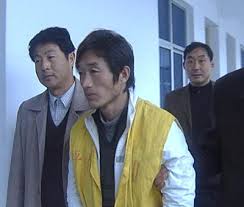 Huang Yong was a Chinese serial killer accused of murdering 17 teenage boys, although he is suspected of 25 murders, between September 2001 and 2003.In 2003, Huang Yong confessed to murdering 25 young men and boys. His motive: He wanted to know what it felt like to be an assassin. He specifically targeted young males, because older men were too vigilant and killing females would make him less of a “hero.” He began killing in September 2001 by luring boys from video halls and Internet cafes to his house under the guise of getting them jobs or funding their education. He would tie them to a noodle processing machine he called the “intelligent hobbyhorse” before suffocating them to death with a cloth. He then kept their belts as souvenirs. He was arrested in November 2003 after a would-be victim, a 16 year-old boy named Zhang Liang went to the police. The investigators at first were not convinced of Liang’s story but the boy claimed that Huang had invited him to his apartment by offering him a job. Once he got there, Huang tried to strangle him and that he went into unconsciousness three times. After, when the young boy awoke, Huang said to him “I killed at least 25 people. You’re number 26″ but Liang escaped and reported him to the police. The police found the bodies of more than 12 boys in his apartment. Huang Yong was convicted for 17 of the 25 murders. He was sentenced to death during a three-hour-long trial in December 2003. Over 300 people attended the trial, and the court installed loudspeakers so that people outside could hear the proceedings.