


Midnight Man
-
Posts
2,389 -
Joined
-
Last visited
-
Days Won
2
Content Type
Profiles
Articles
Calendars
module__media_media
Everything posted by Midnight Man
-
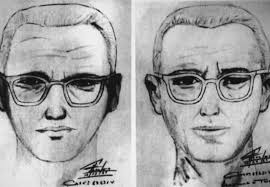 The notorious and very bizarre serial killer who called himself The Zodiac remains one of the world's great unsolved cases. In Oct., 1966, a girl was viciously murdered in Riverside, California when she permitted a man to help start the car that he had intentionally disabled when she was in her school library. This homicide began a ghoulish series of murders that panicked the people of the San Francisco area. For years the Zodiac taunted the police with weird ciphers, phone calls, insulting and cryptic messages.Even though police investigated over 2,500 potential suspects, the case was never solved. There were a few suspects that stood out, but the forensic technology of the times was not advanced enough to nail any one of them conclusively.
 -
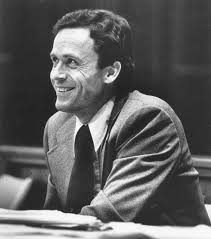 The most frightening of serial killers: a handsome, educated psychopathic law student who stalked and murdered dozens of young college women who looked very much like a young woman who broke off her relationship with him. Bundy was a very adept and glib con artist who faked a broken arm in a sling to convince young women to help him carry his textbooks to his car. Once there, he battered them with a baseball bat and carried them off for ghoulish rituals.
 -
 Acker Bilk Ann B. Davis Ariel Sharon Ben Bradlee Bob Casale Bob Hastings Bob Hoskins Bobby Keys Bobby Womack Carmen Zapata Carol Ann Susi Casey Kasem Charles Keating Charlie Haden Christopher Jones Chuck Noll Clarissa Dickson Wright Dave Brockie Dave Madden David Brenner Dick Jones Diem Brown DJ E-Z Rock DJ Rashad Don Pardo Don Zimmer Edward Herrmann Efrem Zimbalist Jr. Eileen Ford Elaine Stritch Eli Wallach Elizabeth Norment Elizabeth Peña Eric Hill Eric "The Actor" Lynch Frank Marth Gabriel Garcia Marquez Garrick Utley Geoffrey Holder Gerald Wilson Gerry Goffin Glen A. Larson Harold Ramis Henry Lee Jackson (Big Bank Hank) Horace Silver Howard Schultz Jack Bruce James Brady James Garner James Hellwig (The Ultimate Warrior) James Rebhorn James Shigeta James Traficant Jan Hooks Jerry Coleman Jerry Vale Jim Lange Jimi Jamison JJ Murphy Joan Mondale Joan Rivers Joanne Borgella Joe Cocker Joe McGinniss Joe Sample John Henson John Pinette Johnny Winter Juanita Moore Kate O'Mara Ken Weatherwax Kevin Sharp L’Wren Scott Larry D. Mann Lauren Bacall Luis Avalos Luise Rainer Mae Young Malik Bendjelloul Marcia Strassman Maria von Trapp Marian Seldes Marilyn Burns Mary Ann Mobley Mary Rodgers Matthew Cowles Maximilian Schell Maya Angelou Meshach Taylor Michael Gottlieb Michael Johns Mickey Rooney Mike Nichols Misty Upham Monica Spear Nadine Gordimer Nancy Motes Orlando Thomas Oscar de la Renta Oscar Taveras P.D. James Paco de Lucia Patsy Byrne Paul Mazursky Peaches Geldof Pete Seeger Peter Matthiessen Phil Everly Phillip Seymour Hoffman Phyllis Frelich Polly Bergen Ralph Waite Richard Attenborough Richard Bull Richard Kiel Richard Schaal Rik Mayall Rob Bironas Robert Halmi Sr. Roberto Gomez Bolaños Robin Williams Roger Hill Roy Garber Rubin "Hurricane" Carter Ruby Dee Russell Johnson Ruth Robinson Duccini Ryan Knight Sarah Goldberg Sarah Marshall Saul Zaentz Scott Kalvert Sean O'Haire Sheila MacRae Shirley Temple Sid Caesar Simone Battle Stephanie Moseley Tom Magliozzi Tom Sherak Tommy Ramone Tony Gwynn
 -
 Dean Corll was a 33-year-old electrician living in Houston, Texas, who with two teen accomplices was responsible for kidnapping, torturing, raping and murdering at least 27 young boys in Houston in the early 1970s. The Houston Mass Murders, as the case was later called, became one of the most horrific series of murders in U.S. history. He was born in Fort Wayne, Indiana, to Mary Robinson and Arnold Corll. After his parents divorced, Dean and his brother Stanley moved with their mother to Houston, Texas. Dean seemed to adjust to the change, kept a good grade average and was described by teachers as being polite and well-behaved. In 1964, Corll was drafted into the military, but was released on a hardship discharge a year later so he could return home to help his mother with her growing candy business. It was there that he earned the name, The Candy Man, because often he would treat children to free candy. After the business closed his mother moved to Colorado and Dean began training to become an electrician. There was nothing remarkable about Corll except for his odd choice of friends, who were mostly young male teens. Two, who were particularly close to Corll, was a 14-year-old boy named Elmer Wayne Henley and a 15-year-old boy named David Brooks. The three spent much time hanging around at Corll's house or driving with him in his van. That was until August 8, 1973, when Henley shot and killed Corll at his home. When police interviewed Henley about the shooting and searched Corll's home for evidence, a bizarre and brutal story of torture, rape and murder began to unfold. While in police custody, Henley began to tell about his relationship with Corll. He said Corll paid him $200 or more "per head" to lure young boys to his house. Most of the boys were from low-income Houston neighborhoods and were easily persuaded to come to a party where there would be free alcohol and drugs. Many were also childhood friends of Henley and had no reason to distrust his intentions. But once inside Corll's home, they would soon become victims of his sadistic and murderous obsessions. Police skepticism towards Henley's story turned after searching Corll's house. Inside they discovered a bedroom that looked as if it was designed for torture and murder. There was a board with handcuffs attached, ropes, a large dildo and plastic covering the carpeted floor. There was also an odd wooden crate with what appeared to be airholes cut into it. When Henley described what had happened before shooting Corll, the items in the room corroborated his story. According to Henley, he made Corll furious when he brought his young girlfriend over to the house with another friend, Tim Kerley. The group drank and did drugs and each fell asleep. When Henley awoke, his feet were bound and Corll was handcuffing him to his "torture" board. His girlfriend and Tim were also bound with electrical tape over their mouths. Henley was fully aware of what was to follow, having witnessed this same scenario before. He managed to convince Corll to free him by promising to participate in the torture and murder of his friends. Once free, he went along with some of Corll's instructions, including attempting to rape the young woman. Corll meanwhile, was trying to rape Tim, but the young boy fought so much Corll, frustrated, left the room. Henley immediately went for Corll's gun which he left behind. When Corll returned, Henley shot him six times, killing him. Over the next few days, Henley readily talked about his part in the murderous activity in Corll's house. He led the police to where many of the victims were buried. The first location was a boatshed Corll rented in southwest Houston. There police uncovered the remains of 17 of the boys Corll had murdered. Ten more bodies were found at various other burial sites in or near Houston. Altogether there were 27 bodies recovered. An examination of the victims determined that some of the boys had been shot, others strangled to death. Signs of torture were visible, including castration, objects inserted into the victim's rectums and glass rods pushed into their urethras. All had been sodomized. There was much criticism launched at the Houston police department for failing to investigate the many missing person's reports filed by the parents of the dead boys. The police viewed most reports as probable runaway cases although many of them came from the same area or neighborhood. The ages of the young victims ranged from ages nine to age 21, however most were in their teens. Two of the families suffered losing two sons to Corll's deadly rage. Henley confessed to knowing about Corll's brutal crimes and also to participating in murdering one of the boys. Brooks, although closer to Corll than Henley, told police that he had no knowledge of the crimes. After the investigation ended, Henley insisted there were three more boys who had been murdered, but their bodies were never found. In a highly publisized trial, Brooks was found guilty of one murder and sentenced to life in prison. Henley was convicted of six of the murders and sentenced to six 99-year-terms. He was not convicted of killing Corll because it was judged as an act of self-defense.
 -
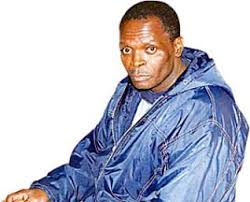 David Thabo Simelane was born in Swaziland in 1956 and grew up in Ngcoseni. He is a Swazi serial killer who caused havoc from the late 1990s until late 2001. His murder spree began in 1997, around the time he was released from prison for a prior conviction of rape. It was one of the many times, about 18, since 1976 that he had been convicted of robbery and rape. The last conviction was significant because he would later claim that he had robbed the woman but he had never raped her. For him, the 28 women and children he would later kill were revenge for the wrongful conviction. Simelane lured most of his victims to the woods of Malkerns with job prospects where he would then kill and bury them in shallow graves. He seemed to have had an accomplice called Vilakati on whose farm the first six bodies were uncovered in July 2000. Two Mozambicans he hired to dig the graves tipped off the police who then launched a manhunt for Vilakati. They found him eight months later and chased him through a maize field before they shot him dead. After his arrest, Simelane led the police to shallow graves in Manzini where 45 bodies were found, including several pregnant women. Many of them had been strangled but some had been stabbed with a knife. Simelane was found guilty of a total of 28 murders and acquitted of six. He was sentenced to death in 2011; seven years after his trial began. A total of 83 witnesses testified against him. He claimed that he had been tortured and coerced to confess to the murders.
 -
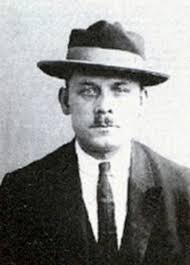 Not much of Karl Denke’s early life has been recorded aside from the fact that he was a terrible student and ran away from home at age 12. 25 years old when his father died, Karl used the inheritance to buy property in the small town of Münsterberg - today known as Ziębice - about 60km south of Wrocław. In Münsterberg, Karl was known as a generous, caring and devout local citizen, even referred to by some as ‘Vater Denke’ or Father Denke. He carried the cross at Evangelist funerals and played the organ during church services. Despite living a lower middle-class lifestyle, he helped beggars and travellers, giving them a place to stay if they were in need. He didn’t drink alcohol and he wasn’t known to have relationships with women. Like many in Germany after WWI, however, he lost his savings due to rampant inflation and was forced to also sell his house, though he continued to rent an apartment in the building on the ground floor. Well-liked and respected around town, Denke regularly sold suspenders, belts, shoelaces and other leather goods in the local market and sometimes even door to door. He also frequently travelled to Breslau (now Wrocław), where he was licensed by the Butchers Guild to sell pork in the city’s markets - all of it boneless, pickled and in jars. It was a time of crisis and his goods were popular, allowing him to maintain a decent enough living. By now you can probably guess where this is going. Denke’s double life unraveled quickly when on December 21st, 1924 a vagrant appeared at the Münsterberg police station covered in blood, claiming he had barely escaped from Father Denke’s apartment with his life. Police were loath to believe the unknown beggar, but a brief medical examination revealed that he had sustained a serious head wound, corroborating his story that he had been attacked with an axe. Police went to question Denke, who explained that he had indeed attacked the vagrant as the man was attempting to rob him after receiving a handout. Denke was taken to the police station and put in a holding cell for the night, only to be found dead when an officer went to look in on him later that same night. He had hung himself with a small handkerchief. It was not until the corpse had been turned over to relatives and the police went to Denke’s apartment to secure his belongings on Christmas Eve that the people of Münsterberg discovered exactly what kind of man had been living among them. What authorities discovered inside was essentially a meat processing shop that lab tests would later confirm was full of human remains, including hundreds of bones, stretched and dehydrated human skin, tubs of fat, jars of meat pickling in brine, and a closet full of blood-stained clothing, as well as the tools for the work, including equipment for making soap. Dozens of documents and identification papers were also found, including Denke’s own extensive ledgers detailing his work, from which authorities were able to positively identify the names of 20 victims – most of them recently released from prisons and hospitals. Based on all the evidence found in Denke’s apartment, it is believed that the formerly high-standing citizen was actually responsible for murdering, dismembering, pickling and processing more than 40 people in a rather short span of 3-4 years. Needless to say, despite the holiday, there was a dip in pork sales in Breslau that Christmas.
 -
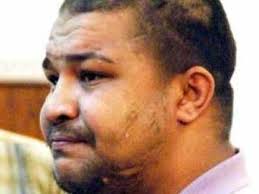 Ramadan Abdel Rehim Mansouralso- Al-Tourbini ('Express Train'). Egyptian street gang leader and serial killer who raped and murdered at least 32 children in the course of seven years. All of his victims were 10 to 14 years old, most of them boys. The gang would lure street children onto the carriage roof of the trains, where they then raped and tortured the children, and tossed them onto the trackside, dead or barely alive. Some of the children were dumped into the Nile, or buried alive.
 -
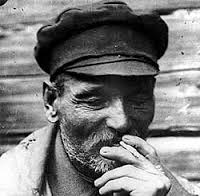 During the early days of Stalin, Vasili Komaroff was a horse-trader known as "The Wolf of Moscow". Vasili mainly killed for money. His first victim was uncovered in 1921. Twenty-one victims in all were found either strangled, bound, doubled-over and dumped in vacant lots around the Shabolovki District. Authorities linked the killings to the horse-trading market in Moscow that happened every Wednesday and Friday. Authorities soon discovered, anyone whom left with Vasili to see his horses were never to be seen or heard from again. Police found his latest victim stuffed in a sack in the stable upon questioning him. Panicked, "The Wolf of Moscow" jumped out the window and escaped. Several days later he was picked up and confessed to thirty-three murders, eleven not under investigation. Within the next few days he uncovered five new corpses for the authorities. The other six victims he dumped in the river and their bodies were never recovered. Vasili named his wife Sofia as an accomplice in which they were both found guilty of multiple homicides and sentenced to death. On June 18, 1923, they were disposed of via firing squad.
 -

Serial Killer: Ali Asghar Borujerdi (Asghar the Murderer)
Midnight Man posted a article in Celebrity
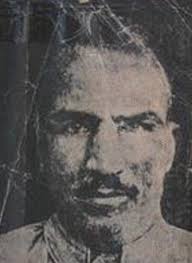 Ali Asghar Borujerdi is the first Iranian serial killer and rapist reported in the 20th century. Moving to Iraq as a child with his family, he started assaulting, raping and latermurdering adolescent boys in Baghdad since he was fourteen years old. Escaped back to Iran in 1933, he continued his murders in Tehran where he was eventually arrested and executed. Asghar Qatel was convicted for raping and killing 33 young adults eight in Tehran and the rest in Baghdad. Ali Asghar Borujerdi was born in 1893 in Borujerd, Western Iran. His father, Ali Mirza, was a famous road thief attackingcaravans around Borujerd, Malayer and Persian Iraq - central parts of modern Iran including Qom, Saveh and Arak. His family, including Ali Aghar, his mother, and his siblings left Borujerd to the holy city of Karbala in Iraq when Asghar was eight years old. Six years later, when Ali Asghar was fourteen, he moved on to Baghdad, where he started to sexually abuse adolescent boys. He learned to kill them in order to get rid of police who were observing him for assaulting and raping young adults. According to his testimony, he killed 25 people in Iraq before escaping back to Iran. In 1933, Ali Asghar was about to be reported to police after he was watched by another boy while he was raping and killing the last Iraqi teenager. Soon he found out that it was unsafe to stay in Baghdad, and as a result he immediately escaped back to Iran. Asghar did not go back to his hometown of Borujerd. Instead he started his new life in the capital city of Tehran, where soon he found it easy to trace and hunt new victims.
 -
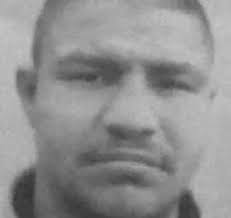 Hadj Mohammed Mesfewi was a Moroccan serial killer who was found to have killed at least 36 women. He was a cobbler and public letter writer. The bodies of 26 women were found under his shop and an additional ten were found buried on property owned by Mesfewi. He was aided by a 70-year-old female accomplice named Rahali, also reported as Annah, during the course of the murders. They would lure young women to dinner, administer a narcotic, and then murder them in their sleep. The victims were then robbed of any valuables they possessed and subsequently buried. They were also mutilated with a dagger.
 -
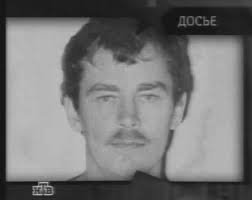 Gennady Mikhasevich does not fit the profile of the typical serial killer. He lived a relatively normal life, even after he began killing. Born in 1947, he spent time serving in the Soviet army, married and had two children, and was an active participant in the Communist Party and other volunteer organizations. The turning point, if Mikhasevich is to be believed, was after he left the army and returned home to find his girlfriend at the time had left him and remarried. He was planning on killing himself in May of 1971, even to the point of having a noose with him, when by chance he met a woman. His suicidal impulses instead turned murderous and he vented his anger by strangling the girl to death. His next victim came later that year, in October, with two more the following year. In the meantime, he was attending technical school and acting the model citizen. Those who knew him had no suspicion that he was capable of such crimes. As the killing continued, Mikhasevich volunteered with the local police department, helping to track down the person responsible for the killing. He even conducted some of the interviews of those suspected of being involved. His victims were all women, killed by strangulation. Some of these were accompanied by rape. He would generally lure them into his car by offering them a ride and then take them to an isolated place to kill them. He sometimes used his scarf to strangle them, but is also known to have improvised with whatever happened to be at hand. Sometimes he would rob his victims as well, giving the more expensive items as gifts to his wife. The police had been hunting down the person responsible for the killings since 1973, though it took them quite a while to finally catch up with Mikhasevich. The corruption of the Soviet police department meant that many shortcuts were taken so that investigators could promote their own careers. Several others were arrested for the murders and some of them even executed. This left Mikhasevich free to continue his spree. In 1984, he stepped up his killing, claiming 14 victims. Another 12 women were killed the following year. In order to throw the police off his trail, Mikhasevich left a note claiming that the murders were politically motivated. This proved to be his undoing, as the police managed to match his handwriting to that of the note. He was eventually arrested on December 9th, 1985. He resisted at first, but later admitted to the killings and led the police to where he had hidden his victims’ belongings. Gennady Mikhasevich was convicted and executed by firing squad.
 -
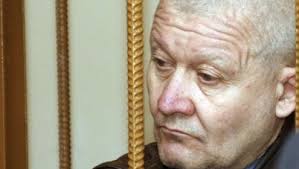 Serhiy Tkach was actually a Ukrainian police criminal investigator turned serial killer. Originally from Russia, he confessed to killing over 100 people. Suffocation and strangulation were his favorite ways to complete his evil deeds. He was also known to perform necrophilia upon these victims. The victims were females from 8 to 18 years of age. One of the worst serial killer may have been caught in Ukraine, according to local police. Prosecutors claim a former forensic expert Sergey Tkach has confessed to killing 40 people, but 60 other deaths are unsolved. It’s alleged that Tkach went on a murder spree for the past 25 years, mainly targeting girls and young women. He is said to have looked for his victims near the roads and railways to make detectives think that the killer came from another city. He reportedly left no clues and used the tracks to escape. Tkach was arrested two years ago at home after allegedly strangling his friend’s daughter. He says he was finally caught when other children from the village recognised him at the funeral as the man who’d been seen with the girl before she died. When police arrived at his door, he surrendered and said that he had been waiting for them all these years. ”He told us that he was a military officer and that he was in Afghanistan, he even showed us his wounds. Other neighbours say that he was a very smart man, very quiet. No one could have thought that he was the man police were looking for,” said Viktoria Kozachukhno, Sergey Tkach’s neighbour. Tkach married three times and has four children. His co-workers and friends say he never treated or spoke about women badly. Meanwhile, detectives believe there was a sexual motive behind the attacks. ”Twenty or 25 years on he still remembers how tall the girls were, and where he hunted them down. I think that he’s even proud of it. Usually such people shut down but he is savouring every part of the story in front of a camera,” commented Viktor Olkhovsky, police colonel, but the accused man says he only did it to mock the incompetence of his former police colleagues. Police say Tkach has pleaded guilty to numerous crimes but refused to apologise for any of them. Psychologists have found him fit to stand trial, and it is not only the families of the victims who are anxiously waiting for a verdict. Up to ten men have been previously convicted for crimes, that Tkach now claims to have committed. The court hearings are held in private because most victims were underage girls.
 -
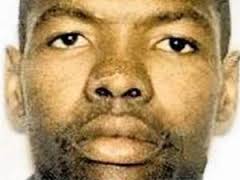 Moses Sithole was found guilty of 38 murders and 40 rapes in 1997. Born in South Africa on November 17, 1964, Moses Sithole is considered one of South Africa's worst serial killers. In 1997, Sithole was found guilty of 38 murders and 40 rapes. A significant number of Sithole's victims were never identified. Moses Sithole, one of five children, was born in Vosloorus, near Boksburg in the Transvaal Province of apartheid (now Gauteng), South Africa, on November 17, 1964, to Simon and Sophie Sithole. His childhood of poverty was exacerbated after his father died and his mother, unable to support the children, abandoned them at a local police station. They were placed in an orphanage in Kwazulu Natal, but systematic abuse provoked the teenage Sithole to run away after three years, seeking refuge first with his older brother Patrick before going to work in the Johannesburg gold mines. Sithole was sexually precocious from an early age, but his relationships were short-lived. Some have surmised that his mother’s abandonment of her children might have played a role in his aggressive attitudes toward women. He also reportedly told some of his rape victims about his own bad experiences at the hands of a previous girlfriend. Sithole has been described as a handsome and charming man, and most of his victims were enticed to their assaults, and often deaths, in broad daylight, with promises of employment opportunities that would never materialize. His social ease and intelligent demeanor made the string of brutal assaults even more chilling, and he was eventually charged with 38 murders and 40 rapes. A significant number of Sithole’s victims were never identified. It is not known when Sithole raped his first victim, but his first recorded incidence of rape occurred in September 1987, involving 29-year-old Patrica Khumalo, who testified at his 1996 trial. Three other known rape victims came forward, including Buyiswa Doris Swakamisa, who was attacked in February 1989. She made a police report at the time that resulted in Sithole’s arrest and trial. In 1989, he was jailed in Boksburg Prison for six years for the rape of Swakamisa. Sithole maintained his innocence throughout the trial and was released early, in 1993, for good behavior. Perhaps Sithole learned a lesson from his time in jail: that rape victims left alive can produce consequences. It is not known how soon after his release that he began his rape and killing spree, but between January and April 1995 in Atteridgeville, west of Pretoria, four bodies of young black women who had been strangled and probably raped were discovered. This began a chain of events that unearthed an appalling litany of brutality and death. When newspapers became aware of the similarities in the killings of each victim, police were forced to admit that a serial killer might be operating in the area. The discovery of the body of one victim’s 2-year old son incited further media coverage, but in a society inured to violence, media interest was relatively brief. However, over the next few months in the vicinity of Pretoria, the recovery of several bodies all sharing the same gruesome pattern of having been raped, tied up and strangled with their own underwear gave the public pause. On July 17, 1995, a witness saw Sithole acting suspiciously while in the company of a young woman; the witness then discovered her body when he went to investigate. Unfortunately, the witness had been too far away to identify the killer. A special investigating team was established within the Pretoria Murder and Robbery Unit to determine whether the murders conformed to a pattern, but the method of attack varied to such an extent that it was impossible to be certain that one killer was responsible. As more victims were identified and as the chronology of deaths, rather than the discovery of their bodies, became apparent, clear evidence showed that the killer was evolving his murder technique to extract the greatest pain from his victims, assumedly increasing his own pleasure. His means of approach was also clarified: In a significant number of cases, the victim had been meeting someone who had promised them employment. On September 16, 1995, a body was discovered at the Van Dyk Mine near Boksburg. Further investigation revealed mass graves. Forensic experts recovered 10 bodies in varying degrees of decomposition over the next 48 hours. Investigators were certain that the Boksburg bodies were linked with the victims at Atteridgeville. Media attention was intense throughout the recovery operation, and even President Nelson Mandela visited the scene of the grisly discoveries. Public concern increased with the media coverage, and local authorities sought external help from retired FBI profiler Robert Ressler, who arrived on September 23, 1995. He assisted in developing a profile of the serial killer. The profile indicated that an intelligent, organized individual with a high sex drive was responsible and was operating with a growing sense of confidence, perhaps with the assistance of a second killer.
 -
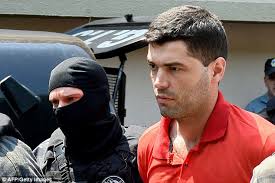 Tiago Henrique Gomes da Rocha is a former Brazilian security guard who has claimed to have killed 39 people. Brazilian police said Thiago Henrique Gomes da Rocha, 26, targeted women, homeless people and homosexuals in the country’s central state of Goias. Rocha was arrested, in his confession of the alleged murders, he said he killed because of his feelings of “fury,” which he felt “against everything” according to police.
 -
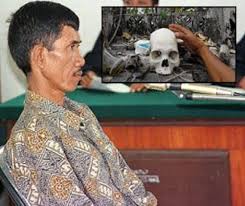 On May 2, 1997, self-described Indonesian witch doctor Ahmad Suradji was arrested by authorities after three bodies were found buried in a sugarcane plantation near his home on the outskirts of Medan, the capital of North Sumatra, Indonesia. Ahmad, also known as Nasib Kelewang or Datuk Maringgi, initially confessed to killing 16 women over a five-year slaying period. Upon further searching of Ahmad’s property, clothes and watches belonging to 25 missing women were uncovered. After further questioning the 48-year-old cattle breeder increased the body count of his 11-year rampage to 42. Ahmad’s three wives, all sisters, were also arrested for helping him commit the murders and hide/dispose of the corpses. The oldest wife, Tumini, was tried as his accomplice in his 11-year rampage. The self proclaimed sorcerer was revered by locals who believed he had paranormal powers, and often asked him for medical and spiritual advice. Many women would hire him to cast magic spells in order to keep the faithfulness of their husbands or boyfriends. Neighbors said that many women sought the sorcerer’s help believing they would become richer, healthier and more sexually attractive to men. Police believe the victims—ages ranging from 11 to 30—may have been too embarrassed to tell their families that they were seeking the sorcerer’s help so their disappearances were not linked to him. A great deal of the victims were prostitutes. This serial killer would charge each victim $200 to $400, and then he would take them to a sugarcane plantation near his home and bury them in the ground up to their waist as part of a magic ritual. Once in the ground he would proceed to strangle each woman with an electrical cable. Then he would drink their saliva, undress their corpse and rebury them with their heads pointing to his home so that he would enhance his magical powers. Suradji told police that nine years ago he had a dream in which the ghost of his father told him to kill 70 women and drink their saliva in order to become a Dukan, or mystic healer, he confessed to the authorities. The sorcerer, Ahmad Suradji, was said to be widely respected in his village. Neighbors said he was often willing to help sick villagers and contribute to charitable causes. Nasib, who led police to the bodies in the field next to his home, told officers he needed to kill up to 70 women to gain paranormal/supernatural powers. Now that the unearthing of 40 corpses testify to Nasib’s true dementia, police have asked local residents to report any more missing women and children. About 80 families in the area have reported female relatives missing, leading to fears that more bodies could be uncovered in the future. During the trials, both Suradji and Tumini, denied the slayings, saying they confessed because they could no longer bear torture by interrogators. On April 27, 1998, an Indonesian court in North Sumatra found the sorcerer guilty of Indonesia’s worst killing spree. As the last of the 42 bodies was being unearthed, the deadly sorcerer was sentenced to death by firing squad.
 -
 Wáng Qiáng was a serial killer from Budayuan Town, Kuandian Manchu Autonomous County, Liaoning, China and one of the most notorious murderers and rapists in Chinese history. Wang grew up in the small village of Kaiyuan, Liaoning city. His father was abusive, addicted to drinking and gambling, and denied Wang the chance to enter school. Wang committed his first murder on Jan 22, 1995. He was finally arrested on July 14, 2003. Official records show he was convicted of 45 murders and 10 rapes. Some young girls were raped post-mortem. Wang never lost any sleep or his appetite after killing. He was executed in 2003 for the 45 murders.
 -
Serial Killer: Alexander Pichushkin (The Chessboard Killer)
Midnight Man posted a article in Celebrity
 Russian serial killer Alexander Pichushkin, nicknamed "The Chessboard Killer," was caught in Moscow and convicted in 2007 of killing 48 people. Following his arrest the police discovered a chessboard with dates on all but two of the squares, apparently connected to the murders he committed. Due to the gruesomeness and number of murders, Russians considered reinstating the death penalty. He was born April 9, 1974, in Mytishchi, Moscow. Known as the Chessboard Killer, Pichushkin was convicted of murdering 48 people in Moscow in 2007. He appeared to be in competition with one of Russiaís most well-known serial killers, Andrei Chikatilo, who was convicted of 52 murders in 1992. Little is known of Pichushkin's early years. He had some type of head injury around the age of four and spent time in an institute for the disabled as a child. Around the time of Chikatilo's trial in 1992, Pichushkin committed his first murder. He was just a teenager when he pushed a boy out of a window, according to Pichushkin's televised confession. While the police did question him in the case, it was later declared a suicide. "This first murder, it's like first love, it's unforgettable," he later said. Pichushkin's murderous impulses lay dormant for years until he began killing people in Moscow's Bittsevsky Park in the early 2000s. Often targeting the elderly or the destitute, he lured his victims to the park to reportedly drink with him at his dead dog's grave. There appears to be some kernel of truth to this story. After the loss of his grandfather, with whom he shared a close bond, Pichushkin became depressed. He got a dog that he often walked in the park. It is unknown whether the dog is actually buried there, however. Pichushkin waited until his intended victim was intoxicated and then he hit him or her repeatedly with a blunt instrument - a hammer or a piece of pipe. To conceal the bodies, he often threw his victims into a sewer pit. Some of them were still alive at the time and ended up drowning. As the killings progressed, Pichushkin's attacks grew even more savage. He left a broken vodka bottle sticking out of some victims' skulls and seemed to care less about disposing of the bodies, just leaving them out in the open to be discovered. By 2003, Moscow residents -- especially those that lived near the park - feared that there was a serial killer on the loose. Newspapers nicknamed Pichushkin the "Bittsevsky Maniac" and "The Bittsa Beast." Authorities finally caught up with Pichushkin in June 2006 after he killed a woman he worked with at a supermarket. She had left a note for her son to tell him that she was taking a walk with Pichushkin. While he was aware of the risks involved in killing his co-worker, he still murdered her.
 -
Serial Killer: Anatoly Yuriyovych Onoprienko (The Beast of Ukraine)
Midnight Man posted a article in Celebrity
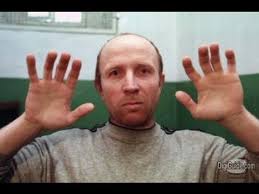 Anatoly Yuriyovych Onoprienko was a Ukrainian serial killer andmass murderer. He is also known by the nicknames "The Beast of Ukraine", "The Terminator", and "Citizen O". After police arrested the 37-year-old former forestry student on April 16, 1996, Onoprienko confessed to killing 52 people. The killings followed a set pattern. He chose an isolated house, gained the attention of the occupants by creating a commotion. He would then kill all occupants starting with the adult male, before going to find and kill the spouse and finally the children. He would then usually set the buildings alight in an attempt to cover his tracks. He would also kill any witness unlucky enough to cross his path during his murderous rampages. The first to die were a family of four in Bratkovychi. Another family of five and two witnesses were killed not long after in the same village. When police imposed a security cordon around Bratkovychi, he then moved to other villages to continue killing. When finally arrested by police, Onoprienko was found to be in possession of a total of 122 items, including a sawed-off TOZ-34 shotgun, a number of other weapons, which matched the murder weapons used in several of the killings, and a number of items which had been removed from murder victims. While incustody, he eventually confessed to eight killings between 1989 and 1995. At first, he denied other charges, but ultimately confessed to the killing of 52 innocent victims over a six-year period. While in custody, he claimed that he killed in response to commands he was given by inner voices. In March 1996, the Security Service of Ukraine (SBU) and Public Prosecutor's Office specialists detained 26-year-old Yury Mozola as a suspect of several brutal murders. Over the course of three days, six SBU members and one representative of the Public Prosecutor's Office tortured (burning, electric shocking and beating) Mozola. Mozola refused to confess to the crimes and died during the torture. Seven responsible for the death were sentenced to prison terms. Seventeen days later, the real murderer, Anatoly Onoprienko, was found after a massive manhunt, seven years after his first murder. This happened after he moved in with one of his relatives and his stash of weapons was discovered. Onoprienko was quickly booted out of the house. Days later, from the information received, Onoprienko was captured. Onoprienko escaped the death penalty and was sentenced to life imprisonment; in 1995 Ukraine had entered the Council of Europe and thus at the time it undertook to abolish the death penalty.
 -
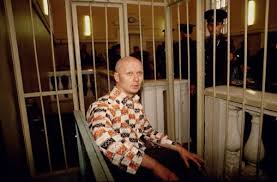 Andrei Chikatilo was a former school teacher who murdered more than 50 young people in the Soviet Union. Andrei Chikatilo was born on October 16, 1936, in the Ukraine state of the USSR. Chikatilo had a difficult childhood and the only sexual experience as an adolescent ended quickly and led to much ridicule, leading to later sexually violent acts. When the police caught him, he confessed to the gruesome murder of 56 and was found guilty in 1990 and executed in 1994. He was born on October 16, 1936, in Yablochnoye, a village in the heart of rural Ukraine in the USSR. During the 1930s, Ukraine was known as the "Breadbasket" of the Soviet Union. Stalin's policies of agricultural collectivization caused widespread hardship and famine that decimated the population. At the time of Chikatilo's birth, the effects of the famine were still widely felt, and his early childhood was influenced by deprivation. The situation was made worse still when the USSR entered World War II against Germany, bringing sustained bombing raids on Ukraine. In addition to the external hardships, Chikatilo is believed to have suffered from hydrocephalus (water on the brain) at birth, which caused him genital-urinary tract problems later in life, including bed-wetting into his late adolescence and, later, the inability to sustain an erection, although he was able to ejaculate. His home life was disrupted by his father's conscription into the war against Germany, where he was captured, held prisoner, and then vilified by his countrymen for allowing himself to be captured, when he finally returned home. Chikatilo suffered the consequences of his father's "cowardice", making him the focus of school bullying. Painfully shy as a result of this, his only sexual experience during adolescence occurred, aged 15, when he is reported to have overpowered a young girl, ejaculating immediately during the brief struggle, for which he received even more ridicule. This humiliation colored all future sexual experiences, and cemented his association of sex with violence. He failed his entrance exam to Moscow State University, and a spell of National Service was followed by a move to Rodionovo-Nesvetayevsky, a town near Rostov, in 1960, where he became a telephone engineer. His younger sister moved in with him and, concerned by his lack of success with the opposite sex, she engineered a meeting with a local girl, Fayina, whom he went on to marry in 1963. Despite his sexual problems, and lack of interest in conventional sex, they produced two children, and lived an outwardly normal family life. In 1971 Chikatilo changed careers to become a schoolteacher. A string of complaints about indecent assaults on young children forced him to move from school to school, before he finally settled at a mining school in Shakhty, near Rostov. An eyewitness had seen Chikatilo with the victim, shortly before her disappearance, but his wife provided him with an iron-clad alibi that enabled him to evade any further police attention. Alexsandr Kravchenko, a 25-year-old with a previous rape conviction, was arrested and confessed to the crime under duress, probably as a result of extensive and brutal interrogation. He was tried for the killing of Lena Zakotnova, and executed in 1984. Perhaps as a result of his close brush with the law, there were no more documented victims for the next three years. Still dogged by claims of child abuse, Chikatilo found it impossible to find another teaching post, when he was made redundant from his mining school post, in early 1981. He took a job as a clerk for a raw materials factory in Rostov, where the travel involved with the position gave him unlimited access to a wide range of young victims over the next nine years. Larisa Tkachenko, 17, became his next victim. On September 3, 1981, Chikatilo strangled, stabbed and gagged her with earth and leaves to prevent her crying out. The brutal force afforded Chikatilo his sexual release, and he began to develop a pattern of attack that saw him focusing on young runaways of both sexes. He befriended them at train stations and bus stops, before luring them into nearby forest areas, where he would attack them, attempt rape and use his knife, to mutilate them. In a number of cases he ate the sexual organs, or removed other body parts such as the tips of their noses or tongues. In the earliest cases, the common pattern was to inflict damage to the eye area, slashing across the sockets and removing the eyeballs in many cases, an act which Chikatilo later attributed to a belief that his victims kept an imprint of his face in their eyes, even after death. At this time serial killers were a virtually unknown phenomenon in the Soviet Union. Evidence of serial killing, or child abuse, was sometimes suppressed by state-controlled media, in the interests of public order. The eye mutilation was a modus operandi distinct enough to allow for other cases to be linked, when the Soviet authorities finally admitted that they had a serial killer to contend with. As the body count mounted, rumors of foreign inspired plots, and werewolf attacks, became more prevalent, and public fear and interest grew, despite the lack of any media coverage. In 1983 Moscow detective Major Mikhail Fetisov assumed control of the investigation. He recognized that a serial killer might be on the loose, and assigned a specialist forensic analyst, Victor Burakov, to head the investigation in the Shakhty area. The investigation centered on known sex offenders, and the mentally ill, but such were the interrogation methods of the local police that they regularly solicited false confessions from prisoners, leaving Burakov skeptical of the majority of these "confessions". Progress was slow, especially as, at that stage, not all of the victim's bodies had been discovered, so the true body count was unknown to the police. With each body, the forensic evidence mounted, and police were convinced that the killer had the blood type AB, as evidenced by the semen samples collected from a number of crime scenes. Samples of identical grey hair were also retrieved. When a further 15 victims were added during the course of 1984, police efforts were increased drastically, and they mounted massive surveillance operations that canvassed most local transport hubs. Chikatilo was arrested for behaving suspiciously at a bus station at this time, but again avoided suspicion on the murder charges, as his blood type did not match the suspect profile, but he was imprisoned for three months for a number of minor outstanding offenses. What was not realized at the time was that Chikatilo's actual blood type, type A, was different to the type found in his other bodily fluids (type AB), as he was a member of a minority group known as "non-secretors", whose blood type cannot be inferred by anything other than a blood sample. As police only had a sample of semen, and not blood, from the crime scenes, Chikatilo was able to escape suspicion of murder. Today's sophisticated DNA techniques are not subject to the same fallibility. Following his release, Chikatilo found work as a traveling buyer for a train company, based in Novocherkassk, and managed to keep a low profile until August 1985, when he murdered two women in separate incidents. At around the same time as these murders, Burakov, frustrated at the lack of positive progress, engaged the help of psychiatrist, Alexandr Bukhanovsky, who refined the profile of the killer. Bukhanovsky described the killer as a "necro-sadist", or someone who achieves sexual gratification from the suffering and death of others. Bukhanovsky also placed the killer's age as between 45 and 50, significantly older than had been believed up to that point. Desperate to catch the killer, Burakov even interviewed a serial killer, Anatoly Slivko, shortly before his execution, in an attempt to gain some insight into his elusive serial killer. Coinciding with this attempt to understand the mind of the killer, attacks seemed to dry up, and police suspected that their target might have stopped killing, been incarcerated for other crimes, or died. However, early in 1988, Chikatilo again resumed his killing, the majority occurring away from the Rostov area, and victims were no longer taken from local public transport outlets, as police surveillance of these areas continued. Over the next two years the body count increased by a further 19 victims, and it appeared that the killer was taking increasing risks, focusing primarily on young boys, and often killing in public places where the risk of detection was far higher.
 -
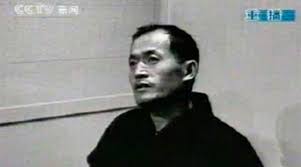 Yang Xinhai who is also known as the "Monster Killer" was killed on February 14, 2004 by a single bullet to the back of his head. He raped 23 women and murdered a total of 67 men, women and children from 1999 - 2003. Yang killed his victims between four Chinese provinces with axes, hammers and shovels during his 4 year killing spree. Yang Xinhai was born into poverty and grew up being a reserved child, but later on in life he became a well known serial killer. Yang had a lot of trouble with the law after he dropped out of school at the age of 17 and left his home to become a nomadic labourer. He was charged with numerous accounts of theft and rape between 1988 and 1999. He started to kill in 2000 after a bad relationship ended which started after he was release from prison in 1999. Yang killed only isolated families who were farmers between four chinese provinces. He would find his target and wait until night when families are asleep. He then enters their home to gruesomely kill the husband and children so he can enjoy raping the grief stricken woman. In October 2002, a pregnant woman that was raped and beaten by Yang had survived and and open a case stating he killed a 6 year old girl and her father and then raped her(the pregnant women). Yang confessed to the 67 murders of men, women and children after he was arrested in 2003. He was arrested when the police officers were doing a routine inspection and found that Yang looked suspicious. The police later found out that their was a warrant out for Yangs arrest for four of the Chinese provinces. Yang was quoted saying "When I killed people I had a desire. This inspired me to kill more. I don’t care whether they deserve to live or not. It is none of my concern… I have no desire to be part of society. Society is not my concern" after he was asked why he killed those people.
 -
 Kampatimar Shankariya was one of the most infamous serial killers of India, he was convicted and sentenced to death in early 1979, with 70 proven victims between 1977 and 1978. Shankariya killed people by striking at the area around their Eustachian tube where it leaves the cheek, and was hence named “kanpatimar”. He is known to have used a hammer as his weapon of assualt. Being one of the least researched serial killers of his time, Shankariya said that he derived pleasure by killing people. He was caught in 1978 and was sentenced to death on May 16, 1979 at Jaipur, India. Before dying Shankariya confessed to all the murders, and said that they were all in vain and that nobody should become like him.
 -
 Lip Sync Battle is an American musical comedy television program on Spike cable network. It features celebrities that go head-to-head in lip sync showdowns. It has gotten off to a very strong start and has drawn over two million viewers. Spyke has renewed it for a second season.
 -
 Sirens is an American comedy television series loosely based on the British series of the same name. Season two ended on April 14th and it is being reported that the series is being cancelled after two seasons.
 -
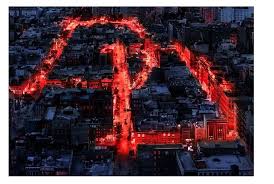 Daredevil is an American web television series created for Netflix and is based on the Marvel Comics character of the same name. The show has received high praise by both critics and audience. Even though it will see a change in showrunners it has been renewed for a second season.
 -
 Faking It is an American single-camera romantic comedy series that runs on MTV. The show has been a solid performer for the network and has been renewed for a third season.