


Midnight Man
-
Posts
2,389 -
Joined
-
Last visited
-
Days Won
2
Content Type
Profiles
Articles
Calendars
module__media_media
Everything posted by Midnight Man
-
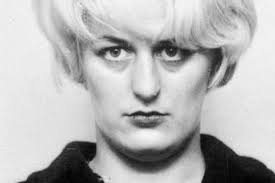 Myra Hindley, born July 23rd, 1942, in England, was an English serial killer. When she was 15, one of her friends died; this led to her quitting school. In 1961, she met Ian Brady. Brady, recently released from prison, worked as a stock clerk when the two met. Brady had far too much influence over Hindley, who was madly in love with him. At first, Hindley wrote, “I hope he loves me, and will marry me some day.” Hindley later noticed that he was “cruel and selfish,” but added that she still “love[d] him.” She was willing to do whatever he said, even stopping her church attendance and reading anything and everything that he suggested. So when Brady suggested that they rape and murder another person, Hindley was ready to go along with it. Their first of many victims was Pauline Reade. Soon after were John Kilbride, Keith Bennett, Lesley Ann Downey, and Edward Evans, all minors. One day Hindley’s brother-in-law witnessed one of their murders, and it led to their eventual trial, where they both received life sentences. Hindley died of respiratory failure in 2002; Brady continues to serve his life sentence.
 -
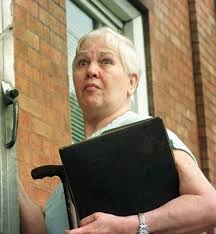 Marie Noe of Philadelphia married Arthur Noe, and the two seemed very happy together. The couple even decided to have children, starting in 1949. However, they seemed to be unlucky – ten children, all just over a year old, or younger, died. Of those ten, eight survived the birthing process, and every last one of those was said to have died of sudden infant death syndrome. The world began to wonder – what was happening to Marie Noe‘s children? However, in 1998, Marie Noe confessed something shocking – she had killed their children. In her twelve-hour interview, she gave police a shocking insight into the depths of her mind. She told them about the killings. On her first murder, she stated, “He was always crying. He couldn’t tell me what was bothering him. He just kept crying…there was a pillow under his face…I took my hand and pressed his face down into the pillow until he stopped moving.” Based on her confession, Noe pled guilty to second-degree murder and received a sentence that would leave her with five years of house arrest and twenty years of probation – lightened because experts wanted to study her in order to understand similar cases. The conviction was handed down to Noe in 1999.
 -
 Karla Homolka, a Canadian serial killer, was born May 4th, 1970 in Ontario. Homolka seemed like a normal child: pretty, popular, and loved by everyone around her. She loved animals, and worked at a vet’s office. This passion for animals led her to a pet convention. She was 17. Paul Bernardo, 23, was there as well. The two met and had sex almost immediately, discovering their shared passion for sadomasochistic sexual acts, with Homolka willingly acting submissive to Bernardo. Bernardo, whose sexual proclivities were extremely perverse, asked Homolka if she would be alright with him raping women. She agreed. Bernardo became the Scarborough Rapist, but was not caught. Bernardo soon became obsessed with Homolka’s younger sister, Tammy. At a Christmas party, they served her drinks spiked with halcyon, then used a rag with Halothane on it to keep Tammy unconscious while they raped her. Tammy vomited during the rape and choked on her own vomit, leading to her death. Drugs in her system were somehow overlooked, and the case was classified as an accidental death. However, the ordeal was not over between Bernardo and Homolka. Bernardo was unhappy with Tammy’s death, and blamed Homolka for it. As a present, Homolka brought a girl named Jane as a replacement, and they raped her as well. Next, they kidnapped Leslie Mahaffy and raped her, killed her, put her body in cement, and then threw the cement in the lake. They married, with Bernardo writing their wedding vows. He refused to be called “husband and wife,” instead selecting “man and wife” to assert his dominance, as well as noting that Homolka would “love, honor, and obey” him. Next, they kidnapped and tortured, humiliated, and raped Kristen French. They separated in 1993 because of physical abuse. Soon after, Bernardo was identified forensically as the Scarborough Rapist. Homolka soon realized she would be caught, and confessed to a family member the truth about her and Bernardo’s relationships. She got a lawyer and entered a plea bargain for a twelve-year sentence; the government agreed that she could be eligible for parole after three years with good behavior. In exchange, Homolka would testify against Bernardo. Later, videotapes of her and Bernardo’s sexual exploits were discovered, and it was clear that she was not the victim she had painted herself to be – she seemed to enjoy their illicit sexual activities. Bernardo received a life sentence. Homolka was released in 2005 with many conditions. Today, she lives in Guadelope under the name Leanne Bordelais.
 -
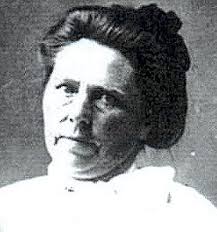 Jane Toppan, born 1857, was a serial killer in Massachusetts. She was born Honora Kelley. Toppan’s life goal was to “have killed more people – helpless people – than any other man or woman who ever lived.” Indeed, she killed at least thirty-one patients, although confessed to having killed more than one hundred. Toppan was a nurse who worked as a type of female serial killer known as an “angel of death.” She injected patients with morphine, and killed them via these injections. Toppan’s murderous career was discovered in 1901 when a family whose mother was friends with Jane – the Davis family. The mother died first while visiting Toppan. Shortly after, one daughter died after asking for help from Toppan, who gave her injections to help. Then, the father died, followed by the other daughter, all of whom had been medicated by Toppan. In court, Toppan was found insane – based on her many suicide attempts throughout her life – and was therefore sentenced to life in an asylum. At age 84, in 1938, she died.
 -
 Gwendolyn Graham, born August 6th, 1964, is an American serial killer. Graham was a nursing aide in Michigan’s Alpine Manor. Cathy Wood, who also worked at the nursing home, befriended Graham, in 1986. Soon after, they became lovers. In the relationship, Graham was dominant over Wood, in all ways. However, Wood was not innocent. Together, the two created a terrible plan, based in their love. They would murder people whose initials would spell “murder.” They soon abandoned the spelling plan, but the murders continued as Graham tried to prove the love that she had for Wood. However, Wood and Graham parted ways soon after. Wood, feeling guilty, told her ex-husband about the murders, and soon, the police were informed. Graham received five life sentences for the five murders and conspiracy to commit murder in 1989. To this day, she is serving her sentence in the Huron Valley Correctional Complex. Wood received a sentenced based on her guilty plea of one charge of conspiracy to commit murder and one charge of second-degree murder. She received 40 years, and is currently eligible for parole. She is in the Federal Correction Institution serving her sentence.
 -
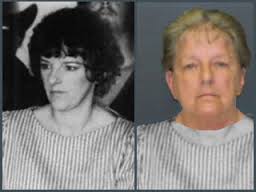 Genene Ann Jones, born July 13th, 1950, is a female serial killer who worked as a pediatric nurse in Texas. She killed an unknown number of children (estimates suggest 46 at the highest) via poison. She is also known as an “Angel of Death” for her style of killing. Jones would inject digoxin, heparin, and other drugs to create a medical situation in a patient. She had meant to revive them, but many children did not survive the damage inflicted initially by the poisons. Jones aroused suspicion in Kerrville, near San Antonio, when a doctor found a puncture in a bottle of newly-diluted succinylcholine. The final straw came, however, when Chelsea McClellan, a baby, died after a routine checkup and some shots. Right after Jones gave the baby shots, she stopped breathing and was rushed to the hospital. Jones was sentenced during two trials – one was for murder of a baby named Chelsea McClellan and injury to others; the second trial regarded her time at a different hospital. In the first trial, on February 15th, 1984, Jones was sentenced to 99 years. In the second, she received 60 years. She came up for parole, but was denied because of opposition from her victims’ families. However, she is set for release in 2018 because of prison overcrowding.
 -
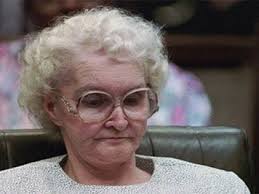 Dorothea Puente was a convicted serial killer who ran a boarding house in Sacramento, California in the 1980s. Puente cashed in the Social Security checks of the elderly and disabled boarders living in her house. Many of them ended up dead and buried in the boarding house’s yard. In April 1982, Puente’s friend and business partner, Ruth Monroe, began to rent out a space in an apartment she owned. Shortly after moving in, Monroe died from an overdose of codeine and Tylenol. When she was questioned by police, Puente said that Monroe had become depressed because of her husband’s illness. Police officially ruled the death a suicide. Several weeks later, 74-year-old Malcolm McKenzie accused Puente of drugging him and stealing his pension. Puente was charged and convicted of theft in August of that year, and was sentenced to five years in jail. When she was serving her sentence, she began a pen-pal relationship with 77-year-old Everson Gillmouth. When she was released in 1985, after serving three years, she moved in and opened a joint bank account with Gillmouth. In November of that year, Puente hired a handyman, Ismael Florez, to install wood panelling in her home. After he completed the job, Puente paid him an $800 bonus and gave him a red 1980 Ford pickup truck- the exact same model and year of Gillmouth’s car. She told Florez that the truck belonged to her boyfriend in Los Angeles, who gave it to her. Puente also hired Florez to build a box that was six feet by three feet by two feet, which she stated that she would use to store “books and other items”. She and Florez then travelled to a highway in Sutter County and dumped the box in a river bank. On January 1, 1986, the box was recovered by a fisherman, who called the police. When police arrived and opened the box, they found the decomposed remains of an elderly man- who would not be identified as Everson Gillmouth for another three years. During this time, Puente collected Gillmouth’s pension and forged letters to his family. During this time, Puente continued to house elderly and disabled tenants in her boarding house. While they were living there, she read their mail and took any money and Social Security checks they received. She paid each of them monthly stipends, but kept the remainder for what she claimed were expenses for the boarding house. Puente’s boarding house was visited by several parole agents as a result of previous orders for her to stay away from elderly people and not to handle government checks. Despite these frequent visits, she was never charged with anything. Neighbors began to grow suspicious of Puente when she stated that she “adopted” a homeless alcoholic man named “Chief” to serve as a handyman. She had Chief dig in the basement and remove soil and garbage from the property. Chief then put in a new concrete slab in the basement before he disappeared. In November 1988, Alvaro Montoya, a tenant in Puente’s house disappeared. Montoya was developmentally disabled and had schizophrenia. After he failed to show up at meetings, his social worker reported him missing. Police arrived at Puente’s boarding house and began to search the property. They discovered recently disturbed soil, and were able to uncover seven bodies in the yard. When the investigation into the deaths began, Puente was not considered a suspect. As soon as police let her out of their sight, she fled to Los Angeles, where she visited a bar and began to talk to an elderly pensioner. The man recognized her from the news and called the police. Puente was charged with nine counts of murder, for the seven bodies found at her house in addition to Gillmouth and Montoya. She was convicted of three of the murders, though the jury could not agree on the other six. Puente was sentenced to two life sentences which she served at Central California Women’s Facility in Madera County, California until her death in 2011 at age 82. Until her death, she continued to insist that she was innocent and that the tenants had all died of natural causes.
 -
 Madame Delphine LaLaurie, a wealthy society woman of New Orleans, is most famous for the torture and murder of her slaves. LaLaurie was born around 1775. Her family moved from Ireland to New Orleans. She married her first time in 1800, a Spanish officer. LaLaurie gave birth to daughter Marie en-route. Her husband died before they reached Madrid. Back in New Orleans, LaLaurie married a banker and had four more children with him. Her second husband died eight years after they got married. Finally, she married Leonard LaLaurie, a doctor, in 1825, and together, they had a mansion where she and her husband and two daughters lived. LaLaurie was extraordinarily cruel to her slaves. However, no one could find evidence of this. Apparently, a young slave girl, Lia, had fallen from the mansion after hurting LaLaurie while brushing her hair. This, again, could not be confirmed. Another rumor claimed that she chained the cook to the stove. A fire started in their kitchen in 1834, and when police arrived, the cook was actually chained to the stove, and had tried to kill herself because she was going to be punished. Her punishment was going to be dispensed in a room in the attic, a room that all of LaLaurie’s slaves feared. The search of the house that resulted showed a grotesquely mutilated bunch of slaves in these quarters, with limbs stretched, hanging from necks. Mobs of angry people attacked the LaLaurie mansion. LaLaurie disappeared shortly afterwards, and by 1836, her mansion was abandoned. Her death is unclear.
 -
 Aileen Carol Wuornos, born February 29th, 1956, was a female serial killer who preyed on truck drivers in Florida.Wuornos’ life began badly; her father, Leo Pittman, was a sociopathic child murderer who was murdered himself while spending time in prison when Wuornos was younger. She became pregnant when she was fourteen, and thus began her life of prostitution and other crime. Wuornos was called “America’s first female serial killer.” She lived on the streets and motels, killing men who picked her up on the side of the highway. Although she worked as a prostitute, she had a lesbian lover by the name of Tyria Moore. She claimed that the murder of all the men had been in self-defense; they had, she claimed, tried to sexually assault her. Wuornos sold the rights to her story almost immediately after her arrest. Her story captivated the media. She received six death sentences and was executed via lethal injection in 2002. Her final words were: “I’d just like to say I’m sailing with the rock, and I’ll be back like Independence Day, with Jesus June 6. Like the movie, big mother ship and all, I’ll be back.”
 -
Serial Killer: Gordon Stewart Northcott (The Chicken Coop Murderer)
Midnight Man posted a article in Celebrity
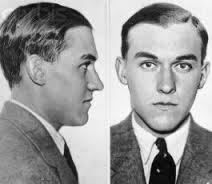 In 1928, southern California was booming. Agriculture and the movie industry had transformed this area into a lively metropolis. However a string of child abductions and murders in the small town of Wineville changed the views of the city. A man named Gordon Stewart Northcott kidnapped, sexually abused and murdered at least three, and possibly up to as many as twenty, young boys. It is believed that he had the help of his mother and his Canadian nephew to commit these crimes. On March 10, 1928, Walter Collins disappeared. This nine-year-old boy was last seen around 5 pm by a neighbor at the corner of Pasadena Avenue and North Avenue 23 in Lincoln Heights, Los Angeles. His mother, Christine Collins, gave him some money to go see a movie at a nearby theatre. His father was in Folsom State Prison for robbery. The Los Angeles Police Department was already under investigation for several corruption scandals and their inability to locate Walter Collins was rather embarrassing. The police chief, James Davis, was under a lot of pressure to solve the case. The police looked along Lincoln Park Lake but were unable to find anything. Collins’ father thought former prison inmates were responsible for his son’s disappearance in an attempt to get revenge. He worked at the prison’s cafeteria and was responsible for reporting other inmates’ infractions. With this sort of job, it is possible that he made more than a few enemies. Several tips came in, but nothing turned out to be very useful. A gas station attendant in Glendale, Richard Strothers, reported seeing a dead boy wrapped in newspaper in the back of a car when a “foreign” couple stopped to ask for directions. A man named C.V. Staley followed the couple when they left the gas station. The couple stopped for a few moments in front of the police station and then sped out of town losing Staley. When the police showed Strothers and Staley Walter Collins’ photo, they both said he was the boy in the back of the car. Other tips came in about a couple traveling across the state with a boy who was begging them to let him go. Walter’s disappearance wasn’t the only one around this time. Nelson and Lewis Winslow, ten and twelve-years-old, went missing on their way home to Pomona on May 16, 1928. Their parents received strange letters from them. The first said they were heading to Mexico and the second said they planned to stay missing as long as they can to become famous. The police didn’t connect these two disappearances together at first. They also didn’t find a connection between these cases and the headless body of a Latino boy they found in La Puente in February. And with none of these connections made, a neighbor’s complaint about a man mistreating a boy at his poultry farm didn’t appear to be relevant either. In August of 1928, Illinois police picked up a boy who told them his name was Arthur Kent. At first he would say only that his father abandoned him, so they placed him with a temporary family. Eventually he told them his real name was Walter Collins from Los Angeles and that he had been avoiding their questions to protect his father. Illinois police contacted California police, sent photographs of the boy, and later sent him to Los Angeles. California authorities contacted Christine Collins and showed her the photos of “her son.” She immediately said that he was not her son. However, Captain J.J. Jones talked her into “trying out” the boy for awhile. Three weeks after their reunion, Christine Collins brought the boy back to the police station. She brought with her Walter’s dental records and signed statements from people who knew Walter saying that this boy was not him. Captain Jones called her a lunatic and claimed she was trying to get the state to take care of her child and believed she was just trying to embarrass the police department. He threw her into a psychiatric ward in Los Angeles County General Hospital on a “Code 12″ which allows police to get rid of troublemakers by throwing them into psychiatric hospitals. In September 1928, a Canadian woman named Winnefred Clark contacted U.S. authorities to tell them that her nephew had kidnapped and was holding her son, Sanford Wesley Clark, in California. Jessie Clark was worried about her 15 year-old brother since he left two years prior with their uncle, Gordon Stewart Northcott, who was only 21 at the time. Jessie decided to go to Northcott’s ranch in Wineville, California to check on things. In the few days she stayed, she found out her uncle was abusing her brother and was involved in something very strange. Her uncle even attacked her too. On September 15, 1928, Sanford told investigators that his uncle kidnapped him and had physically and sexually abused him. He also said Northcott had forced him to watch the abuse and murders of Walter Collins, Nelson and Lewis Winslow, and other boys. Sometimes he even made him participate in these acts. Northcott abducted boys to rape them and when he got bored, he would lead them into the incubator room to see hatching chicks and kill them with an ax. To destroy the evidence, Northcott covered their bodies in quicklime. Sanford also said Northcott had killed a Latino boy in La Puente. They both killed Walter Collins because the boy had seen Northcott help another man kill his mining partner. Sanford told the police that they could find graves near the chicken coop for the Winslow brothers and Walter Collins. Two graves were found but the full bodies were not there, only pieces of bone. Axes found among other farm equipment had human hair and blood on them. Several bones were scattered across the ranch which pathologists later determined to be from male children. Inside the house, a book checked out to one of the Winslow boys was found. Also more letters to their parents were written. A child’s whistle and several Boy Scout badges were found. Nothing that could be directly attributed to Walter Collins was found. Northcott’s father, Cyrus George Northcott, told police two days later that his son had admitted the murders to him. But by that time, Northcott and his mother, Louise Northcott, had left town. The Los Angeles Police Department initially continued to insist that Christine Collins had her son. They only discontinued this belief when a handwriting expert came in to analyze their writing styles. The expert concluded that this boy’s handwriting was definitely not a match to the samples collected from previous years. The strange “R’s” the boy used was commonly taught in Illinois but not found in California. The boy eventually told the truth. He admitted several other aliases as well. He said he had decided to try to pass off as Walter Collins when someone had mentioned he looked like the missing boy. Arthur Hutchins, 12 years-old, has assumed Collins’ identity in an attempt to go to Hollywood to meet his cowboy hero, Tom Mix. His stepmother picked him up in Los Angeles and took him back to their Illinois home. He didn’t appear to have any remorse for his actions and said Christine Collins must have known he wasn’t her son so it was just a big game for them both. Shortly after Arthur Hutchins went home, Christine Collins was released from the institution. On September 20, 1928, Gordon Stewart Northcott was arrested in British Columbia. They arrested his mother, Sarah Louise Northcott, in Alberta. In December, the police took Northcott back to his ranch in an attempt to get more information. While there, he verbally confessed to five murders, including the Winslow brothers, Walter Collins, and a Mexican boy named Alvin Gothea. However later that day, Northcott only admitted one homicide in a written confession and that was the murder on Alvin Gothea. Also in December, Northcott’s mother confessed to the murder of Walter Collins. She said she delivered the final blow to the boy and then buried him in a hole near the chicken coop. Sanford Clark said his grandmother had told them that if they each hit the boy then they will be equally guilty if caught. Sarah Louise Northcott was sentenced to life in prison for the murder of Walter Collins. Gordon Stewart Northcott’s trial began in January 1929. Northcott fired several defense attorneys and proceeded to defend himself. He admitted to abusing young boys because he loved them. He even had his mother testify for him. She claimed she was actually his grandmother because her husband had raped her daughter Winnefred and Northcott was Winnefred’s son. Northcott also claimed to have an incestuous relationship with Sarah Louise and that his father had molested him. Northcott’s defense was rather odd and it was obvious that he was no lawyer. Along with the strange defense, Sarah Louise didn’t prove to be a very credible witness since the only continuous statement she made was that she would do anything for Gordon. On February 8, 1929, an all-male jury convicted Northcott for the first-degree murders of the Winslow brothers and an anonymous victim. Judge George R. Freeman sentenced him to death. Although he was convicted and sentenced to death, the families of his victims didn’t have closure due to the inability to find intact bodies. Northcott was hanged on October 2, 1930. Shortly after his execution, the Wineville Chicken Coop murders were finally put to rest after the citizens decided to change the town’s name. They changed it to Mira Loma, which mean “hillview” in Spanish. This name change helped the town to disassociate from the horrific acts on that poultry farm. The horrors of the Wineville Chicken Coop Murders were introduced again in 2008 when the Clint Eastwood film The Changeling was released. The story reflects Christine Collins’ attempts to recover her son, Walter. The Changeling showed Christine Collins’ perseverance to overcome the unjust law enforcement system and learn the truth about her son.
 -
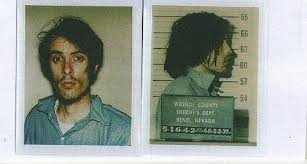 Richard Trenton Chase became known as “The Vampire Killer of Sacramento” because he would drink the blood of his victims and practiced cannibalism with their body parts. Six known victims were claimed by Chase. He was born on May 23, 1950 in Sacramento, California. As a child he was known to set fires, wet the bed, and torture animals. Once he became older, he started drinking and using drugs, mostly smoking marijuana and using LSD. He was in and out of mental institutions during much of his life. He developed hypochondria from his drug and alcohol abuse which caused him to tell doctors that his pulmonary artery had been stolen, his heart would stop beating, and he claimed that his blood was turning to powder. When he was 21, he lived on his own in an apartment. His roommates became fed up with his behavior and decided to move out, and he eventually had to return home. He didn’t stay long because his father put up rent for a new apartment. He had no social life and no girlfriends. Chase spent time capturing and killing animals, and then eating them raw or blended up. In 1976, he was hospitalized for blood poisoning after injecting himself with the blood from a rabbit he killed. Many patients and nurses were frightened by him and referred to him as Dracula. He was frequently found with blood smeared on his face which he claimed was from cutting himself shaving. However, he was actually biting the heads off birds and sucking their blood. Once he began taking medication, he was released. A year later, Chase was found in a field near Lake Tahoe, Nevada. He was naked and covered in cow’s blood. The incident was reported but nothing else was done. Only a few short months later, Chase shot and killed Ambrose Griffin. The event was a drive-by, according to the FBI. Chase was not identified at first as the shooter. His next victim, Terry Wallin, was the 22 year-old pregnant wife of David Wallin. She was found by her husband when he arrived home from work, disemboweled and drained of her blood. It appeared that Chase had collected her blood into a yogurt cup to drink it. Again, Chase was not identified as the savage killer. An investigation began and other incidents were discovered, such as the burglary of a house nearby where the disemboweled remains of a dog were found. The FBI developed a profile for the suspect based on the evidence; it was a perfect match for Chase. The FBI asked for any information leading to his capture but it wasn’t long before another murder was committed. A neighbor entered the home of Evelyn Miroth, only to find a massacre. Not only was 36 year-old Evelyn found dead, but her 6 year-old son Jason and family friend Daniel Meredith were also found dead. Evelyn’s 22 month old nephew, Michael Ferreira was also missing from the home. The playpen where Michael would normally be found was covered in blood and contained a pillow with a bullet hole, so it was assumed he was also killed and the suspect took the body with him when he left. A significant lead for the police came from a woman in her 20’s who mentioned that she ran into a man she had gone to high school with and he approached her car. She noticed that his eyes were sunken, he was extremely thin, and he had blood stains on his sweatshirt. She identified him as Richard Trenton Chase. The police discovered that he resided within a mile of most of the murder sites. After staking out his apartment, police took Chase into custody. He was forcefully detained and a gun found in evidence was linked back to all of the murders. Authorities also discovered a 12-inch butcher knife, rubber boots, animal collars, three blenders containing blood, and several dishes inside the refrigerator containing body parts. A calendar was even found in his apartment containing the word “today” marked on the dates of the Wallin and Miroth murders. A mummified, decapitated, baby was then found later in a box outside of a vacant lot. It was determined to be the nephew of Evelyn Miroth. The trials began in 1979, and Chase pleaded not guilty by reason of insanity. However, he was deemed legally sane at the time he committed the crimes and was found guilty on all six murder counts. During an interview, Chase admitted to walking the streets checking to see if doors were unlocked. He stated that, “if the door was locked that meant you weren’t welcome.” Following his conviction, he began receiving medication. Instead of actually taking the medication, he stockpiled it until he had enough to commit suicide. He was found dead in his cell in December of 1979.
 -
 Richard Ramirez, known as the “Night Stalker” was an American serial killer. Ramirez spent over two years of his life raping and torturing over 25 victims and killing more than a dozen people. Most of these crimes were committed in the victims California homes. Richard, the son of Mercedes and Julian Ramirez, was born in El Paso, Texas on February 28, 1960. Growing up Richard was a troubled kid. A lot of this was due to his older cousin, Mike, who had just returned from fighting in Vietnam. Ramirez’s cousin would tell him gruesome stories and show pictures of the torture he would inflict upon Vietnamese women. Mike introduced drugs to Ramirez, which consequently resulted in Ramirez committing petty crimes. He also became a Satan worshiper. Because of this rebellion, Ramirez became alienated from his parents. The first series crime that Ramirez was involved in was the murder of his cousin’s wife. Although Mike was the one whom murdered his own wife, Ramirez was at the scene of the crime and didn’t do anything to stop it. In 1977, Ramirez was sent to a juvenile detention center for a series of petty crimes. In addition, he was put on probation for marijuana possession in 1982. Soon after these two crimes, Ramirez moved to California and continued to commit crimes such as burglary and possession of cocaine, as well as a car theft charge, which resulted in a jail sentence. On June 28th 1984, Ramirez’s committed his first murder. The 79-year-old victim was sexually assaulted, stabbed and murdered in her own home. In just one year Ramirez had murdered over a dozen people and tortured of 25 people. After many delays, in 1989, Richard Ramirez, age 29, was sentenced to the conviction of 13 murders, five attempted murders, 11 sexual assaults and 14 burglaries. Ramirez was sentenced to die in California’s gas chamber. His remarks to this were “Big deal. Death always went with the territory. See you in Disneyland.” Twenty-four years after this sentence, while Ramirez had been on death row for more than 23 years, Ramirez died from B-cell lymphoma at age 53 on June 7, 2013.
 -
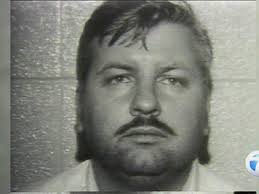 John Wayne Gacy was a friendly man who loved to entertain young children. He frequently dressed up as his alter ego, Pogo the Clown, at parties that he hosted for his entire neighborhood. By 1978, public perception of Gacy would change forever, and he would earn the ominous nickname of “the Killer Clown”. The first warning sign about Gacy appeared in 1964, when he was found guilty of sodomizing two young boys. Gacy was arrested and spent 18 months in prison. By the time he was released, Gacy was divorced and decided to move to Chicago for a fresh start. In Chicago, Gacy founded a successful construction business, attended church, re-married, and volunteered as the Democratic Precinct Captain in his area. During this time he threw elaborate block parties and built a solid reputation in his community. Gacy was respected and admired by friends, neighbors, and police officers. During July of 1975, a teenager who worked for Gacy disappeared. His parent’s pleaded with Chicago police officers to investigate Gacy, but they never did. This would not be the last time worried parents asked officials to review Gacy as a suspect, but the pleas fell on deaf ears. In 1976, Gacy divorced for a second time, and it seemed to give him a feeling of personal freedom. Unknown to anyone else at the time, Gacy began to rape and kill young men. Over a period of just a few years, he murdered 33 people, 29 of whom were found underneath Gacy’s house — 26 in the crawlspace and 3 other bodies were found in other areas beneath his home. A young man went to the Chicago police for help in 1977, claiming that he had been kidnapped and molested by John Wayne Gacy. A report was made, but officers failed to follow up on it. The following year, Gacy murdered a 15-year-old boy who had gone to Gacy’s home to ask about a job with his construction company. This time, the Des Plaines police got involved and searched Gacy’s home. They found a class ring, clothing for much smaller individuals, and other suspicious items. Upon further investigation, officers discovered that the ring belonged to a teenage boy who was missing, and they found a witness who claimed Gacy had admitted to killing up to 30 people. Gacy was arrested, and used an insanity plea in the hopes of a not guilty verdict. The ruse did not work, and he was found guilty. On May 10, 1994, John Wayne Gacy was executed by lethal injection.
 -
 Jeffrey Dahmer, an American serial killer and sex offender, was born on May 21, 1960. Between the years of 1978 and 1991, Dahmer murdered 17 males. Rape, dismemberment, necrophilia, and cannibalism were involved in his murders. He was beaten to death on November 28, 1994 by an inmate at the Columbia Correctional Institution, where he had been incarcerated. By most accounts Dahmer had a normal childhood; however he became withdrawn and uncommunicative as he got older. He began showing little to no interest in hobbies or social interaction around the ages of 10 to 15. Dead animals became an interest of his and he also started drinking heavily during his high school years. His drinking escalated and was a huge issue following high school. His father made him enlist in the army, but he was kicked out due to alcoholism. Dahmer then traveled to Florida, spending most of his time in the hospital, but was eventually kicked out for his drinking. His behavior became increasingly strange once he moved in with his grandmother. She began finding disturbing things in her home, including a .357 magnum under his bed and a male mannequin in his closet. He continued his fascination with dead animals, dissecting dead squirrels in the basement and dissolving them with chemicals. In both 1982 and 1986, he was arrested for indecent exposure. The strange behaviors led his grandmother to ask him to move out in the summer of 1988. Once he moved out of his grandmother’s, he found an apartment close to his job at the Ambrosia Chocolate Factory. Only one day after moving into his new apartment, he was arrested for drugging and sexually fondling a 13-year-old boy. He was given a sentence of five years of probation, one year at a work release camp, and required to register as a sex offender. He was released two months early from the work release camp and soon moved into a new apartment. Shortly following, the string of murders began and ended with his arrest in 1991. His first murder was in the summer of 1978. Dahmer was 18-years-old. After being left alone by his father who was away on business, he picked up a hitch hiker named Steven Hicks and offered to take him back to his father’s house to drink beer. When Hicks decided to leave, Dahmer hit him in the back of the head with a 10 lb dumbbell. He then buried the body in the back yard, and admitted to killing him because he didn’t want him to leave. Nine years passed before he killed again. Steven Tuomi was the second victim, killed in September of 1987. Dahmer picked him up from a bar and later killed him on impulse. He stated that he had no memory of committing that crime. The killings occurred sporadically after Tuomi, with two in 1988 and one in 1989. He usually picked up his victims at gay bars and had sex with them before killing them. Until he was caught, he even kept the skull of one of his victims, Anthony Sears. In May of 1990, he once again moved out of his grandmother’s house into an apartment that would later be the location of four more murders in 1990 and three in 1991. In 1991, a boy was discovered wandering the streets drugged and confused, he was 14-year-old Konerak Sinthasomphone. The two women that found him called 911; however Dahmer chased after his victim and stated to the police that he was his 19-year-old boyfriend. Without a sex offender background check or age verification, the police handed Sinthasomphone back over to Dahmer. Later that same night, Dahmer killed and dismembered Sinthasomphone and kept his skull as a souvenir. He began killing around one person each week by the summer of 1991. Dahmer was using the idea that he could turn his victims into “zombies” to have youthful submissive sexual partners. He used many different techniques, such as drilling holes into their skull and injecting hydrochloric acid or boiling water into their brains. Soon, residents of Oxford Apartments complex began noticing awful smells coming from Dahmer’s apartment, as well as loud noises from falling objects. Although most serial killers stick with one racial background, Dahmer killed a variety of people from different racial backgrounds. On the day of his arrest, Dahmer attempted to lure Tracy Edwards into his home. While inside the home, Edwards was forced into the bedroom by Dahmer with a butcher knife. During the struggle, Edwards was able to get free and escape out into the streets where he flagged down a police car. When the police arrived at Dahmer’s apartment, Edwards alerted them to the knife that was in the bedroom. Upon entering the bedroom pictures of dead bodies and dismembered limbs allowed the officers to arrest Dahmer. Further investigation of the home lead to a severed head in the refrigerator, three more severed heads in the apartment, multiple photographs of victims and human remains and more human remains in his refrigerator. It was later assumed that he practiced necrophilia and cannibalism. A total of seven skulls were found in his apartment as well as a human heart in the freezer. An attempted alter was also constructed with candles and human skulls in his closet. After being indicted on 17 murder charges, the trial began on January 30, 1992. Even though the evidence against him was overwhelming, Dahmer pleaded not guilty by reason of insanity. Following two weeks of trial, the court declared him sane and guilty on 15 counts of murder. He was sentenced to 15 life terms, for a total of 957 years in prison. Following sentencing, Dahmer expressed remorse for his actions and wished for his own death. In May of the same year, he entered a guilty plea for the murder of his first victim, Stephen Hicks. During his time in prison, Dahmer declared himself a born-again Christian. He served his time at the Columbia Correctional Institution in Portage, Wisconsin. He was attacked twice during that time. The first attempt, to slice his neck with a razor, left him with only superficial wounds. However, the second attack ended up killing him, and he died on the way to the hospital from severe head trauma.
 -
 In 1861, Herman Webster Mudgett was born in New Hampshire. It is said that at an early age he was fascinated with skeletons and soon became obsessed with death. It may have been this interest that led him to pursue medicine. After graduating high school at 16, Mudgett changed his name to Henry Howard Holmes, and later in life would be known as H.H. Holmes. Holmes studied medicine at a small school in Vermont before being accepted into the University of Michigan Medical School. While enrolled in medical school, Holmes stole cadavers from the laboratory, burned or disfigured them, and then planted the bodies making it look as if they had been killed in an accident. The scandal behind it was that Holmes would take out insurance policies on these people before planting the bodies and would collect money once the bodies were discovered. In 1884 Holmes passed his medical exams and in 1885 he moved to Chicago where he got a job working at a pharmacy under the alias Dr. Henry H. Holmes. When the owner of the drugstore passed away, he left his wife to take over the responsibilities of the store; however, Holmes convinced the widow to let him buy the store. The widow soon went missing and was never seen again. Holmes claimed that she moved to California, but this could never be verified. After Holmes had become the owner of the drugstore, he purchased an empty lot across the street. He designed and built a 3-story hotel, which the neighborhood called the “Castle.” During its 1889 construction, Holmes hired and fired several construction crews so that no one would have a clear idea of what he was doing; he was designing a “Murder Castle.” After construction was complete in 1891, Holmes placed ads in newspapers offering jobs for young women and advertised the Castle as a place of lodging. He also placed ads presenting himself as a wealthy man looking for a wife. All of Holmes’ employees, hotel guests, fiancés, and wives were required to have life insurance policies. Holmes paid the premiums as long as they listed him as the beneficiary. Most of his fiancés and wives would suddenly disappear, as did many of his employees and guests. People in the neighborhood eventually reported that they saw many women enter the Castle, but would never see them exit. In 1893, Chicago was given the honor of hosting the World’s Fair, a cultural and social event to celebrate the 400th anniversary of Columbus’ discovery of America. The event was scheduled from May to October, and attracted millions of people from all over the world. When Holmes heard that the World’s Fair was coming to Chicago, he looked at it as an opportunity. He knew many visitors would be searching for lodging near the fair and believed many of them would be women whom he could easily seduce into staying at his hotel. After being lured into the hotel, many of these out-of-town visitors would never be seen again. The first floor of the Castle had several stores; the two upper levels contained Holmes’ office and over 100 rooms that were used as living quarters. Some of these rooms were soundproof and contained gas lines so that Holmes could asphyxiate his guests whenever he felt like it. Throughout the building, there were trap doors, peepholes, stairways that led nowhere, and chutes that led into the basement. The basement was designed as Holmes’ own lab; it had a dissecting table, stretching rack, and crematory. Sometimes he would send the bodies down the chute, dissect them, strip them of the flesh and sell them as human skeleton models to medical schools. In other cases, he would choose to cremate or place the bodies into pits of acids. Through it all, Holmes travelled throughout the U.S. committing insurance scams with his accomplice, Benjamin Pitezel. Once the World’s Fair had ended, Chicago’s economy was in a slump; therefore, Holmes abandoned the Castle and focused on insurance scams – committing random murders along the way. During this time, Holmes stole horses from Texas, shipped them to St. Louis, and sold them – making a fortune. He was arrested for this swindle and sent to jail. While in jail, he concocted a new insurance scam with his cellmate, Marion Hedgepeth. Holmes said he would take out an insurance policy for $10,000, fake his own death, and then provide Hedgepeth with $500 in exchange for a lawyer who could help him if any problems arose. Once Holmes was released from jail on bail, he attempted his plan; however, the insurance company was suspicious and did not pay him. Holmes then decided to attempt a similar plan in Philadelphia. This time he would have Pitezel fake his own death; however, during this scam Holmes actually killed Pitezel and collected the money for himself. In 1894, Marion Hedgepath, who was angry that he did not receive any money in the initial scam, told police about the scam Holmes had planned. The police tracked Holmes, finally catching up to him in Boston where they arrested him and held him on an outstanding warrant for the Texas horse swindle. At the time of his arrest, Holmes appeared as if he was prepared to flee the country and police became suspicious of him. Chicago police investigated Holmes’ Castle where they discovered his strange and efficient methods for committing tortuous murders. Many of the bodies they located were so badly dismembered and decomposed that it was hard for them to determine exactly how many bodies there really were. The police investigation spread through Chicago, Indianapolis, and Toronto. While conducting their investigation in Toronto, police discovered the bodies of the Pitezel children, who had gone missing sometime during Holmes’ insurance fraud spree. Linking Holmes to their murders, police arrested him and he was convicted of their murders. He also confessed to 28 other murders; however, through investigations and missing person’s reports, it is believe that Holmes is responsible for up to 200 murders. In May 1896, one of America’s first serial killers, H.H. Holmes, was hanged. The Castle was remodeled as an attraction and named the “Holmes Horror Castle”; however, it was burned to the ground shortly before its opening.
 -
 Gary Leon Ridgway is famous for being the serial killer who has admitted to more murders than anyone else. He is linked to the deaths of 48 young women, most of who were strangled to death around the Seattle and Tacoma, Washington areas. It took nearly 20 years for Ridgway to be caught and brought to justice. He committed the majority of his murders between 1982 and 1983, during which time the bodies of many of his victims were found near Green River in Washington. This earned the then unknown assailant the title of “the Green River Killer.” Police officers discovered the bodies of many of Ridgeway’s victims naked along the river bank. They were often placed together in groups, and sometimes the bodies were even posed. Almost all of the victims were prostitutes, so the police were able to identify a common trait that the killer looked for and used that information in their ongoing investigation. The sheriff’s department founded the “Green River Task Force” and assigned the men involved with the responsibility of tracking down the serial killer. In 1982, Gary Ridgway was arrested on a prostitution charge. He became a suspect in the killings, but after passing a polygraph test in which he claimed to be innocent, he was no longer considered to be a prime candidate. Members of the task force held on to their suspicions and to samples of his hair and saliva. After 1983, the murders seemed to have stopped but the search continued for the killer. By 2001, investigators had DNA evidence of the murderer and it was compared to the strands Ridgway’s hair still in police custody. The samples matched. Ridgway was arrested on November 30, 2001 after being linked to the murder of four women. During the trial that followed in 2003, Ridgway plead guilty to the murders of 48 women. He claimed that there were more victims – as many as 90 in total. To avoid the death penalty, he agreed to help police officials locate the remains of his victims that had not yet been discovered. Ridgway was sentenced to 48 consecutive prison sentences. He currently resides at the Washington State Penitentiary and has no hope of parole.
 -
 On March 13, 1933, Donald Gaskins was born in Florence County, South Carolina. At a young age, Gaskins was teased and given the nickname “Pee Wee” as a result of his small body frame. Violence and ridicule followed him from his home where his stepfather beat him to his school where he fought with the other kids daily. This would ultimately lead to him becoming the most prolific serial killer in South Carolina. At age 11, Gaskins quit school and began working on cars at a local garage. While working there, he met two boys, Danny and Marsh. They were all around the same age and out of school, so they teamed up and called themselves “The Trouble Trio.” The trio burglarized homes, picked up prostitutes, and even sometimes raped little boys. They would threaten the little boys so they wouldn’t go to the police. Eventually the trio broke up after they were caught for gang-raping Marsh’s little sister. For punishment, the parents beat the boys until they bled. Danny and Marsh left the area shortly after that. Gaskins continued to burglarize homes alone. In 1946, a girl who knew Gaskins interrupted him while he was burglarizing her home. She struck him with an ax. He managed to get it away from her, struck her in the head and arm with it before fleeing the scene. Luckily, the girl survived the attack. Gaskins was arrested and convicted for assault with a deadly weapon and intent to kill. During the court proceedings, it was the first time he had heard his real name spoken in his whole life. He was sent to the South Carolina Industrial School for Boys until he turned 18. At the reform school, Gaskins was almost immediately attacked and raped due to his small stature. He spent his time either accepting protection from the “Boss-Boy” in exchange for sex or attempting to escape. Eventually he escaped from the reform school and got on with a traveling carnival. He married a 13-year-old girl while there, but decided to return to the reform school to finish out his sentence. After he was released from reform school, he began working on a tobacco farm. There, he got involved in insurance fraud; he worked with a partner by collaborating with local tobacco farmers to burn their barns for a fee. Around the area, people began to wonder about Gaskins’ involvement with the barn fires. When his employer’s daughter questioned him about the barn fires, he panicked and split the girl’s skull with the hammer in hand. He received a five year sentence in prison for assault with a deadly weapon and attempted murder. While in prison, Gaskins committed his first murder in an attempt to become a “Power Man.” Power men are the most brutal and feared inmates. Gaskins decided killing a fellow inmate would be enough to keep the other inmates from bothering him. He was found guilty of manslaughter and sentenced to six months of solitary confinement but he accomplished his goal of becoming a “Power Man.” The newly found status made his life in prison more enjoyable. In 1955, his wife filed for divorce. Gaskins flipped and escaped from prison. Shortly thereafter, he remarried but the second marriage only lasted two weeks. Then he became involved with Betty Gates. The two went to Tennessee to bail out Gates’ brother, but when Gaskins arrived back at the hotel he was in for a surprise. He found out Gates’ brother was actually her husband and he had recently escaped. The police arrived at the hotel and it didn’t take them long to realize that he was an escaped convict. He was sent back to prison with an extra nine months for aiding the escape of a prisoner. In August 1961, he was released from prison and returned to South Carolina. He was unable to stay out of trouble and began burglarizing homes again. He avoided arrest by working with a traveling minister as his driver and general assistant. This was an easy way Gaskins could travel from town to town while burglarizing homes and would make his crimes harder to trace. In 1962, Gaskins was arrested for the statutory rape of a 12-year-old girl, but he escaped to North Carolina in a stolen car. Once in North Carolina, he met a 17-year-old girl whom he married. She eventually turned him into the police for statutory rape and he received six years in Columbia Penitentiary. In November 1968, he was paroled and made a vow to never return again. Throughout Gaskins’ life, he described feelings that forced him into criminal activity which he referred to as “them aggravated and bothersome feelings.” In September 1969, he found relief from these feelings. Gaskins picked up a female hitchhiker in North Carolina and became angry when she laughed at his sexual propositions. He beat her until she was unconscious. Gaskins raped, sodomized, and tortured her. Then he went to a swamp to sink her weighted body so she would drown. His “process” of rape, torture, and murder was described by Gaskins as a “vision” into the “bothersome feelings” he experienced throughout his life. Satisfying these feelings became his driving force in life. He mastered the skill of torture, often keeping his injured victims alive for days. Sometimes he would cannibalize their severed body parts and either make them watch him eat them in horror or join in the eating. Gaskins preferred female victims, but that didn’t stop him from doing the same to the males he happened upon. By 1975, he had found 80 boys and girls along the highways in North Carolina and killed them. He considered these highway murders as “weekend recreation” and thought killing his personal acquaintances were “serious murders.” Some of the serious murders included his 15-year-old niece and her friend. He lured the two girls off to an abandoned house where he beat, raped, and drowned them. Although Gaskins had a reputation for being explosive, some people in the town just thought he was mentally disturbed. Most tried to avoid even being around him, but some people actually liked him and considered him as their friend. One of the people who considered Gaskins to be a friend was Doreen Dempsey, a mother of a two-year-old baby girl and was pregnant with her second child at the time of her death. She was leaving town and decided to get a ride to the bus station from her old friend. Gaskins took her to a wooded area where he raped and killed her and then raped, sodomized, and killed her baby. He buried the two together. Gaskins was 42 years old in 1975 and had been killing steadily for the past 6 years. Up until then, he had worked alone and that had helped him avoid being caught. However after he murdered three people after their van broke down on the highway, he needed some help. He called up an ex-con Walter Neely to drive the victims’ van to his garage so he could repaint it and sell it. Gaskins was also a hired hit man. That same year, Suzanne Kipper, paid him $1500 to kill her ex-boyfriend, Silas Yates. John Powell and John Owens handled the communication between Gaskins and Kipper concerning the arrangement of the murder. On February 12, 1975, Diane Neely lured him out of the house by claiming to have car trouble. Gaskins then kidnapped and murdered Yates while Powell and Owens watched. All three helped bury him. Diane Neely and her boyfriend decided to blackmail Gaskins. They asked for $5000 in hush money; Gaskins quickly got rid of them after he arranged a meeting for the payoff. Around the same time, Gaskins had tortured and killed other people he knew, such as Kim Ghelkins, a 13-year-old who rejected him. Two locals robbed Gaskins’ repair shop without knowing about his bad side. He eventually killed and buried these two with the other locals in his private cemetery. Once again, he called on Walter Neely to help him bury the two bodies. While there, Gaskins even showed Neely where he had buried other locals. After the disappearance of Kim Ghelkins, the authorities began to become suspicious of Gaskins. After searching his apartment, they found clothing that had been worn by Ghelkins. Gaskins was indicted for “contributing to the delinquency of a minor.” Neely cracked under pressure while waiting for the trial and showed the police Gaskins’ private cemetery. In the cemetery, they found the bodies of the following: Sellars, Judy, Howard, Diane Neely, Johnny Knight, Dennis Bellamy, Doreen Dempsey and her child. On April 27, 1976, Gaskins and Walter Neely were charged with eight counts of murder. On May 24, 1976, a jury convicted Gaskins of the murder of Dennis Bellamy and he was sentenced to death. In an attempt to avoid additional death sentences, he later confessed to seven more murders. In November 1976, the Supreme Court ruled that the death penalty was unconstitutional, so his death sentence was converted to life with seven consecutive life sentences. In 1978, the death penalty was restored. This didn’t mean anything to Gaskins until he was caught and found guilty for being paid to murder fellow prisoner, Rudolph Tyner. This conviction caused him to receive a death sentence. He began confessing for other murders to avoid the electric chair. If these confessions were true, then he would be the worst killer in South Carolina’s history. He admitted to the murder of Peggy Cuttino but prosecutors had already charged and sentenced William Pierce to life in prison for the murder. Gaskins’ confession was rejected. Over the last months of his life, Gaskins worked with author Wilton Earl on his book, Final Truth. This book was published in 1993 and discussed the murders and the “bothersome” feelings Gaskins felt throughout his life. On the day of his execution, he cut his wrists in a last attempt to avoid the electric chair. However that didn’t work. Gaskins was placed in the electric chair, with stitched arms, and pronounced dead by electrocution on September 6, 1991. It is unknown as to how many murders Gaskins actually committed since information was never provided for all of the bodies. Maybe he just wanted to be known as the most prolific serial killer in South Carolina. One thing we know for certain is that Donald Gaskins was a psychopath who had no regard for human life.
 -
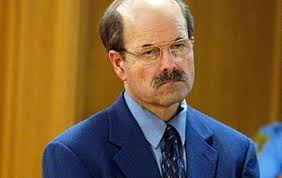 Dennis Lynn Rader, born on March 9th, 1945, was the BTK Killer. The letters “BTK” stood for “bind, torture, and kill.” Rader was an active serial killer in Wichita, Kansas, between 1974 and 1991. During his youth, Rader hanged cats, reportedly. However, other than that, he led a normal life, joining the Air Force and marrying a woman named Paula. He even had children. In 1974, he would begin work for ADT Security Services. This year also marked the first of Rader’s murders. He killed the Oteros, taking a watch and a radio. In April of the same year, he killed Kathryn Bright and attempted to kill her brother, who survived the attack. Despite this eyewitness account, Rader was not caught at the time. Rader took credit for his victims by leaving a note in a book in a public library, where he also requested that he be called BTK. Next, he killed Shirley Vian and Nancy Fox. At this point, it seemed that he was doing it for the attention, sending poems to the newspaper about his victims. He even called the police, just to rub it in their faces. Rader killed Marine Hedge and Vicki Wegerle, along with Dolores Davis. Then, suddenly, he stopped. In 1991, for no explicable reasons, the murders simply stopped. In 2004, he emerged from the shadows once more, sending clues and pictures and letters to police and media. He even left them a computer disk. This disk, which led them to his church and his van and even his daughter, would lead to the eventual arrest of Rader on February 25th, 2005. He was charged with ten counts of murder. Rader pled guilty, and was handed ten life sentences, which he is currently serving in Kansas.
 -
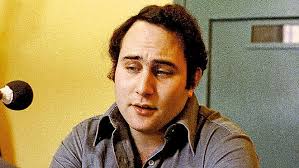 David Berkowitz, also known as Son of Sam and the .44 Caliber Killer, is an American serial killer who terrorized the New York City area from July 1976 to July 1977. Berkowitz killed six people and wounded seven, most using a .44 caliber Bulldog revolver gun. Berkowitz was born Richard David Falco on June 1, 1953 in Brooklyn, New York. His unmarried parents separated shortly before he was born, and he was placed on adoption. His adoptive parents switched his first and middle names, and gave him their surname. From a young age, Berkowitz had began to show early signs of his future violent behavior patterns. While he was of above-average intelligence, he lost interest in school and instead focused on more rebellious habits. Berkowitz got involved in petty larceny and pyromania. However, his misbehavior never led to legal troubles or impacted his school records. When he was 14, Berkowitz’s adoptive mother died of breast cancer and his relationship with his adoptive father and new stepmother grew strained. When he was 18, in 1971, Berkowitz entered the U.S. Army and served both in the U.S. as well as South Korea. He was honorably discharged three years later. Berkowitz then tracked down his birth mother, Betty Falco. His mother told him about his illegitimate birth and the recent death of his birth father, which greatly upset Berkowitz. He eventually lost contact with his birth mother and began working a number of blue-collar jobs. According to his own accounts, Berkowitz’s killing career began on December 24, 1975, when he stabbed two women using a hunting knife. One of the women was Michelle Forman, and the other has never been identified. In the early morning hours of July 29, 1976, 18-year old Donna Lauria and 19-year old Jody Valenti were sitting in Valenti’s car when Berkowitz walked up to the car and shot at them. He fired three shots, and walked away. Lauria was killed instantly and Valenti survived. When Valenti was questioned by police, she stated that she did not recognize him, and gave a description, which fit with a statement by Lauria’s father, who said that he saw the same man sitting in a yellow car. Testimony by other individuals in the neighborhood stated that the yellow car had been seen driving around the neighborhood that night. Police determined that the gun used was a .44 caliber Bulldog. On October 23, 1976, Berkowitz struck again, this time in Flushing, a community in the borough of Queens. Carl Denaro and Rosemary Keenan were sitting in their car, parked, when the windows shattered. Keenan immediately started the car and drove off. It was not until they got help that they realized they had been shot at, even though Denaro had a bullet wound in his head. Both Denaro and Keenan survived the attack, and neither saw the shooter. Police determined that the bullets were .44 caliber, but could not determine what gun they came from. Investigators did not initially draw a connection between this shooting and the previous one, because they occurred in two separate New York boroughs. Shortly after midnight on November 27, 1976, 16-year old Donna DeMasi and 18-year old Joanne Lomino were sitting on Lomino’s porch in Bellerose, Queens. As they talked, a man approached them, dressed in military fatigues. He began to ask them for directions in a high-pitched voice before taking out a revolver and shooting at them. They both fell, injured, and the shooter ran away. Both girls survived with wounds, and Lomino was paralyzed. Police were able to determine that the bullets were from an unknown .44 caliber gun. They were also able to make composite sketches based on testimony from the girls and neighborhood witnesses. On January 30, 1977, Christine Freund and John Diel were sitting in Diel’s car in Queens when the car was shot at. Diel suffered minor injuries and Freund died of injuries at the hospital. Neither victim ever saw the shooter. After this shooting, police publicly connected this case with the previous shootings. They observed that all shootings involved a .44 caliber gun, and the shooter seemed to target young women with long, dark hair. When the composite sketches from the various attacks were released, NYPD officials noted that they were likely searching for multiple shooters. On March 8, 1977, Columbia University student Virginia Voskerichian was shot walking home from class. She lived just one block away from fellow victim Christine Freund. She was shot several times, and eventually died of a gunshot wound to the head. In the minutes following the shooting, a neighbor who heard the shooting went outside and saw what he described as a short, husky, teenage boy sprinting from the crime scene. Other neighbors reported seeing the teenager as well as a man matching Berkowitz’s description in the area of the shooting. The earliest media coverage implied that the teenager was the perpetrator. Eventually, police officials determined that the teenager was a witness and not a suspect. On April 17, 1977, Alexander Esau and Valentina Suriani were in the Bronx, several blocks away from the scene of the Valenti-Lauria shooting. The pair were each shot twice while sitting in a car, and both died before they could talk to police. Investigators determined that they were killed by the same suspect in the other shootings, with the same .44 caliber firearm. At the crime scene, police discovered a handwritten letter addressed to the captain of the NYPD. In this letter, Berkowitz referred to himself as the Son of Sam, and expressed his desire to continue his shooting sprees. With the information from the first letter and the connections between the previous shootings, investigators began to create a psychological profile for the suspect. The suspect was described as neurotic, potentially suffering from paranoid schizophrenia, and believed that he was possessed by demons. Police also tracked down every legal owner of a .44 caliber Bulldog revolver in New York City and questioned them, in addition to forensically testing the guns. They were unable to determine which was the murder weapon. Police also set up traps of undercover police officers posing as couples in parked cars in the hopes that the suspect would reveal himself. On May 30, 1977, Jimmy Breslin, a columnist for the Daily News received the second Son of Sam letter. It was postmarked for that same day from Englewood, New JErsey. The envelope had the words “Blood and Family – Darkness and Death – Absolute Depravity – .44” written on the reverse side. In the letter, the Son of Sam stated that he was a reader of Breslin’s column, and referenced several of the past victims. He also continued to mock the New York City Police Department over its inability to solve the case. In the letter, he also asks “what will you have for July 29?”. Investigators believed that this was a warning, as July 29th would be the anniversary of the first shooting. One notable observation was that this letter seemed to be written in a more sophisticated manner than the first one. This led investigators to believe that the letter could have been written by a copycat. The letter was published about a week later, and sent much of new York City into a panic. Many women opted to change their hairstyle, due to Berkowitz’s pattern of attacking women with long, dark hair. On June 26, 1977, the Son of Sam made another appearance, in Bayside, Queens. Sal Lupo and Judy Placido were sitting in their car in the early morning hours when they were shot with three gunshots. They both suffered minor injuries, and survived, though neither saw their attacker. However, witnesses reported seeing a tall, stocky man with dark hair fleeing the crime scene, as well as a blond man with a moustache driving in the area. Police believed that the dark man was their suspect, and the blond man was a witness. On July 31, 1977, just two days after the anniversary of the first shooting, Berkowitz shot again, this time in Brooklyn. Stacy Moskowitz and Robert Violante were in Violante’s car, parked near a park when a man walked up to the passenger side and began shooting. Moskowitz died at the hospital, and Violante suffered non-life threatening injuries. Unlike most of the other female victims, Moskowitz did not have long or dark hair. There were several witnesses to this shooting who were able to provide descriptions of the shooter to police. One of the witnesses described that the man looked like he was wearing a wig, which could account for the varying descriptions of suspects with blond and dark hair. Several witnesses saw a man matching Berkowitz’s description -wearing a wig- driving a yellow car, without any headlights and speeding away from the crime scene. Police decided to investigate the owners any yellow cars matching the description. David Berkowitz’s car was one of those cars, but investigators initially pegged him as a witness rather than a suspect. On August 10, 1977, police searched Berkowitz’s car. Inside they found a rifle, a duffle bag filled with ammunition, maps of the crime scenes, and an unsent Son of Sam letter- addressed to Sergeant Dowd of the Omega task force. Police decided to wait for Berkowitz to leave his apartment, hopefully with enough time to obtain a warrant, as they had searched his car without one. The warrant never arrived, but police surrounded Berkowitz when he left his apartment, holding a .44 Bulldog in a paper bag. When Berkowitz was arrested, he allegedly told police “Well, you got me. How come it took you such a long time?”. When police searched Berkowitz’s apartment, they found Satanic graffiti drawn on the walls, and diaries detailing his alleged 1,400 arsons in the New York area. When Berkowitz was taken in for questioning, he quickly confessed to the shootings and stated that he would plead guilty. When police asked what his motivation for the killing spree was, he said that his former neighbor, Sam Carr, had a dog that was possessed by a demon, which told Berkowitz to kill. Sam Carr is the same Sam that inspired his nickname, the Son of Sam. Berkowitz was sentenced to 25 years in prison for each murder, served in New York’s supermax prison, Attica Correctional Facility. In February 1979, Berkowitz held a press conference and stated that his claims about demonic possession were a hoax. Berkowitz stated to a court-appointed psychiatrist that he was lashing out in anger against a world that he felt had rejected him. He felt that he had been particularly rejected by women, which could be one of the reasons that he specifically targeted attractive young women. In 1990, Berkowitz was moved to Sullivan Correctional Facility, where he remains today.
 -
 Craigslist is a popular website typically used to buy items or services; however, for Philip Markoff it was a tool that allowed him to commit crimes while living a double life. He grew up in a small town in New York, where he excelled academically and participated in a variety of student groups and activities, including the National Honor Society. After graduating from high school, he became a pre-med student at The State University of New York’s Albany campus. Markoff spent a lot of time focusing on his studies and volunteering in the emergency room of the Albany Medical Center Hospital. In his free time, he enjoyed staying up all night playing poker with friends, and had a reputation for being a serious player who did not take losing lightly. In 2005, Markoff met Megan McAllister while they were volunteering at the hospital. Both were students at SUNY and soon became college sweethearts. Markoff graduated in just three years with a bachelor’s degree in biology and was accepted in to Boston University’s School of Medicine. McAllister had also planned on attending medical school, but because she was not accepted by the schools she wanted to attend, the couple moved to Boston and Megan put her plans on hold. In 2008, Markoff and McAllister were engaged, and set their wedding date for August 14, 2009. McAllister kept herself busy with wedding planning, while Markoff attended medical school and frequented casinos – racking up over $130,000 in debt. In April of 2009, Boston police were investigating two separate attacks on women who had advertised erotic services online and had planned to meet their “client” at a luxury hotel. On April 10th 2009, 29-year-old Trisha Leffler, an escort, was gagged, bound, and robbed at gunpoint at a Westin hotel by a man who had responded to an ad she placed on Craigslist. Four days later, Julissa Brisman was found murdered in the doorway of her Marriott hotel room. It appeared that she had been trying to fight off her attacker, when she was shot multiple times. She had placed an ad on Craigslist offering erotic massage services and had scheduled an appointment to meet a man named “Andy” at her hotel room. Police believed the same attacker was linked to the attempted robbery of Cynthia Melton, an exotic dancer offering lap dance services. Markoff had scheduled an appointment to meet her at a Holiday Inn hotel in Rhode Island through the usage of a disposable TracFone cell phone. The three incidents were similar in that the motive appeared to be robbery, the attacks were on women offering sexual services, the dates were close together, and two of the women had been bound with plastic cords. Through all of this, Markoff’s fiancée remained in the dark – believing that he was “beautiful inside and out.” Through security camera footage and electronic evidence, police determined that the person of interest in the three incidents was a young, blonde, clean-cut man, about 6 feet tall. Police traced an email that had been sent to Julissa in response to her Craigslist ad and the electronic trail led them to Philip Markoff’s Boston apartment. Police followed Markoff for several days, and finally pulled him over while he was driving to a local casino with his fiancée, Megan. He was accused of murder, armed robbery, and kidnapping. During the investigation of Markoff’s apartment, police located a gun, bullets matching those found in the Brisman case, plastic zip-ties, duct tape, a laptop with communication to Brisman, several TracFone cell phones, and several pairs of stolen women’s underwear – 2 of which belonged to Leffler. Upon discovery of the evidence, Markoff was arraigned on murder and gun charges for the slaying of Brisman; Markoff pled not guilty. Markoff’s trial was delayed until March 2011. Initially, Megan McAlister stood by Markoff and believed he was innocent; but, in June 2009, she visited him in jail to end their relationship. While in jail, Markoff made several, unsuccessful suicide attempts; however, on August 15th 2010, Markoff was found dead in his jail cell -one year and one day after the date his wedding was to have taken place. It was determined that he had committed suicide through self-inflicted wounds and suffocation. ABC News reported that Markoff had “evidently used an object shaved into a razor to slash major arteries in his ankles, legs and neck… covered his head with a plastic bag and stuffed toilet paper down his throat so jail authorities could not resuscitate him, then covered himself head-to-toe with a blanket.” Before he died, he wrote the name “Megan” on his cell wall in blood and placed photos of Megan throughout his cell.
 -
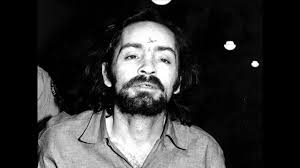 Charles Manson is an American cult leader whose followers carried out several notorious murders in the late 1960s and inspired the book Helter Skelter. Born in Ohio in 1934, Charles Manson is notoriously connected to the brutal slayings of actress Sharon Tate and other Hollywood residents, but he was never actually found guilty of committing the murders himself. However, the famous 'Tate-La Bianca' killings have immortalized him as a living embodiment of evil. Images of his staring 'mad eyes' are still used today to illustrate countless serial-murder news stories. The Manson Family—including Charles Manson and his young, loyal dropout disciples of murder—is thought to have carried out some 35 killings. Most were never tried, either for lack of evidence or because the perpetrators were already sentenced to life for the Tate/La Bianca killings. In 2012, Manson was denied parole for the 12th time. Charles Manson was born Charles Milles Maddox on November 12, 1934, in Cincinnati, Ohio, to Kathleen Maddox, a 16-year-old girl who was both an alcoholic and prostitute. Kathleen later married William Manson, but the marriage ended quickly and Charles was placed in a boys school. Although the boy ran back to his mother, she didn't want anything to do with him. Charles was soon living on the streets and getting by through petty crime. By 1951, Manson began spending time in prison, and early on, before he discovered the benefits of being a "model prisoner," he was considered dangerous. He would eventually spend half of the first 32 years of his life behind bars. A new chapter in his life began in 1955 when he married a 17-year-old girl and moved with her to California. She became pregnant, but Manson resumed a life of crime again, once again stealing cars. It wasn't long before he was back behind bars, and by 1956 his estranged wife had left with their child and her new lover. Manson later had another child with a different woman while out on probation.
 -
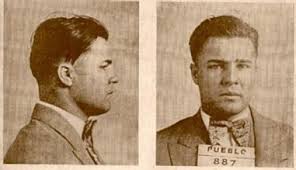 On July 10, 1942 the first of five brutal murders and rapes began with the 20 year old red-haired wife of a man named William Brown. Charles Floyd entered the Brown’s home and strangled his wife to death before brutalizing her body. She was pregnant at the time so police ruled the murder as a double homicide. Six months later Georgina Green and her happily married daughter were alone in their home when Floyd broke in. He bludgeoned both of them to death. They were both redheads, which helped police understand that the killer had an affinity for red-haired women. On May 15, 1945 the killer struck again. This time his victim was Panta Lou Niles, another red-haired woman. A local drifter named Henry Owens was arrested for the murders of these four women. Due to his simple mindedness, he was an easy suspect to pin the murders on. He remained in prison until Charles Floyd struck for the fifth and final time on July 1, 1948. Floyd broke into a home with a mother who was watching her two daughters. He began to force them into sexual acts until a concerned neighbor came to the aid of the women and Floyd ran off. Charles Floyd then broke into Ruth Norton’s home two blocks away and murdered her. Now that there were survivors of an attack, the police had a description that quickly led them to the arrest of Floyd on November 22, 1949. Floyd was convicted after confessing to the rape and murder of these five red-headed women and the murder of the unborn child. After testing his IQ the judge felt as though Floyd should not be sentenced to death by way of the electric chair, so Floyd was sentenced to life in a mental institution. Floyd would eventually die there due to natural causes.
 -
 Kenneth McDuff was an American serial killer suspected of at least 14 murders, and served time on death row from 1968 to 1972 and again in the 1990’s. Born on March 21, 1946, he was from central Texas and had three siblings. McDuff’s mother, Addie McDuff, was well known around her town as “the pistol packin’ momma” because of her habit of carrying a firearm and her violent tendencies. McDuff was known to shoot his .22 rifle at living creatures and was often getting into fights with boys older than he was. With these tendencies, he was well known by the sheriff of his hometown. Before his murder convictions, he was convicted of 12 counts of burglary and an attempted burglary. He was then sentenced to 12 four-year prison terms, served concurrently; however he was paroled in December of 1965. On the night of the murder, McDuff and his newfound friend, Roy Dale Green, were driving around central Texas when they came across a car parked near a baseball diamond. Inside the parked car were two men and a woman; Robert Brand, his girlfriend Edna Louise, and his cousin Marcus Dunnam. The two men approached the vehicle and ordered the three people into the trunk of both cars. McDuff and Green drove both of the cars to a remote area where both men were shot in the head. The woman was raped by both men and then strangled by McDuff with a broomstick. The following day when the murder was announced on the radio, Green felt guilty and turned himself in to the police. In exchange for his testimony against McDuff, he was given a lesser sentence. McDuff went to trial and was sentenced to death for the murder of Robert Brand. With the death sentence being overturned in 1972 and the overcrowding in Texas prisons, many prisoners were not serving out their full sentences. As a result, McDuff was given parole in October of 1989. Although never officially connected, another proposed McDuff victim was Sarafia Parker, whose body was found just three days after McDuff’s release from prison. Although released on parole, McDuff made no attempt to show he had reformed. He was convicted of making threats and trying to pick fights with others, and even for public drunkenness and a DUI. He began drinking heavily and became addicted to crack cocaine. During a roadblock in October of 1991 a woman with her hands behind her back was seen attempting to kick out the windshield of a car and was never seen alive again. She was later identified as a prostitute named Brenda Thompson. Only a few days later, another prostitute, Regina “Gina” Moore, also vanished. In December of 1991, McDuff and a close friend, Alva Hank Worley, were driving around looking for drugs. Worely later testified, that McDuff would point out specific women along the street that he would like to “take.” That night, they saw Colleen Reed, an accountant, who was washing her car at a car wash. McDuff grabbed her and forced her into the car. Both men raped the woman and although witnesses called the police, they were too late. McDuff dropped Worley off and later disposed of the body. A brief job at Quik-Pak market led McDuff to a fascination with his senior manager’s wife, Melissa Northrup. On many occasions, he mentioned wanting to rob the store and “take” Melissa. Her husband grew worried when she didn’t return home one night following her shift and an investigation was launched. Eyewitnesses were able to identify McDuff in the area of the abduction, as well as at the site where Colleen Reed was kidnapped. A month later, the body of Melissa Northrup was discovered. Around the same time, another body was found in the woods. Her name was Valencia Kay Joshua, a prostitute, who was last seen searching for McDuff’s dorm room. At this point, McDuff had fled Texas, obtained a new car and a fake ID. He became a garbage collector. Soon after Melissa Northrup’s body was found, he was profiled on America’s Most Wanted. Only a day later, a coworker contacted the police to tell them where to find him. He was pulled over during a garbage stop and became America’s Most Wanted’s 208th successful capture. During the first trial, involving the death of Northrup, he was rude and disruptive. He even tried to represent himself but could never provide truthful accounts of the night the woman was killed. He was sentenced to death for the murder of Melissa Northrup. Following that trial, he was then tried for the murder of Colleen Reed and was more disruptive this time around. Although her body was never found, he was convicted of killing her based on strong circumstantial evidence and eyewitness accounts. He was again sentenced to death. Following his arrests, Texas began an overhaul to ensure that no other criminals like him were able to get out on parole. They changed the rules and improved the monitoring upon release; collectively these new rules in Texas became known as McDuff laws. The location of Regina Moore and Brenda Thompson’s bodies were provided as his execution date neared. He was even taken out, under tight security, to provide the location of the remains of Colleen Reed. On November 18, 1998, McDuff was put to death by lethal injection in the Huntsville prison.
 -
 From June 1962 through January 1964, 13 single women between the ages of 19 and 85 were murdered throughout the Boston area. Many people believed that at least of 11 of these murders were committed by the same individual due the similar manner in which each murder was committed. It was believed that the women, who all lived alone, knew the attacker and let him in, or that he disguised himself as a repairman, or a delivery man to get the women to voluntarily let him into their apartments. “In every case, the victims had been raped – sometimes with foreign objects – and their bodies laid out nude, as if on display for a pornographic snapshot. Death was always due to strangulation, though the killer sometimes also used a knife. The ligature – a stocking, pillowcase, whatever – was inevitably left around the victim’s neck, tied with an exaggerated, ornamental bow.” This series of crimes was often referred to as “The Silk Stocking Murders” and the sought after attacker became known as the “Boston Strangler.” A couple of years before “The Silk Stocking Murders” began, a series of sex offenses began in the Cambridge, Massachusetts area. A smooth-talking man, in his late twenties, went door-to-door looking for young women. If a young woman answered the door, he would introduce himself as a talent scout from a modeling agency looking for new models. If she was interested he would tell her that he needed to get her measurements. Many women expressed interest and allowed him to measure them with his measuring tape. He would then fondle the women as he took their measurements. Several women contacted the police and this man was referred to as the “Measuring Man.” In March of 1960, police caught a man breaking into a house. He confessed to the burglary, and without any prompting, he also confessed to being the “Measuring Man.” The man’s name was Albert DeSalvo. The judge sentenced DeSalvo to 18 months in jail, but he was released after 11 months for good behavior. Following his release, he began a new crime spree throughout Massachusetts, Connecticut, Rhode Island, and New Hampshire. During this spree, DeSalvo, while dressed in green, broke into over 400 homes and sexually assaulted over 300 women. While police throughout New England were in search of the “Green Man”, Boston homicide detectives continued their search for the “Boston Strangler.” In October of 1964, a young woman who was one of the “Green Man’s” victims came forward to police saying that a man posing as a detective entered her home and sexually assaulted her. From her description of the man, the police were able to identify the man as Albert DeSalvo. A photo of DeSalvo was published in newspapers and several women came forward to identify him as their attacker. He was arrested on a rape charge and was sent to Bridgewater State Hospital for psychiatric observation, where he befriended convicted murderer George Nassar. It is speculated that the two worked out a deal to split reward money if one of them confessed to being the Boston Strangler. DeSalvo confessed to his attorney, F. Lee Bailey, that he was the Boston Strangler. Through DeSalvo’s ability to describe the murders in accurate detail, Bailey believed that DeSalvo was in fact the Strangler. After hours of questioning, where DeSalvo described murder by murder, the details of his victim’s apartments and what they wore, the police were convinced that they had the killer. Despite his confession, there was no physical evidence to link Albert DeSalvo to the “Silk Stocking Murders.” Doubt remained, and police brought the Strangler’s one surviving victim, Gertrude Gruen, to the prison to identify the man she fought off as he attempted to strangle her. To observe her reaction, the police brought two men through the prison lobby, the first was Nassar and the second was DeSalvo. Gruen said that the second man, DeSalvo, was not the man; however, when she saw the first man, Nassar, she felt there was “something upsetting, something frighteningly familiar about that man.” Through it all, DeSalvo’s wife, family and friends never believed he was capable of being the Strangler. Because there was no physical evidence and he did not match witness descriptions, he was never tried in any of the “Boston Strangler” murders. He was however sent to prison for life for the rapes and sexual assaults from the “Green Man” case. He was sent to Walpole maximum security state prison in 1967 to serve his sentence; but six years later he was stabbed to death in his cell. After nearly 50 years, no one has ever been charged as the Boston Strangler. In July 2013, the Boston Police Department believed that they had discovered DNA evidence linking Albert DeSalvo to Mary Sullivan, who had been raped and strangled in 1964 – the final victim of the Boston Strangler. After taking DNA from DeSalvo’s nephew, the Boston Police said it was a “near certain match” to DNA evidence found on Mary Sullivan’s body and on a blanket taken from her apartment. Upon this discovery, the court ordered the exhumation of DeSalvo’s body. After extracting DNA from DeSalvo’s femur and some of his teeth, it was determined that DeSalvo was the man who killed and raped Mary Sullivan. While the case of Mary Sullivan’s murder has been closed, the mystery of the Boston Strangler still remains open to speculation.
 -
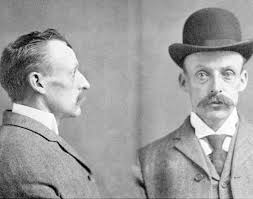 Albert Fish was first known as Frank Howard. He responded to an ad looking for work placed in the newspaper by Edward Budd. Edward Budd was an 18 year-old boy determined to make something of himself. Frank Howard arrived at Budd’s doorstep with a job offer. He stated that he would like to have Budd come work with him at his farm, telling the story of his six children and how his wife had left them. Edward was looking forward to having a job and providing for his family, and Howard even offered a job to Budd’s friend, Willie. Howard planned to come pick them up a few days later to take them back to his farm to begin work. When Howard didn’t show, he provided a hand-written note explaining that he would be in touch in a few days. He came over for a visit the following morning and the family invited him to stay for lunch. During his visit, Howard spotted Budd’s younger sister, Gracie. Explaining that he had to attend a birthday party before he could take the boys to the farm, he asked if Gracie would like to join him. With his gracious attitude and friendly nature, the Budds gave Gracie permission to attend the party. That evening, Howard did not return and Gracie vanished. The family reported her disappearance to the local police and an investigation began. No leads were discovered, partially because Frank Howard didn’t exist. The Budd family received a letter with a description of the mutilation and murder of little Gracie. The note matched the handwriting from the original note sent to them earlier. During the time of the investigation and before the letter was received, another child vanished. Billy Gaffney, a four year-old boy playing with his neighbor, who was also named Billy, disappeared and the three year-old Billy stated that “the boogey man” took Billy Gaffney. The police didn’t take the statement to heart, and instead ignored it. Shortly after the disappearance of Billy Gaffney, another little boy also disappeared. Eight year-old Francis McDonnell was playing on the porch with his mother when a grey-haired, frail, old man walked down the street muttering to himself. The mother noticed his awkward demeanor but did not report anything. Later that day, while Francis was playing at the park, his friends noticed that he walked into the woods with an elderly grey-haired man. When his family noticed that he was missing, they organized a search. Francis was found under some branches in the woods, badly beaten and strangled with his suspenders. The manhunt for the “grey man” began but despite many efforts, he vanished. The letter that was received by the Budd family was investigated and was found to contain an emblem of the New York Private Chauffeur’s Benevolent Association (NYPCBA). All of the members were required to obtain a handwriting test for comparison to the letters from Howard. A janitor came forward to admit that he had taken some sheets of paper and left them in his old rooming house. The landlady was able to confirm that an old man matching the description had lived there for two months and had only checked out a few days earlier. The former tenant was identified as Albert H. Fish. The landlady also mentioned that he wanted her to hold a letter that would be arriving from his son. Detectives intercepted the letter at the post office and were contacted by the landlady that he would be coming to get his letter. The lead detective was able to capture Mr. Fish. Many confessions and testimonies were heard by law enforcement and psychiatrists. Mr. Fish described how he wanted to lure Edward Budd and his friend Willie to his farm to kill them. However, once he laid eyes on Gracie, he changed his mind and desperately wanted to kill her. He took Gracie to the train station and purchased her a one-way ticket. After the ride to the country side, he took her to a house. While at the house he told Gracie to wait outside and she picked flowers. He went to the second floor of the house and removed all of his clothes. When he called for Gracie to come upstairs she was frightened by him and called out for her mother. Mr. Fish choked her to death. Following her death, he decapitated her and cut up her body. He took parts with him when he left, wrapped in newspaper. Police were able to locate the remains of Gracie based on his confession. Albert Fish had many run-ins with police in his lifetime. However, each time charges were dismissed. He discussed the details of the murder of Billy Gaffney, describing how he tied him up and beat him. He even admitted to drinking his blood and making a stew out of his body parts. His attitude was not like those of people with psychosis. He was calm and reserved, which was out of the ordinary. He confessed that he wanted to inflict pain and have pain inflicted on him. He taunted and preyed on children, mostly boys. He also had a compulsion to write and send obscene letters. An x-ray determined that he placed needles into the region between his anus and scrotum, and at least 29 needles were discovered. In trial, the defense argued that he was legally insane. They used many descriptions and testimonies to prove to the jury that he was mentally ill. However, the jury didn’t believe this. He was considered to be a “psychopathic personality without a psychosis” and he was found guilty after 10 days of trial.