


Midnight Man
-
Posts
2,389 -
Joined
-
Last visited
-
Days Won
2
Content Type
Profiles
Articles
Calendars
module__media_media
Everything posted by Midnight Man
-

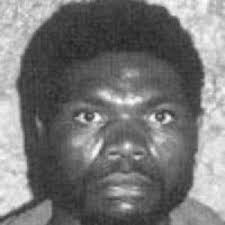 Christopher Mhlengwa Zikode is a South African rapist and serial killer who was convicted in 1995 on 8 counts of murder, 5 counts of rape, 5 counts of attempted murder and 2 counts of indecent assault. Zikode is however considered responsible for at least 18 murders and 11 attempted murders. Known as the "Donnybrook Serial Killer," Zikode murdered 18 people and attempted to murder another 11 over a period of two years in the rural Natal midlands town of Donnybrook in South Africa. All his victims were between 20 and 30. His modus operandi was to kick open the door of his victims' house, shoot the men in the head and drag the women to nearby plantations, where he would rape them repeatedly - sometimes for as long as five hours - and kill them. If they resisted he would shoot them first and commit necrophilia. Sometimes he would attack women from behind in footpaths in the area. Mhlengwa, 21 was arrested on September 29, 1995. On January 7, 1997, a High Court judge sentenced 23-year-old Zikode (23) to 140 years in prison, including five life sentences for a six-month rape and murder rampage. The judge said during sentencing that Zikode had absolutely no regard for human life and his attitude to women was "contemptible," and found it unnecessary to review the "gory details" of the case. Zikode was convicted on 21 charges, including eight murders, five rapes, five attempted murders and one indecent assault, between April and September 1995. The judge noted "with dismay" that ZIKODE was arrested for the first time in July 1995 for the attempted murder of Beauty ZULU. While on bail he committed five more offences - two attempted murders, housebreaking with intent to rape and murder.
 -
 Randall Woodfield is anAmerican serial killer who was dubbed The I-5 Killer or The I-5 Bandit by law enforcement due to the crimes he committed along the Interstate 5 corridorrunning through Washington, Oregon, and California. Before his capture, the I-5 Killer was suspected of multiple sexual assaults and murders. A native ofOregon, Woodfield was convicted of three murders and is suspected of killing up to 44 people. He is currently incarcerated at the Oregon State Penitentiary. In 2011, Woodfield was the subject of a Lifetime television movie Hunt for the I-5 Killer. The movie was based on the book The I-5 Killer by crime author Ann Rule. The former Greenbay Packers' hopeful, is nearing 60, and his black hair is gray now. He married twice while he was in prison, the last marriage a few years ago. He has little chance of a parole, although he still claims to be innocent of the rapes and murders of numerous victims in the seventies and early eighties. Detectives feel he is actually guilty of many more homicides than he was charged with, but, of course, there is no statute of limitation on murder. On February 8, 2006, Portland detectives announced that modern-day DNA testing had linked Randy's body fluids with the 1980 murder of Cherie Ayers, who had graduated from high school with him, and with whom he planned their "10 Year Class Reunion." Anyone who has read The I-5 Killer knows that the murders of Darci Fix, Doug Altic, Julie Reitz, In the Portland area, and Donna Eckard and Janell Jarvis, In Shasta County, California, have either gone unsolved or unpunished. There is little doubt that modern forensic science will finally close out those cases. No one should get a half dozen murders for the price of one.
 -
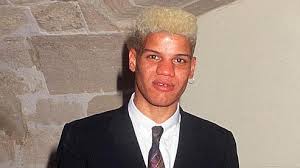 Paulin was born in Fort-de-France, Martinique. His father flew to France just after his birth, leaving his teen-aged mother to fend for herself and the baby. Paulin was raised in Martinique by his paternal grandmother, who owned a restaurant and allegedly paid little attention to her grandson. When he was ten, Paulin started to live with his now married mother, trying to blend in with his stepbrothers and sisters. His behavior started to become erratic and violent towards the other children, and eventually his mother asked his father to take their son to France. His father accepted in order to avoid paying alimony. Alternately dubbed the “Monster of Montmartre” and the “Little Old Lady Killer,” Thierry Paulin stood out as an anomaly not only within “normal” society but among serial killers. The victims of most sadistic psychopaths generally mirror the murderer’s own sexual orientation and race: whites tend to prey on whites, blacks on blacks, straight males on women, gay males on other men, etc. Paulin violated all these expectations. A bleached blond black drag queen, he savagely murdered nearly two dozen old white women in the Montmartre neighbourhood of Paris in the mid-1980’s, creating a panic among the city’s elderly female population. Paulin’s crime wave began in 1984, when he was twenty-one. Accompanied on occasion by his nineteen-year-old lover, Jean-Thierry Mathurin, Paulin would trail old ladies home as they returned from the market, then pounce when they unlocked the front door. He and his accomplice killed with unusual ferocity. One victim, eighty-year-old Marie Choy, was bound with steel wire and forced to drink bleach before she was beaten to death. Another, seventy-five-year-old Maria Mico-Diaz, was so savagely hacked with a knife that she was nearly cut in two. The “Monster of Montmartre” celebrate his twenty-fourth birthday in November 1987, by attacking three victims during a single weekend. One survived to describe him to the police, who had little trouble tracking down a black transvestite with platinum blond hair. In custody, Paulin confessed to the murder of twenty-one female victims between the ages of sixty and ninety-five. He died of AIDS in April 1989, while awaiting trial.
 -
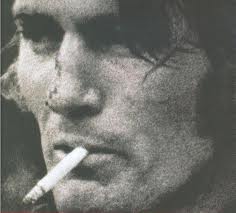 Paul John Knowles, a.k.a. "Lester Daryl Gates" aka "Daryl Golden" was an American spree killer, also known as The Casanova Killer, tied to the deaths of 18 people in 1974, though he claimed to have taken 35 lives. Born in Orlando, Florida, his father gave him up to live in foster homes and reformatories after he was convicted of a petty crime. Knowles himself was first incarcerated at the age of 19, and in the years following he spent more time in prison. In 1974, he was granted parole and sought to marry Mrs. Angela Covic, with whom he had corresponded from prison. Allegedly because of something a psychic told her, she ended the relationship. After this rejection, Knowles went on a murderous spree across northern Florida. He was eventually caught in Georgia and sent back to Florida. In early 1974, Knowles was serving time in the prison at Raiford, Florida when he began corresponding with a California divorcee, named Angela Covic. Angela visited the prison long enough to accept his proposal of marriage. She was then instrumental in getting Knowles released from prison by paying for the lawyers used to win his release. When he was granted parole and released following the stint at Raiford Prison, Knowles flew directly to San Francisco to marry Angela Covic. Highly agitated at the rejection by Covic, Knowles traveled back home to Jacksonville, Florida. He was soon arrested after a bar scuffle and was jailed again. He avoided a quick trip back to prison on this occasion by picking a lock and escaping on July 26, 1974. After escaping, Knowles went on a murderous spree across the country starting that same night in Jacksonville. He was eventually caught in Georgia, but while he was claiming to assist officers in finding the officer's pistol he had used in his last two murders, he tried to escape and was shot and killed by a police officer. Paul John Knowles was a man with an I.Q. of 129, an excellent musician and a disco dancer. He was so good a dancer that when he would get on the dance floor, others would get off the dance floor just to watch him. Paul John Knowles was a lean, red-haired joy killer who taped his own confession to fourteen murders and told a Georgia sheriff that he had killed eighteen times in seven states. "I ask him to tell me how many people he had killed," said Georgia Sheriff Earl Lee, who had custody of Knowles for two weeks in December of 1974. "He made a figure 18 in the palm of his hand. I said where did you kill them?" Knowles wrote out several states on a peace of scrap paper, showed it to Sheriff Earl Lee and then burned the piece of paper. Sheriff Earl Lee describes Knowles as "intelligent and mean as hell." Knowles was charged with seven killings in Georgia, Florida and Ohio. Georgia Law Enforcement officers were fearful of an escape attempt and moved him from county to county. In early December 1974, Knowles was transferred to the Douglas County, Georgia Jail, which was under Sheriff Earl Lee. On December 18, 1974, Sheriff Earl Lee and G.B.I. Agent, Ronnie Angel were taking Knowles to Henry County, where Knowles had dumped a weapon he had taken from the Florida State Trooper he had Killed. While traveling on I-20 close to Lee Road, Knowles picked his handcuffs with a paper clip. Knowles then leaned over the seat and grabbed Sheriff Earl Lee's gun, discharging it through the holster. Sheriff Earl Lee, who was driving tried to control the car and struggle with Knowles at the same time. During the struggle Agent Ronnie Angel, without hesitation whipped out his own pistol and shot Knowles point blank in the rear of the Sheriff's car; killing him instantly.
 -
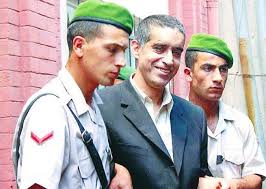 Yavuz Yapıcıoğlu is a Turkish serial killer and arsonist. Nicknamed "The Screwdriver Killer", he is considered the killer with the greatest number of victims in Turkey. He murdered at least eighteen people between the period of 1994-2002 and assaulted many more. Even though criminal records tell us that he murdered eighteen people, his family and eye witnesses claimed he murdered between forty three to fifty people . What is more, his brother claims that Yapicioglu is not only a serial killer, but also a rapist. His brother believes that his sibling is responsible for raping and then murdering as many as two young university student girls.He has nine siblings. He claimed his family was unloving. His father married a woman with whom he had an affair, and he was raised by his stepmother. He finished primary and middle school at the top of the class. He was well liked by his classmates. He left home and dropped out of high school in the tenth grade after a quarrel with his parents.
 -
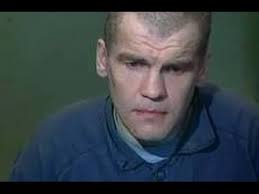 Sergei Ryakhovsky, also known as The Hippopotamus or The Balashikha Ripper is a Russian serial killer and rapist who between 1988 and 1993 killed in and around Moscow at least 19 people aged 14 to 78 years including 12 men, 4 women and 3 boys. He also assaulted six other victims who survived the attack. During a routine search of the crime scene area, investigators found a shack with a noose fixed to the ceiling. Considering it a part of the preparation for the next murder, they decide to make an ambush. On 13 April 1993 Ryakhovsky arrived at the shack and was subsequently arrested by the Militsiya officers. It is worth noting that despite his considerable strength and violent temperament shown later at trial, Ryakhovsky gives absolutely no resistance. Later he admitted that, after seeing weapons in the hands of officers he became paralyzed with fear. During investigation Ryakhovsky cooperated with officials and investigators, willingly indicating crime scenes and describing methods of killing. According to his confessions, most murders were not planned and were rather an effect of a sudden impulse forcing him to “clean the world of homosexuals and prostitutes”, the same explanations were used to explain motivation behind the murder of 70-year old woman and 78-years old man Ryahovski accidentally met in the forest. There was an exception however, as the murder of three homosexuals met in Izmailovski Park in 1988 were thoroughly planned and the murder of 45-years old woman that, according to Ryakhovsky, was a result of his sexual urge. Most victims were people over 40 and around 50 years of age, three of his were over 60. According to psychiatrists from the Moscow Serbsky Institute, Ryakhovsky’s necrophiliac tendencies were caused by a malfunction in his central nervous system, however Ryakhovsky was evaluated as sane, competent for trial and fully responsible for his actions. After being informed of his diagnosis, Ryakhovsky ‘s behaviour changed dramatically. The accused, at first complacent and fully cooperating with the investigators, suddenly became obtrusive, stopped his cooperation and began demanding punishment for the experts. He also revoked his previous confessions. This may suggest that he planned to avoid death penalty through an insanity plea. Ryakhovsky was sentenced to death by firing squad in July, 1995. After hearing the verdict he said: ‘I will be back’. However, in 1996 Russia imposed moratorium on executions and the sentece was changed to lifetime imprisonment in the maximum-security penal colony IK1.
 -
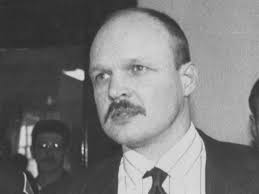 In death, the despicable acts of Larry Eyler were countered by one redeeming gesture-the confession through his court-appointed attorney that he had killed 21 boys and young men in the two states in the early 1980s, picking them up at random in gay bars or while they were hitchhiking and luring them to their deaths in a spree of rage. It is important to note that Eyler's saying he was the murderer does not necessarily make it so. Nevertheless, the revelations were not a surprise to authorities in Illinois and Indiana, who-once they had gotten on Eyler's trail-had reason to suspect that he was a serial killer in the gruesome mold of a John Wayne Gacy or Jeffrey Dahmer. And to the families, Eyler's word was sufficient to at last close the book. There was comfort, too, in that Eyler-though he escaped execution-was now himself dead, succumbing to AIDS-related complications Sunday at Pontiac Correctional Center. Indianapolis Police Lt. Steven Garner spoke for them all: "It's not for the police; it's for the families. When your son, your brother, has been dead for years, you want some sort of finality to it: `Just tell me the truth, no matter how grotesque it is.' All of these families can now put their children to rest." Police and prosecutors, however, are challenged anew-obligated to attempt their own closure from the clues and details left behind by Eyler. Seven victims, for example, remain unidentified. There also is Eyler's claim that in four of the murders he had an accomplice-a disturbing assertion that must be pursued urgently. Indeed, a companion was acquitted of an Indiana murder in 1991. And there is the irony that Eyler insisted that someone else, not he, committed the one murder for which he was sentenced to die-the 1984 slaying of 15-year-old Daniel Bridges of Uptown. It is not sufficient for the office of Cook County State's Atty. Jack O'Malley to summarily dismiss this possibility. The victims and families may rest. Justice cannot.
 -
 The "mama's boy" of serial killers. Known as the Siberian Cannibal. Russian, Alexander Spesivtsev, was accused of killing over 80 children and cannibalizing some of his victims. Spesivtsev, committed his crimes with the assistance of his mother. If that wasn't enough, Spesivtsev was sent to a mental institute (twice!), while his mother spent 13 years in prison. Not much is know about Spesivtsev's early life. He was born march 1st, 1970 (some accounts say 1969) in a very abusive home. His father allegedly tortured the entire family. Spesivtsev, would later torture and kill his girlfriend. A crime for which his only punishment was 3 years in a mental institute. After his release, he moved into an apartment with his mother, Lyudmila. Alexander Spesivtsev, took it upon himself to "cleanse the evil that democracy had brought" and decided that homeless children were detrimental to society. His murder spree began in Siberia in 1991 and lasted until 1996. His mother, Lyudmila, would lure the children into their apartment with her motherly look, where Spesivtsev would torture, rape and kill the children. Later, his mother would cook the victim and they would sit down and have dinner. He began discarding body parts in the Aba river in the summer of 1996. Police began to suspect that there was a serial killer, but since the victims were homeless and children, not a lot of weight was put into the investigation. If police had acted on complaints by Spesivtsev’s neighbors they may have been able to save some of the children. One of Spesivtsev’s neighbors continuously complained to police of the stench coming from the apartment and the incredibly loud rock music. No officer went to investigate or even look up the man in question. Ever. After his arrest, one of Spesivtsev's victims, Olga Galtseva, told prosecutors how Lyumilda lure her and 2 of her friends, 13 year old girls, into the apartment. They were asked to help with grocery bags. The 3 girls were beaten and raped. After the first girl was killed, the remaining 2 had to cut her into pieces in the bathtub. Olga was forced to eat soup made out of one of her friends. At the time of his arrest, in 1996, Spesovtsev was an unemployed black marketeer living in the Siberian town of Novokuznetsk. A pipe breakage in his apartment forced the neighbors to call a plumber. Since no one ever answered the knock, the door was opened by force. As the police entered, they noticed blood on all walls. Human pieces were found in the kitchen. A mutilated headless body was found in the bathtub. A rib cage in the living room. On the sofa, there was a 15 year old girl, still alive, but with deadly wounds. Olga Galtseva would die a few hours later. Evading police, Spesivtsev escaped through his balcony. He was later captured in a woman's apartment while he tried to rape her. During his interrogation, Mr Spesivtsev, confessed to over 80 murders and during the investigation, authorities found over 82 different pieces of bloody clothing and jewelry. Although suspected of over 80 murders, he was only found guilty in 19 cases. Mainly because he wrote detail descriptions in his diary (of course he had a diary!). Ruled insane by a court. Spesivtsev, now resides in a psychiatric hospital writing poetry and philosophy. His mother was released after 13 years, (even thought she was sentenced to life in prison). To this day, however, she has not uttered a word since her arrest.
 -
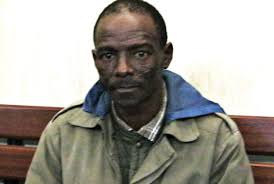 The arrest of Bulelani Mabhayi, the “Monster of Tholeni”, proved to be most daunting. Mabhayi operated in the Eastern Cape, preying on victims in Tholeni, a place that became known as “the village of death”. The village lies along the N2 freeway, about 15km from Butterworth, a town situated between East London and Mthatha. It’s a small village. Herds of cattle, sheep and goats graze on the vegetation growing in the almost barren landscape. “There aren’t many jobs around and most people just keep livestock or do odd jobs in the village or town,” said Nomfundiso Mpontshane, an activist whose house was used as a victim support centre for traumatised relatives and other frightened villagers during Mabhayi’s reign of terror. There are abandoned and dilapidated buildings interspersed with brightly painted houses. The deserted houses belonged to Mabhayi’s victims or their relatives, an eerie reminder of his trail of destruction. It was in June 2010, after the murder of Sinazo Mbeki and her two grandchildren, that Hanise was tasked with tracking the perpetrator behind a string of murders now believed to be linked. The three killings brought to eight the tally of murders that were believed to have been committed by the same perpetrator. Authorities were for the first time admitting that they were looking for a serial killer. Hanise and his team of detectives initially put up a R250 000 reward for an arrest leading to a conviction, but nobody came forward with any helpful information. “We called the psychologists’ office to help determine if we had a serial killer on our hands. They confirmed that,” said Hanise. DNA samples were also collected from some of the village residents with previous rape convictions in the hope of finding a link. It came to naught. The case stalled and so provincial police management initiated a strategy called Operation Good Hope, drawing on police from various units including the organised crime unit, the dog unit and forensic divisions. The joint operation made its first move on May 17, 2010, when hundreds of males over the age of 16 were rounded up in an early-morning blitz in the area. They were taken to a local church, where they had their DNA samples and fingerprints taken. Mabhayi was among them, but his fingerprints could not be lifted as he did not have an ID document. The police focus did not deter Mabhayi. He continued with his killing spree, murdering five more people over the next 13 months. The breakthrough, when it was finally made, came as a result of Mabhayi’s indiscretion rather than good detective work. On August 11 last year, Mabhayi murdered Nophumzile Florence Lubambo and accidentally left his shoe at the crime scene. It was a mistake that led to his arrest. “We were looking for another person, who happened to be his (Mabhayi)’s brother, the late Siyabonga. Incidentally, we got him because of the shoe we found on the crime scene. It matched the one he was wearing,” said Hanise. The saliva that had been drawn from Mabhayi during Operation Good Hope proved indispensable. His DNA test results linked him to the string of murders. “It was a huge relief when he was arrested. I can gladly go on pension now,” laughed Hanise. As Mabhayi began serving his life sentence in prison on Tuesday, residents of the village he terrorised for so long said they continued to live in fear. Many believe Mabhayi was not working alone when he committed his crimes. “When he testified in court, he (Mabhayi) always said ‘we’ when he answered questions. Who else was he referring to?” asked Mpontshane.
 -
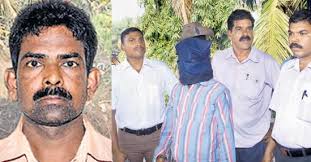 Mohan Kumar, also known as Cyanide Mohan, is a serial killerwho preyed on women looking for marriage. A Mangalore fast track court tried and convicted him for the murder of 20 women. He was accused of luring women who were unable to pay dowry or were unable to find suitable husbands. He would kill them by giving them cyanide pills, claiming they were contraceptives, and rob them of their jewelry. He was charged with 20 murders and defended himself in court. He was sentenced to death in December 2013. Apart from murder, he was also alleged to have been involved in bank loan frauds and forgeries. He was a primary school physical education teacher from 1980 to 2003. He confessed to the murders of 20 young girls over a period of 5 years. His modus operandi was to lure unmarried young girls into marrying him. The next day after marriage, he would kill them by giving them the anti-pregnancy pill. He is also known as Cyanide Mohan.
 -
 Yoo Young-chul was born in 1970, in South Korea. His parents separated quickly soon after his birth and Yoo was raised along with his siblings by his grandmother for a few years until they moved in with their father in the Mapo district of Seoul. Yoo's parents were blue collar workers who often had money problems. This poverty was one of the reasons he was made fun of in class, which planted in him a resentment towards the wealthy. It was in school where he also found an interest in the arts. He played guitar, sang, painted, and read poetry through elementary school, finding himself enamored with arts so much that he applied to a high school that specialized in them. He was denied admission though and enrolled in a technical school. During his high school years, he began his life of crime and spent time in juvenile detention for thievery. He continued stealing into his adulthood, from cash and cameras to cars. He spent time in and out of jail throughout the 90s as a way to provide for his young family. In 2000, Yoo was arrested for the rape of a 15-year old girl, which caused his wife to divorce him while he served his time in prison. When he was released from prison in 2002, he earned money by extorting it from pimps and hookers, using a fake police ID. He then decided to step up his criminal activities, and broke into a house that seemed to belong to affluent people. Inside, he found a very elderly couple that he murdered and stole from. He committed at least two more robberies and killed four more people in the process. Yoo then moved onto killing prostitutes, taking advantage of the anonymity provided by South Korea's illicit sex market. He managed to find a system that allowed him to lure prostitutes into his apartment, where he would bash their heads in with a homemade hammer that became his signature murder weapon. Hiding the bodies would involve him cutting up the corpse and burying the pieces in a particularly humid area of Seoul where they would decompose quickly. Yoo's murders became infamous quickly, to the point where pimps voluntarily collaborated with police in an attempt to catch the killer. Local pimps had noticed that one number had come up in relation to the various prostitutes' deaths and notified the police of it. The next time the number came up during the summer of 2004, the pimps and police laid a trap for the caller. Yoo was ambushed, found chewing phone cards and carrying the fake police badge that he had been using throughout the year. When he was brought in by the police, Yoo confessed to everything, claiming to have killed 26 people since the time he was released from prison in 2003. He led police to various corpses and was eventually charged for 21 murders. While Yoo was sentenced to death, the debate over the death sentence in South Korea has made it so that he waits in prison with 62 other convicts with the same sentence.
 -
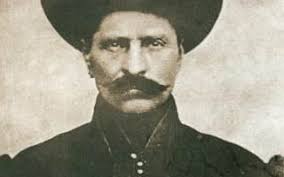 Vasile Tcaciuc was a Romanian man who lured victims and then murdered them with an axe that he specially constructed. The primary motive was robbery. On 7 September 1935 a dog found six bodies under his house. He had already been in prison on robbery and burglary charges. He confessed to having committed at least 26 murders. He was shot dead by a policeman while trying to escape during a reconstruction of one of his crimes.
 -
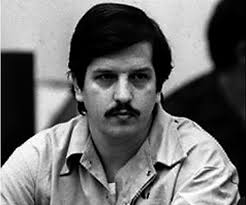 On the night of February 22, 1996, William George Bonin requested two pepperoni and sausage pizzas, three pints of coffee ice cream and three six-packs of Coke for dinner. He watched “Jeopardy” while he ate. Hours later, he put on a new pair of denim pants and a blue work shirt and was led to the execution chamber at San Quentin Prison. At 12:13 a.m. on February 23, 1996, Bonin was pronounced dead, the first inmate executed by lethal injection in the state of California. Bonin, known as the “Freeway Killer”, was convicted of 14 murders committed across two counties between 1979 and 1980, and he was suspected in many other deaths. His victims were all boys, 12 to 19 years old—some hitchhikers, some prostitutes, some just young men in the wrong place at the worst possible time—who were robbed and raped before being killed and dumped along California freeways. According to court records, most had marks on their wrists and ankles indicating they had been tied up, and some showed signs of beatings and torture. On August 6, 1979, the body of the first victim Bonin would be convicted of killing was discovered naked on the side of a road in Malibu Canyon. Marcus Grabs, a 17-year-old German student on a backpacking trip, was abducted the night before, sodomized, beaten and stabbed 77 times. Weeks later, on August 27, the body of 15-year-old Donald Hyden was found near an off-ramp of the Ventura Freeway. He had been sodomized, stabbed and strangled, and he had a burn mark above his groin. At least a dozen more victims followed, most killed by ligature strangulation. According to court records: When he was arrested on June 11, 1980, Bonin was caught in the act of raping a 15-year-old boy in his van. Police found white nylon cord and three knives in the vehicle. Bonin later gave investigators a statement leading them to the body of 14-year-old Sean King, who had disappeared from a bus stop in Downey on May 20, 1980, but that statement was not admissible in court. He was acquitted of King’s murder. Court records show Bonin had at least four alleged accomplices during the course of his killing spree. One, Vernon Butts, committed suicide in jail while awaiting trial. Gregory Miley and James Munro, two teens who had sexual relationships with Bonin, pleaded guilty to murder charges and cooperated with the prosecution. According to prosecutors, Gregory Miley was 18 years old when he and Bonin picked up one of the victims, Charles Miranda, near the Starwood Ballroom in West Hollywood in the early hours of February 3, 1980. Bonin sodomized Miranda and Miley attempted to but was unable to do it. Miley testified that Bonin whispered to him, “This kid’s going to die,” and began to tie him up. He asked why Bonin did not just let Miranda go and Bonin replied, “No, man, he’ll know the van and he’ll know us.” Bonin and Miley then used Miranda’s shirt to suffocate him and crushed his neck with a jack handle, court records state. After they dumped his body in an alley, Bonin said, “I’m horny again. I need another one,” according to Miley. Later that morning in Huntington Beach, they picked up James Macabe, a 12-year-old who said he was on his way to Disneyland, according to prosecutors. Miley drove the van while Bonin sexually assaulted him. The two then strangled Macabe with a shirt and left his body in a dumpster. At Bonin’s Orange County trial, James Munro, who was 18 at the time of Steven Wells’ murder, testified that he and Bonin picked up Wells as he was hitchhiking on the afternoon of June 2, 1980 and brought him to Bonin’s house. According to Munro, Bonin offered to pay Wells if he would let him tie him up during sex. Munro then helped hold Wells down while Bonin strangled him with a t-shirt. When they were on their way to dispose of the body, they bought cheeseburgers with $10 they took from Wells’ wallet, Munro claimed. As they ate, Bonin allegedly looked up and laughed, saying, “Thanks, Steve, wherever you are.” However, Munro changed his story about exactly what happened many times. Several exhibits introduced at the trial showed inconsistencies, including letters Munro wrote to judges and to Bonin’s defense attorney claiming that he either never saw Bonin kill anyone or that he killed Wells himself. Bonin’s attorney highlighted these contradictions during Munro’s cross-examination. A fourth accomplice, William Pugh, was the one who first put police onto Bonin’s trail, according to court records. After an arrest for unrelated auto theft charges on May 29, 1980, Pugh, then 17, told authorities that he had gotten a ride home from a party with Bonin once and that Bonin talked about having killed young boys. Investigators eventually learned that Pugh participated in Bonin’s March 1980 abduction and killing of Harry Turner. Still, his tip gave police a suspect, and Bonin was placed under surveillance on the night of June 2, leading to his arrest just over a week later, according to a probation officer’s report. Pugh was convicted of voluntary manslaughter in Turner’s death and sentenced to six years in prison. Once detectives convinced Bonin’s friend and neighbor, Scott Fraser, of his guilt, Fraser told them that Bonin claimed to have killed a teen in self-defense in August 1979 and that Vernon Butts was present at the time, Fraser said Bonin claimed he hid the body because he thought police would never believe him, given his criminal record for assaulting teenage boys. Police then arrested Butts, who confessed to participating in six or seven murders with Bonin before his suicide, investigator John St. John told the Register. Fraser ultimately received a $20,000 reward that had been offered for information in the case. In addition to Fraser, Miley and Munro, another key witness at Bonin’s trials was reporter David Lopez of KNXT in Los Angeles. Lopez, who interviewed Bonin in jail after his arrest, testified that he showed Bonin a list of 21 presumed victims of the Freeway Killer and Bonin admitted to murdering 20 of them. When Lopez asked what he would be doing if he was not in jail, Bonin said, “I'd still be killing. I couldn't stop killing. It got easier with each victim I did." Prosecutors also presented forensic evidence linking Bonin to several of the murders. Investigators found triskelion-shaped fibers on the bodies of three of the victims that were consistent with the carpeting of his van. Hair that matched Bonin’s was found on three other victims. Also, human blood stains were found in several places in Bonin’s home and vehicle. At both of his trials, Bonin’s defense largely focused on attempting to discredit the prosecution witnesses, many of whom were criminals who stood to benefit from testifying against him. During the penalty phases, they tried to show that Bonin had been abandoned and abused as a child and that he had the potential to behave well and contribute to society in the structured setting of a prison if spared the death penalty. Bonin’s former pre-parole counselor testified that he seemed interested in helping people and raised money to support the family of a prisoner in New England. A records custodian from Atascadero State Hospital said Bonin volunteered for experimental treatment programs while in custody for a previous sexual assault conviction. Defense experts testified that Bonin suffered from repeated abandonment as a child and that he showed signs of organic brain damage. Dr. Jonathan Pincus said Bonin exhibited a “snout reflex” and a “right Babinski reflex” that suggested frontal lobe damage, which could have made him uncommonly impulse-driven. However, Dr. Park Dietz, testifying for the prosecution, said that Bonin did not present any other behaviors associated with such damage and he testified that the reflexes Pincus observed would not explain a desire to sexually assault young men. Dietz determined that Bonin was a sexual sadist with a possible antisocial personality disorder, but he did not identify signs of any other neurological or psychiatric disorders. Bonin was sentenced to death in both Los Angeles County and Orange County. An opinion on the case written by Ninth Circuit Court of Appeals Judge Alex Kozinski in 1995 highlighted a disturbing truth about Bonin’s crimes: “The facts of this case shock even those of us inured to shocking facts by years of capital cases. Most distressing, however, is that these tragedies could have been averted: Bonin gave us more than fair warning of his proclivities before he embarked on his killing spree.” Testimony by Bonin’s relatives and others at his trial alleged that his father was an abusive alcoholic and that Bonin was sexually abused in a detention home as a child. He served in Vietnam, received a medal for saving a fellow soldier and was honorably discharged, but he also engaged in what a judge described as “violent nonconsensual homosexual activity” during his service. Family members testified that he returned from the war a changed man. According to court testimony, he had planned to marry a woman when he came back, but she married someone else while he was away. Between 1968 and 1969, Bonin abducted and sexually assaulted four teenage boys. One said he was gagged with his underwear and another was choked nearly to unconsciousness. When he was arrested in 1969, Bonin was driving with a 16-year-old boy. He told police he might have killed the teen if they had not caught him, according to court records. He was committed to Atascadero State Hospital as a “mentally disordered sex offender amenable to treatment.” However, in 1971, he was found unamenable to treatment and sent to prison instead. Bonin was released in 1974 and was convicted of sexually assaulting a teenage boy at gunpoint the following year. At the time of his arrest, he told police he would never leave a witness alive to testify against him again, court records showed. In 1978, he was paroled. A year later, the freeway killings began. Bonin presented numerous arguments in his appeals, many relating to alleged failures by his trial attorney to present mitigating evidence and decisions by judges that he argued infringed on his rights. Appellate courts agreed that some errors were made, but they never concluded that those mistakes—such as allowing David Lopez to testify that Bonin admitted to 20 or 21 murders rather than just 14, or only letting one of his two defense attorneys present closing arguments—would have impacted the verdict. While awaiting his execution, William Bonin wrote a collection of stories and essays that received a small print run. The book, titled “Doing Time, Stories from the Mind of a Death Row Prisoner,” included several fictional tales of young boys in danger that ended with moments of redemption. “I like the way my writing is going…the message that I’m trying to get across,” Bonin said in a 1991 telephone interview with the paper. On the morning before his execution, while his attorneys filed motions for last-minute intervention by the Supreme Court, Bonin gave an interview to a local radio station. He told a reporter he had accepted the fact that he was going to die. However, he said of the victims’ families, “They feel that my death will bring closure. But that’s not the case. They’re going to find out.” About 50 witnesses attended the execution, including family members of several of Bonin’s victims and the survivor of the 1975 attack. According to the California Department of Corrections and Rehabilitation, Bonin delivered his last words to the prison warden 45 minutes before his death. “That I feel the death penalty is not an answer to the problems at hand,” Bonin said. “That I feel it sends the wrong message to the youth of the country. Young people act as they see other people acting instead of as people tell them to act. And I would suggest that when a person has a thought of doing anything serious against the law, that before they did, that they should go to a quiet place and think about it seriously.” Two of Bonin’s accomplices remain in prison today. Gregory Miley, who was sentenced to 25 years to life for first-degree murder, had planned to seek parole in 2011, but he agreed to a continuance until 2014. In apress release announcing the delay, the Orange County District Attorney’s Office noted that Miley had incurred 26 prison rule violations including threats against inmates and nonconsensual sexual behavior that indicated he could pose a “significant” threat to the public if released. James Munro is serving 15 years to life for second-degree murder. At his sentencing hearing, the superior court judge stated, “He should every few seconds say a prayer that he is not going to the gas chamber with Bonin. For what he has done, I would have no problem sending him there, so I think he’s very, very fortunate.” Munro has tried and failed several times to get paroled. Over the last 22 years, he told several different versions of the events surrounding the murder of Bonin’s final victim, Steven Wells, according to court records and parole hearing transcripts. Munro sometimes claimed that he watched Bonin kill Wells but did not participate at all, and he convinced his wife—who he married while in prison—and other supporters that he was completely innocent. He also sent letters to the district attorney’s office in 1994 and 1998 claiming that he was the one who killed Wells, but he later stated at a 2005 parole hearing that he only did that to “piss off” the prosecutors. When he has admitted to helping Bonin with the crime, Munro insisted that he only did so out of fear that Bonin would kill him if he did not. “I was scared to death,” he said at a 2005 parole hearing. “I was a victim as well as Steven Wells. Steven Wells died. I swear to God, I wish he never had.” Wells’ family has expressed doubt about Munro’s remorse. “I feel that he fully participated in this murder,” his sister, Susan Ruzzamenti, said at a 2009 hearing. “I feel he enjoyed it, and I feel that he received some type of deviant sexual satisfaction from it.” The parole board has repeatedly rejected Munro’s release, citing his history of minimizing his involvement in the crime and psychological evaluations that indicate he may pose a risk to the public. In 2009, the board ruled that Munro could seek parole again in five years. William Bonin continued to spark outrage and controversy even after his death, when it was revealed that the Social Security Administration had continued to pay benefits stemming from a 1972 diagnosis with mental illness into his bank account while he was on death row. Nearly $80,000 in disability checks was deposited in the account during the years between his arrest and execution. Bonin’s family agreed to repay the funds once the error was discovered, the paper reported. An investigation by the Social Security Administration concluded that no other death row inmates were receiving similar benefits.
 -
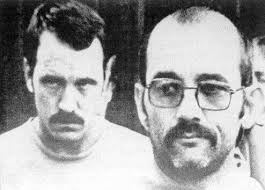 Patrick Wayne Kearney told investigators that he committed his first murder while living in Culver City in 1962. The Redondo Beach man ultimately would be convicted of 21 killings, all males, all between the ages of 5 and 28, but he may have killed dozens more. He claimed to have killed one victim a month starting in 1974. Kearney was born in East Los Angeles on Sept. 24, 1939. The bespectacled serial killer stood 5 foot 5 inches, and reportedly had an IQ of 180. He worked at Hughes Aircraft and lived with his gay partner, Dave Hill, 34, at a house on Robinson Avenue near Aviation Boulevard in north Redondo Beach. Kearney became known as the “trash bag murderer” for his method of putting body parts and corpses into large plastic trash bags and leaving them on the side of the road. The crimes took place in five Southern California counties. The case began in Los Angeles County on Jan. 24, 1977, when a highway worker tripped over a tightly wrapped object in the Lennox Boulevard tunnel under the San Diego Freeway near LAX. It turned out to be the corpse of 28-year-old Nicolas Hernandez-Jimenez of Los Angeles. Kearney, a necrophile, used to pick up his victims in Los Angeles and Hollywood. He would befriend hitchhikers, troubled teenagers and younger children, perhaps offering to take them camping or to Lake Elsinore, a favorite haunt of his, before killing them, having sex with their corpses and discarding their remains in the plastic bags. When Sett and his partner Roger Wilson questioned friends of John LaMay, 17, of El Segundo, after his corpse was found stuffed inside a trash bag in a 55-gallon drum in Riverside on March 18, 1977, they were told that LaMay liked to hang out with “Pat and Dave” – Pat Kearney and Dave Hill. The detectives met with the pair at their house. Samples of hair from the suspects and their poodle and threads from a blue rug matched those found by police investigators on LaMay’s body. A search warrant was issued. When Sett and Wilson called to notify Kearney and Hill, the two men fled to Hill’s family home in Texas. The family urged them to give up, and the pair returned to California, turning themselves in at the Riverside County Sheriff’s station on July 1, 1977. Kearney decided to talk following his arrest. First, he cleared Hill of any wrongdoing. He had kept the murders from him, and committed them while Hill was away from their home. He talked about his first victim in Culver City. He told investigators the address and where the body was buried. Detectives went there and recovered the skeleton, and found that the details of the crime matched Kearney’s description. Over the next few months, Kearney gradually confessed to 21 murders that detectives could confirm, ranking him among the ten most prolific serial killers in U.S. history. Police said he might have committed as many as 43 killings. Because the crimes were committed before California reinstated the death penalty law in 1978, the maximum sentence Superior Court Paul Breckenridge Jr. could give him when he pleaded guilty on Feb. 21, 1978 to the 21 murders was concurrent life sentences for all the crimes. “I would only hope that the Community Release Board will never see fit to parole Mr. Kearney because he appears to be an insult to humanity,” Breckenridge said during the sentencing. The judge got his wish.
 -
Serial Killer: Manuel Bermúdez (Monster of the Cane Fields)
Midnight Man posted a article in Celebrity
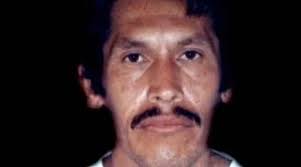 Manuel Octavio Bermúdez was born in Trujillo, Valle del Cauca, Colombia in 1961 and was orphaned after birth. He was adopted by an abusive mother who threw him off a balcony, breaking his hand and foot. This gave him a permanent limp. He was given to another family in the city of Palmira. His new parents were alcoholics and his father was described as abusive. Bermudez later had several kids of his own. Bermúdez raped and killed at least 21 children in several towns of Valle del Cauca from 1999 to 2003. He had worked as an ice cream vendor and would lure his victims to corn fields with offers of money for picking corn. Bermúdez would then rape and strangle them to death while sometimes injecting them with a syringe to drowsy their legs. The mother of 12 year old Luis Carlos Gálvez reported his disappearance and Bermúdez had been seen with him. He was arrested on July 18, 2003. Investigators inspected a room he had rented in El Cairo and found newspaper clippings of the murders, syringes, Lidocaine, and the wristwatch Luis Carlos Gálvez was wearing the day he disappeared. Bermúdez confessed to the murders of 21 children, 17 of whom were found and was sentenced to 40 years in prison on March 20, 2004. He is suspected of killing over 300 children.
 -
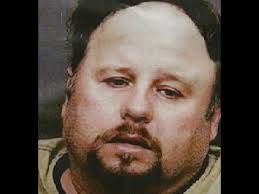 Ronald J. Dominique of Houma, LA has confessed to murdering 23 men over the past nine years and dumping their bodies in sugarcane fields, ditches and small bayous in six southeast Louisiana parishes. His reason for killing? He did not want to return to jail after raping the men. In 1997, authorities found 19-year-old David Levron Mitchell's murdered body near Hahnville. The body of 20-year-old Gary Pierre was found in St. Charles Parish six months later. In July 1998, the body of 38-year-old Larry Ranson was found in St. Charles Parish. Over the next nine years, more bodies of men ranging in age from 19 to 40 would be found dumped in sugarcane fields, desolate bayous and in ditches in remote areas. Similarities in 23 of the murders lead investigators to suspecting the men were victims of a serial killer. A task force made up of nine South Louisiana parish sheriff's offices, the Louisiana State Police and the FBI, was formed in March 2005, to investigate the murders. Investigators knew the 23 victims were mostly homeless men, many who led high-risk lifestyles, which included drug use and prostitution. The victims had been asphyxiated or strangled, some raped and several were barefooted. After receiving a tip, authorities armed with forensic evidence, arrested Ronald Dominique, 42, and charged him with the murder and rape of 19-year-old Manuel Reed and 27-year-old Oliver Lebanks. Just days before his arrest, Dominique had moved from his sister's home into the Bunkhouse shelter in Houma, LA. Residents of the home described Dominique as odd, but no one suspected he was a killer. Soon after his arrest, Dominique confessed to murdering 23 southeast Louisiana men. His tactics in capturing, sometimes raping then murdering the men was simple. He would lure homeless men with the promise of sex in exchange for money. Sometimes he would tell the men he wanted to pay them to have sex with his wife, and then show a picture of an attractive woman. Dominique was not married, he then lead the men to his home, asked to tie them up, then raped and eventually murdered the men to avoid arrest. In his statement to the police, Dominique said the men who refused to be tied up would leave his home unharmed. Such was the case with one unnamed man who a year ago, reported the incident to the task force, a tip that eventually led to Dominique's arrest. Ronald Dominique spent much of his youth in the small bayou community of Thibodaux, LA. Thibodaux sits between New Orleans and Baton Rouge and is the type of community where everyone knows a little about each other. He attended Thibodaux High School where he was in the glee club and sang in the chorus. Classmates who remember Dominique say he was ridiculed about being homosexual during his teen years, but at the time he never admitted he was gay. As he got older he seemed to live in two worlds. There was the Dominique who was helpful to his neighbors in the small trailer parks where he lived. Then there was the Dominique who cross-dressed and did bad impersonations of Patti LaBelle at the local gay club. Neither world embrace him and among the gay community, many remember him as someone who was not particularly well liked. Through most of his adulthood, Dominique struggled financially and would end up living with his mother or other relatives. In the weeks before his arrest, he was living with his sister in a singlewide trailer. He was suffering from declining health, having been hospitalized for a severe heart condition and forced to use a cane to walk. Outwardly, there was side to Dominique who enjoyed helping people. He joined the Lions Club just months before his arrest, and spent Sunday afternoons calling out Bingo numbers to senior citizens. The membership director said he was well liked by everyone he had met through the Lions Club. Maybe Dominique had finally found a place he felt accepted. What sparked Dominique to move from the comfort of his sister's home to the dismal surroundings of a shelter for the homeless is uncertain. Some suspect the family grew uncomfortable by the 24-hour police surveillance and Dominique, knowing he was soon to be caught, moved away to avoid getting his family involved in his arrest.
 -
 Bela Kiss preyed on lonely women looking for love by placing ads in a Budapest newspaper, his ideal victim being a woman with lots of money and few personal connections. After murdering the women, he preserved the bodies in barrels that his landlord believed stored gasoline. There was only one male victim — a young artist with whom his wife had an affair. In 1932, an excited New York City detective named Henry Oswald said he was certain he had spotted one of the world's most wanted men strolling out of the subway at Times Square. Oswald tried to follow, but the man quickly vanished into the crowd. The detective was certain it was Bela Kiss, Hungary’s prince of love ’em and bleed ’em. At that time, Kiss had been eluding justice for more than 15 years. He had killed at least 23 women and one man, preying on lonely women looking for love in the want ads. Lovelorn men and women have always been an easy target for serial killers. France had Henri Landru, a contemporary of Kiss, who romanced war widows, taking their money and their lives, and then reducing their bodies to cinders in his furnace. Along with fire, acid baths and cannibalism have been among the favorite methods these serial killers use to cover up their horrible deeds. Kiss had a singular technique for ridding himself of all those inconvenient corpses. He pickled them. In 1914, Kiss, then 37, marched off to fight in World War I. He left his home — a cottage he rented for more than 15 years in Cinkota, near Budapest — in the care of an elderly housekeeper. Then he disappeared into the chaos that was Europe in those years. He had lived in the town since around 1900, but no one knew much about him. Tall, blond, and handsome, Kiss had a prosperous tinsmith business, and was known as a bon vivant who loved to throw parties. Cinkota’s most eligible bachelor, or so many ladies thought. His first attempt at wedded bliss had ended in disaster a year after the 1912 wedding. His wife, Marie, was 15 years younger than her husband. Her eye strayed to a suitor closer to her age, a handsome artist, Paul Bikari. The pair disappeared shortly after the start of their affair. Kiss told anyone who asked that his wife and her paramour had run off to America to start a new life. Soon, Kiss was seen squiring around a collection of lovelies, some young, others elegant women of a certain age. Most came from Budapest. None stayed for long. In July 1916, two years after Kiss headed to the battlefield, his landlord figured that the reports of his tenant being dead were probably true. It was time to clean up the house for a new occupant. The landlord started with seven large metal barrels that had been left in the yard. Rumor had it that Kiss had been storing liquor, but he had insisted that he was stockpiling gasoline in anticipation of a fuel shortage. No one ever asked him to open the barrels to prove what was in them. With Kiss gone, the landlord decided to look inside. He poked a little hole in one of the barrels and was overwhelmed by the scent of death. When the police came and opened them all, they found, inside each, a woman’s body preserved in wood alcohol. Eventually, there were a total of 24 barrels recovered, each holding a pickled corpse. Many were naked women with ropes around their necks. Puncture wounds in some of the victims’ necks suggested that they had been drained of blood, earning Kiss the sobriquet of Vampire of Cinkota. There was only one male victim, Bikari, the young artist who had won the heart of the killer’s wife. Marie Kiss met the same fate as her lover, turning up in a different barrel. A thorough search of the house found little until police opened a locked door to a secret room that no one, not even the housekeeper, had ever entered. It held meticulously maintained files filled with correspondence from women who had answered ads that Kiss, using the alias of Hofmann, had placed in a Budapest newspaper. They read, “lonely widower seeking female companionship.” About 175 women sent proposals. Kiss had apparently been at it for years, with the earliest letters dating back to 1903. His ideal victim was a woman with lots of money and few personal connections. Sweet talk persuaded them to turn over their savings. One of his victims, Katherine Varga, a widow living in Budapest, had sold her dressmaking business and was last seen heading off to Cinkota with a handsome stranger. Another victim was Margaret Toth, who was killed in 1906, but not before Kiss forced her to write a bogus letter stating she was heading for America. Other women brought forth lawsuits, but the legal matters were never resolved because the women disappeared. They were among the dead. The last people from Cinkota had heard of Kiss, he had been fighting in the Carpathian Mountains. Some reports had him falling in battle or dying of typhoid in a Serbian hospital. Budapest police investigated but they discovered that Kiss had given them the slip by exchanging identities with a dead man. For years, there were sightings of men fitting the fugitive's description — a soldier in the French Foreign Legion, a thief in Romania, a businessman in Budapest — but nothing of these tips ever panned out. Oswald’s report was one of the last, with another following in 1936, when someone thought he saw the killer working as a janitor in New York City. Kiss became a phantom, then a legend. Today he is memorialized as many bloody monsters are in slasher movies and heavy metal music.
 -
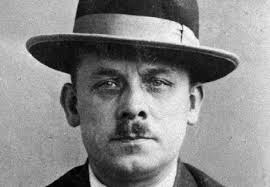 One of the most infamous vampire related mass murderers was Fritz Haarmann (1879-1925), who with his two accomplices was responsible for the deaths of at least twenty and as many as fifty young men. He was known as a vampire because of his cannibalism and habit of biting his victims in the throat. Born to a working-class couple in Hanover, Germany, Fritz was a sullen and slow-witted child whose favorite pastime was dressing up like a girl. At 17, he was committed to an asylum after being arrested for child molesting. Six months later, he escaped to Switzerland and made his way back to Hanover. Throughout his twenties, he was in and out of jail for offenses ranging from being a pickpocket to burglary. For awhile, he attempted to lead a respectable life, taking a job in a cigar factory and getting engaged to a young woman. But this period of normalcy didn't last. Deserting his fiancee, he ran off and joined the army. A child molester and homosexual, Haarmann spent time in a sanatorium after being discharged from the army. After being released he rejoined the army, this time serving with an elite group, distinguishing himself throughout World War I. A civilian again during Germany's post war era, Haarmann returned to his native city and joined a postwar smuggling ring that trafficked, among other things, in black-market beef. He also served as a police stool pigeon, a sideline that afforded him protection for his illicit activities. By this time he was already a murderer and then in 1919 he met Hans Grans, a fellow homosexual, who came to dominate Haarmann and lead him into the gaudy underworld of Hanover's homosexual community. Later in 1919 after being caught in bed with a young boy, Haarmann was shipped back to prison. It was after his release nine months later that Haarmann launched into his career of unparalleled depravity. Living in Hanover's seamy Old Quarter, Haarmann found an abundant supply of prey in the young male refugees who were flooding the city. He often brought young men home with him and murdered them in a grisly fashion, all under the watchful eye of Grans. Another mysterious accomplice entered the scene and aided in body disposal. The victims' clothing was sold on by Haarmann, and the most horrid of all acts was that Haarmann and Grans actually sold flesh to unsuspecting people for human consumption, peddling it as black market beef. Though Haarmann was ultimately charged with 27 murders, it seems likely he was responsible for as many as 50. The method he employed to kill his victims was always the same. After luring the hungry boy to his room, Haarmann would feed him a meal, then overpower him (often with Grans's assistance) and fall upon the boy's throat, chewing through the flesh until he had nearly separated the head from the body. Generally, he would experience a sexual climax while battering on the boy. As the number of missing boys mounted, police suspicion began to fall on Haarmann. A woman who had purchased one of his black-market "steaks" became convinced it was human flesh and turned it over to the police. In the summer of 1924, several skulls and a sackful of bones were found on the banks of the canal. Searching Haarmann's rooms, detectives found bundles of boys' clothing. The landlady's son was wearing a coat--given to him by Haarmann--that belonged to one of the missing boys. In the end, Haarmann confessed his crimes in minute detail, proclaiming insanity but declaring he was forced to commit the crimes whilst in a trance. He was tried in 1924, found guilty, and sentenced to death. While awaiting execution, the "Vampire of Hanover" (as he'd been dubbed by the press) produced a written confession in which he described, with undisguised relish, the pleasure he had derived from his atrocities. At his own request, he was beheaded with a sword in the city marketplace, ironically one of the most common and effective ways to dispose of a vampire. Afterward, his brain was removed from his skull and shipped to Goettingen University for study. Unfortunately, nothing came of this effort. To this day, science is still no closer to comprehending the reasoning behind the crimes committed by people like Fritz Haarmann.
 -
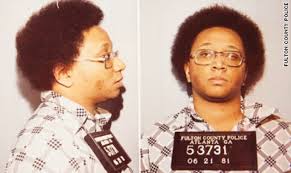 On July 21, 1979, a 14-year-old boy disappeared. Four days later, another teen went missing. Both, it was soon learned, had been killed. It was the beginning of a shocking series of murders—some 29 in all—that would take place over the next 22 months in Atlanta. The victims were all young African-Americans, and as the death toll mounted, so did fear and tension across the city. The FBI’s involvement in the case began on June 22, 1980 following the abduction of a 7-year-old girl. The Atlanta Police Department, which—along with the Georgia Bureau of Investigation—was investigating the string of killings, asked the FBI if the federal kidnapping statute had been violated. None of the crimes appeared to fall under federal law, but Special Agent in Charge John Glover—the first African-American to lead an FBI field office—offered all the support the Bureau could give under the circumstances. Our Atlanta office helped follow up on out-of-state leads. The FBI Lab provided assistance. And our Behavioral Sciences Unit sent an expert to develop a profile of a possible perpetrator. Meanwhile, the murders continued. Local politicians, the news media, and even Georgia Senator Sam Nunn asked the Department of Justice to permit FBI involvement, and the attorney general did so on November 6, 1980, authorizing a preliminary investigation. On November 17, the Bureau launched a major case investigation, devoting more than two dozen agents and other personnel to the case full time. FBI agents joined local and state law enforcement officers on a task force investigating the murders. Collectively, they focused on a dozen disappearances with several shared traits. The victims were all young African-American males who vanished in broad daylight in fairly public locations. Their bodies were found in desolate areas. Their murders had no obvious motivation (in contrast, two other homicides from that period appeared to have been gang-related). These commonalities suggested a single killer. The case continued through the winter and into the spring of 1981. By late April, however, the killer began to change his behavior, dumping the victims’ bodies in the Chattahoochee River. Members of the task force staked out the 14 bridges in the Atlanta metropolitan area that crossed the river and patiently waited. On May 22, a big break came in the case. One of the groups conducting surveillance—consisting of an FBI agent, an Atlanta police officer, and two police cadets—heard a loud splash around 2:52 a.m. A car sped across the bridge, turned around in a parking lot on the other side, and sped back across the bridge. The vehicle was pursued and stopped. The driver was a 23-year-old African-American freelance photographer named Wayne Williams. Lacking probable cause, authorities let Williams go. But when the body of a young African-American man named Nathaniel Cater was found downstream two days later, more attention was paid to Williams. Investigators soon learned that his alibi was poor and that he had been arrested earlier that year for impersonating a police officer. Later, he failed multiple polygraph examinations. Williams was arrested on June 21, 1981. He was convicted of two murders on February 27, 1982, after he was linked to the victims through meticulous hair and fiber analysis and witness testimony.Following the trial, the law enforcement task force concluded that there was enough evidence to link Williams to another 20 of the 29 deaths. He went to jail for life, and the Atlanta child killings stopped.
 -
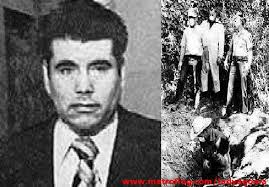 Juan Corona murdered at least twenty-five migrant workers during a bloodstained six week period in 1971. He had arrived in Yuba City, California in the 1950s as a Mexican migrant worker. By the early 1970s, he'd moved up the pecking order and was a labour contractor; he hired itinerants to pick fruit on behalf of local farmers (for minimal pay) around the Yuba area. Long before Corona’s series of homicides, as far back as 1956, he’d been diagnosed as suffering from schizophrenia. However, no-one suspected the disturbing depths of his true mental condition. Though outwardly a macho man with a wife and children, Corona was a predatory homosexual and a brutal sadist. His murder victims were all male and all were sexually assaulted before being killed. At least one other member of the Corona Family had a history of sexually motivated violence; in 1970, Juan’s half-brother Natividad, who owned the “Guadalajara” cafe in nearby Marysville, had molested and beaten a young man in the washroom at his place of business. The victim was discovered bleeding by other customers; when he sued Natividad for $250,000.00. The pervert fled back to Mexico. As a labour contractor, Corona personally recruited migrant workers and housed the men in a barracks-like building on the Sullivan ranch. These men were, for the most part, elderly alcoholics, social dropouts, and misfits - the kind of people who would not ordinarily be missed if they vanished. In early May 1971, Corona apparently started to single out individual workers for sex and death. But it’s likely that his career as a homosexual rapist began much earlier. His job and his twisted inclinations gave him ample opportunities to prey on vulnerable men; his position and their lack of social standing would have ensured that the police were not informed. On May 19, a Japanese fruit farmer noticed a large hole seven feet long and three and a half feet deep that had been scooped out of his land in a peach orchard. The next night he went to the same spot and saw that the earth had been packed back into the hole. He called the police who dug into what was a fresh grave. Inside of it was Kenneth Whitacre, a vagrant who had homosexual pornography in his back pocket. He had been sexually assaulted and then stabbed to death - somebody had chopped his head open with a machete. Another farmer noticed what appeared to be a freshly dug grave on his land and police began digging again; this time finding an elderly man - Charles Fleming, known to be a drifter. More graves in this area yielded more men, all of them sodomized, stabbed (one was shot) and mutilated viciously about the head with a machete. The killer had followed a similar pattern in every case; each of the victims bore a deep puncture to the chest followed by two slashes across the back of the head in the shape of a cross. All had been buried face up, arms stretched above their heads, shirts pulled up over their faces. Some had their lower garments lewdly pulled down. In one grave police found the body of Melford Sample and a meat market receipt made out to "Juan V. Corona." The bodies kept turning up - including that of John Henry Jackson, an elderly worker who had been seen some weeks earlier riding in the back of Corona's pickup truck. The police kept digging until June 4, 1971, unearthing twenty-five bodies, along with more receipts that had the name of Juan Corona on them. Corona was arrested and charged with murder. He pleaded not guilty, but his defence lawyers, who maintained that his half-brother had done the murders, had an uphill battle against the overpowering evidence of bodies, receipts and eyewitnesses who had seen the murdered workers with Corona shortly before they disappeared. There was speculation that Corona and another man committed the murders, but no other suspect was ever found, let alone arrested. Psychiatrists ventured many theories about Corona, one claiming that as the spring deepened and the fruit ripened, Corona's madness increased until the climate drove him into a frenzy of murder and mutilation so that he was compelled to kill someone each day to satisfy his blood lust. The availability of victims increased as warmer weather set in and scores of migrant workers drifted into the Marysville -Yuba City area. In several instances, the prosecution at Corona's trial proved that Corona had planned his murders in advance - digging graves days before he had any victims to put into them. Added to this was the presence of two bloodstained knives, a machete, a pistol and blood-caked clothes in his home...along with an equally damning ledger in which Corona had officiously listed the names of seven his victims and the dates of their murders. Corona simply had to stop his truck at any roadside and take his pick from a steady stream of nomadic workers - men who would generally grab the chance to make some money. He would work his chosen targets a few days then, when it was time to pay them, the burly, 200-pound Corona would strike; they were sexually molested, murdered and buried. His victims included Kenneth Whitacre, Charles Fleming, Melford Sample, Donald Smith, John J. Haluka, Warren Kelley, Sigurd Beierman, William Emery Kamp, Clarence Hocking, James W. Howard, Jonah R. Smallwood, Elbert T. Riley, Paul B. Allen, Edward Martin Cupp, Albert Hayes, Raymond Muchache, John H. Jackson, Lloyd Wallace Wenzel, Mark Beverly Shields, Sam Bonafide (also known as Joe Carriveau) and Joseph Maczak, plus four men who remained unidentified. The jury in the Corona case deliberated for forty-five hours and then brought in a verdict of 'Guilty' in the case of each of the twenty-five murdered men. In January 1973, Judge Richard E. Patton sentenced Corona to twenty-five life terms to run consecutively with no hope of parole. In 1978 an appeals court upheld a petition by Corona - he claimed that his original legal team had been incompetent. They had not put forward Schizonphrenia as a mitigating factor or pleaded inasnity. Corona was granted a new trial. Whilst awaiting this process, he was attacked in prison by three other inmates and slashed with a razor thirty-two times, losing his sight in one eye. In 1982, his second trial confirmed all twenty-five guilty verdicts. Some observers have theorised that he might have killed prior to 1971. Corona's early years in Mexico are obscure and not well documented, so we'll never know what he did before he hit the road as a migrant worker. Whilst it’s entirely possible that the Californian countryside still contains bodies and dark secrets, several factors tend to suggest that his 1971 killing spree was an explosion of long-supressed urges, rather than the tail-end of a lengthy career in homocide. He was extremely careless in the manner used to dispose of his victims. Holes were dug and left empty for some time - perhaps he thought that this was a clever way of cutting down on the danger of discovery when he was in possession of a corpse? In reality, the ruse only aroused the curiosity of farmers who were naturally interested in unauthorised activities on their land. The victims' bodies were buried along with a lot of evidence that could only point towards Juan Corona. He made no attempt to dispose of incriminating weapons, clothing or even a list with victims' names and dates of death. It seems more credible that he graduated to rape/murder after enjoying a very long period of rape and battery without even coming close to being caught. There came a point when beating and violating a helpless person no longer thrilled enough. His need to dominate and express unbridled power over others sought out a higher, more bloody level. The ultimate expression of power over another person is to deprive him of life. Corona had never needed to be particularly careful or resourceful in the past; this attitude stayed with him when he extended his activities and began to kill the men he raped.
 -
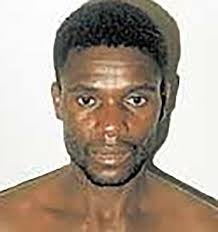 Maoupa Cedric Maake was a particularly brutal individual whose crimes seemed almost random. He operated mostly in the city of Johannesburg, South Africa. His victims included men and women, both young and old. There was no set pattern to whom he decided to kill, just the chaotic murders of a deranged mind. To add further unpredictability to his crimes, there were several methods that he used to attack his victims. Some he would sneak up behind while they were alone and bludgeon to death with rocks. Others consisted of couples in cars, the men which he would shoot before raping the women. For some reason he also attacked tailors within the inner city, beating them to death with a hammer while they were in their shops. The seemingly unconnected nature of the crimes confused police for some time. They at first thought Maake’s killings to be the work of two separate serial killers due to the different victims chosen and murder weapons used. Eventually, however, they would catch up with Maake in December of 1997. When he was finally caught, he was charged with a wide variety of crimes. The total convictions ended in 27 murders, 26 attempted murders, 14 rapes, 41 robberies and a number of other, less serious crimes. In all, he was found guilty of 114 charges and sentenced to 1159 years in prison, where he resides today.
 -
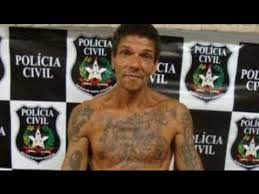 Pedro Rodrigues Filho is a Brazilian serial killer. In 2003 he was convicted of murdering 70 people and sentenced to 128 years in prison. He has claimed over 100 victims, 40 of them prison inmates. He also killed his father. Pedro Rodrigues Filho was born at a farm in Santa Rita do Sapucaí, south ofMinas Gerais, with an injured skull, the result of beatings his father had inflicted upon his mother's womb during a fight. Pedro said his first urge to kill happened at the age of 13. During a fight with an older cousin, he pushed the boy into a sugar cane press. The boy almost died. At the age of 14, he murdered the vice-Mayor of Alfenas, Minas Gerais, because he fired his father, a school guard, at the time accused of stealing the school kitchen's food. Then he murdered another guard, supposedly the real thief. He took refuge in Mogi das Cruzes, São Paulo, where he began a series of burglaries and murdered a drug dealer. There he also met Maria Aparecida Olympia, a woman he then lived with. They lived together until she was killed by some gang members. Pedro escaped. In search of revenge for her death, he murdered and tortured several people in an attempt to find out the identity of the gangster who killed Maria. Before he was 18 years old he had already left a trail of 10 bodies and several injured. Still in Mogi das Cruzes, he executed his own father at a local prison, after his father butchered his mother with a machete. To get revenge, Pedro killed his father, cut out a piece of his heart, chewed it, and threw it away. Pedro was first arrested on May 24, 1973. He was sentenced to prison and killed at least 47 inmates while incarcerated. He later claimed a total of 100 victims. His total confirmed victims are 71, including his father. In 2003, he was sentenced to 128 years in prison, although Brazilian law system prohibits anyone from spending more than 30 years behind bars. But due to the crimes he committed inside the prison, his sentence was changed to over 400 years in prison. However, he was set to be released by the Justice System in 2007, but after 34 years in prison, he was released on April 24, 2007. Information from the Brazilian National Security Force Intel indicates that he went to Brazilian north-east, more precisely, toFortaleza in Ceará. On September 15, 2011, local media from Santa Catarina published that Pedrinho Matador had been arrested at his home, in the rural area, where he worked as a house-keeper, at Balneário Camboriú, Santa Catarina coastline. According to a news channel, he will serve time for accusations such as riot and false imprisonment. Besides the number of killings, Pedrinho became notorious in Brazil for promising the murder of other criminals, such asFrancisco de Assis Pereira, a.k.a. The Park Maniac, another serial killer.
 -
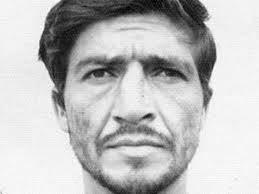 Pedro Alonso López, accused of raping and killing more than 300 girls across his native country, then Peru and Ecuador, and possibly other countries. Aside from uncited local accounts, López’s crimes first received international attention from an interview conducted by Ron Laytner, a long time freelance photojournalist who reported interviewing López in his Ambato prison cell in 1980. By his mid-teens, Lopez had left school and returned to Colombia where he took to stealing cars. He ended up in prison where he was brutally gang raped. He retaliated by killing each of his assailants and was released in 1978. Following his release, Lopez claimed to have raped and killed at least 100 girls from various Indian tribes throughout the region. In 1980, while in police custody, Lopez revealed that he had performed similar grisly acts with more than 100 others throughout Peru and Colombia. Police were skeptical at first, but Lopez escorted agents to his burial sites, where they uncovered 81 bodies. Though it is impossible to know exactly how many lives Lopez took, some guess the number to be more than 300. In late 1980, Lopez was convicted on multiple counts of murder and sentenced to life in prison.
 -
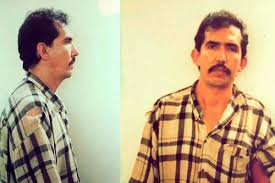 Luis Alfredo Garavito was born on 25 January 1957 in Génova, Quindío, Colombia. He is the oldest of seven brothers, and apparently suffered physical and emotional abuse by his father. In his testimony, he described being a victim of sexual abuse when young. He is a Colombian rapist and serial killer. In 1999, he admitted to the rape and murder of 140 young boys. The number of his victims, based on the locations of skeletons listed on maps that Garavito drew in prison, could eventually exceed 300. He has been described by local media as "the world's worst serial killer" because of the high number of victims. Once captured, Garavito was subject to the maximum penalty available in Colombia, which was 30 years. However, as he confessed the crimes and helped authorities locate bodies, Colombian law allowed him to apply for special benefits, including a reduction of his sentence to 22 years and possibly an even earlier release for further cooperation and good behavior. In subsequent years, Colombians have increasingly felt that due to Garavito's approaching early release, his sentence is not sufficient punishment for his crimes. Colombian law originally had no way to extend the sentence, as cases of serial killers like Garavito had no legal precedent in the country and thus the legal system could not properly address this case. In late 2006, however, a judicial review of the cases against Garavito in different local jurisdictions found that his sentence could be extended and his release delayed, due to the existence of crimes he did not admit to and for which he was not previously condemned. Garavito's victims were poor children, peasant children, or street children, between the ages of 6 and 16. Garavito approached them on the street or countryside and offered them gifts or small amounts of money. After gaining their trust, he took the children for a walk and when they got tired, he would take advantage of them. He then raped them, cut their throats, and usually dismembered their corpses. Most corpses showed signs of torture. Garavito was captured on 22 April 1999. He confessed to murdering 140 children. However, he is still under investigation for the murder of 172 children in more than 59 towns in Colombia. He was found guilty in 138 of the 172 cases; the others are ongoing. The sentences for these 138 cases add to 1,853 years and 9 days. Because of Colombian law restrictions, however, he cannot be imprisoned for more than 30 years. In addition, because he helped the authorities in finding the bodies, his sentence has been decreased to 22 years. As Garavito served his reduced sentence, many Colombians began to gradually criticize the possibility of his early release, some arguing that he deserved either life in prison or the death penalty, neither of which are applicable in Colombia. In 2006, local TV host Pirry interviewed Garavito, which aired on 11 June of that same year. In this TV special, Pirry mentioned that during the interview, the killer tried to minimize his actions and expressed intent to start a political career in order to help abused children. Pirry also described Garavito's conditions in prison and commented that due to good behavior, Garavito could probably apply for early release within 3 years. After the Pirry interview aired, criticism of Garavito's situation gained increased notoriety in the media and in political circles. A judicial review of the cases against Garavito in different local jurisdictions found that his sentence could potentially be extended and his release delayed, because he would have to answer for unconfessed crimes separately, as they were not covered by his previous judicial process.
 -
 Velma Bullard, later Velma Barfield, was born on October 29th, 1932 to a poor family in South Carolina. Her life of crime began early, when, after starting to attend school at age seven, she noted the financial differences between her and her classmates. She began stealing pocket money from her father to afford small luxuries while gone at school, and soon after, progressed to stealing $80 dollars from an old neighbor. Her father found out and beat her, and that was the last time during her childhood that theft was recorded. Despite his criticisms of her and her own criticisms of the way her family worked, Velma loved her father. He bought her nice things sometimes, right when she wanted them, and she adored him for it. Later, it was revealed that this relationship was probably not strictly father-daughter and had evolved into a sexual relationship. She wed high school sweetheart Thomas Burke when she was 17, and they dropped out of school to live a nice home life. She gave birth to two children and love the fiercely, counted on to be extremely engaged with her children’s classes. Velma took another job at a textile plant. However, in 1964, she had a hysterectomy after medical problems. The hysterectomy led her to feel insecure in her womanhood and she began to feel lots of pain. When Thomas began to drink, she started to hate him. She began taking Librium and Valium, going to multiple doctors for prescriptions. One day, her house caught on fire. Only Thomas was home. Soon after, they moved back in with Velma’s parents and she began dating Jennings Barfield. Barfield died in 1971 of heart failure that had been an issue much of his later life. Lillie, Velma’s mother, died in a strange way, which, it would later be revealed, was arsenic. Velma had taken a liking to killing those in her care by poisoning them, then attempting to nurse them back to health. She took a job working to care for sick old people. Her employer, Dollie, died of similar strange circumstances. Then, a man under her care died as well. When boyfriend Stuart Taylor died in a similar way, an anonymous tipster, later revealed to be Velma’s sister, notified police that Velma had killed a lot of people the same way she’d killed Stuart. Velma was given a death sentence, and although psychiatric witnesses tried to stop Velma from being sentenced, she was convicted in the end – the first woman to be executed since 1976. She was poisoned on November 2nd, 1984.