


Midnight Man
-
Posts
2,389 -
Joined
-
Last visited
-
Days Won
2
Content Type
Profiles
Articles
Calendars
module__media_media
Everything posted by Midnight Man
-
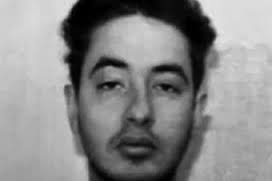 Joseph G. Christopher was an American serial killer, active from September 22, 1980 until his arrest on May 10, 1981. He was known as the "Midtown Slasher". It is believed that he killed at least twelve individuals and wounded numerous others, almost all African Americans, with one Hispanic male. His homicidal rampage began on September 22, 1980, when he was 25 years old. He started his crimes by shooting African American men with a sawn-off .22 rifle while they went about their daily duties, striking in the middle of the day and into the night with sometimes more than five murders in one day. However, Christopher changed his method of killing midway through his onslaught of terror by choosing a knife as his new weapon, stabbing his victims to death and cutting the heart out of two of his victims, who were cab drivers.
 -
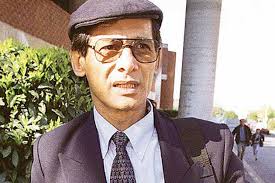 Charles Sobhraj was a famous serial killer in the 1970's, known for drugging and killing between 12 and 24 western tourists in Asia. His several successful escapes from prison coined him the nickname, "The Serpent." Known for a string of killings in Vietnam in the 1970's. Born to an Indian father and Vietnamese mother, he spent most of his childhood on the rough streets of Saigon. He befriended mostly western tourists in Asia, later drugging and killing them. Between 1972 and 1976, it is speculated he killed anywhere from 12 to 24 people. He earned the nickname “the Serpent” for his numerous escapes from jail.
 -
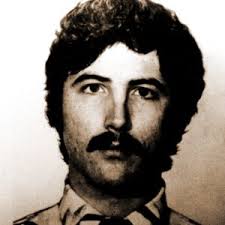 Kenneth Alessio Bianchi is an American serial killer,kidnapper and rapist. Known as the Hillside Strangler, worked with his cousin Angelo Buono to commit 15 rapes and murders. They went on a killing spree between October 1977 and January 1978, raping and murdering 15 victims in Los Angeles. The men posed as policemen and targeted prostitutes to begin with, moving on to middle-class women and girls. They usually left the bodies on the hillsides of the Glendale Highland Park area, earning the moniker "The Hillside Strangler." In 1975, he left Rochester and moved to Los Angeles, where he lived with his older cousin, and later moved in with his girlfriend, Kelli Boyd, and had a child. A chronic liar, he set up a psychology practice with a phony degree and told his girlfriend that he was dying of cancer. Before long, he and Buono teamed up for a spree of kidnappings, rapes and murders that eventually claimed 15 victims,
 -
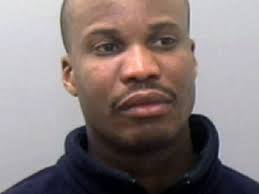 Maury Troy Travis was an American serial killer who committed suicide in a St. Louis county jail, after being arrested for murder. Travis was named in a Federal criminal complaint for the murders of two women. At the time of the murders, Travis was a waiter and on parole for a robbery in 1989. While in his letter Travis claimed to have murdered 17 women, some authorities were doubtful, others thought he may have murdered up to 20 women. He sent a letter and a map to the press and has the dubious honour of being the first serial killer to be caught by Google. That shows advances in technology are making it more and more difficult for a serial killer to remain active.
 -
Serial Killer: William Suff (Riverside Prostitute Killer )
Midnight Man posted a article in Celebrity
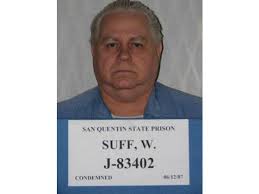 William Lester Suff, also known as the Riverside Prostitute Killer, and the Lake Elsinore Killer, is an American serial killer. Between 1986 and 1992, he murdered at least twelve prostitutes in Riverside, California. In 1995, a jury found that the unassuming-looking middle-aged man had picked up street walkers in his van, then strangled or knifed them, and proceeded to do unsettling things with their corpses. His conviction appeared to bring to a close a six year-long manhunt for the so-called “Riverside Prostitute Killer” wanted in connection with the slayings of 19 prostitutes. Riverside’s long search for the prostitute killer led to Suff’s arrest. On January 9, 1992, police cruising the prostitution district saw a van stopped along curbside, where the driver had a conversation with a woman on the sidewalk. When the van pulled away suddenly and made an illegal U-turn, police stopped it. Although they arrested Suff for driving with a suspended license and lapsed vehicle registration, what he had inthe back of his van was the break detectives had been looking for: a rope, sleeping bag, and bloody knife.
 -
 The Paturis Park murders are a series of 13 murders of gay men between February 2007 and August 2008. The murders took place in Paturis Park in Carapicuíba, Brazil and perpetrated by an unknown killer dubbed the Rainbow Maniac. São Paulo is the annual stage for the largest gay pride march on Earth and home to one of South America's most vibrant gay communities. But a wave of homophobic murders cast a shadow over one of the most tolerant cities in Latin America. The killer labelled the Rainbow Maniac, was behind the murders of 13 men in Carapicuíba, a city of nearly 400,000 people in greater São Paulo. They were killed in a park used as a gay meeting point. Police also investigated whether the same killer was behind three murders in the neighbouring city of Osasco, where a similar weapon was reportedly used. The killing began on 4 July 2007 when 32-year-old José Cicero Henrique was murdered in the Paturis park. 12 other men have been killed in the park, nine in virtually identical circumstances. Their half naked bodies were dumped in the undergrowth with a .38 caliber bullet in the back of the head and their trousers wrapped around their knees.
 -
 Thozamile Taki, also known as the Sugarcane Killer, is a South African serial killer who killed 13 women aged 18–25, dumping their bodies in agricultural plantations. He lured the woman, promised them jobs but killed them and dumped their bodies in sugarcane fields. He murdered 10 victims in the sugarcane plantations around the town of Umzinto, as well as a further three victims in the tea plantations near Port St Johns, KwaZulu Natal. Body parts of some of his victims are alleged to have been provided to a local traditional healer or sangoma.
 -
 Li Wenxian was a Chinese serial killer who killed 13 female prostitutes inGuangzhou from 1991 to 1996. He was sentenced to death on December 18, 1996 and executed thereafter. Li's first victim was reportedly found on February 22, 1991 and was described as a woman in her early twenties. The genitals were carved out with a knife and the body showed signs of sexual intercourse. Five more murders occurred in the next six months. The victims were either stabbed or strangled, then dismembered, put in rice bags and dumped in rubbish heaps in Guangzhou. A seventh victim washed ashore in Hong Kong in March 1992. The corpse was assumed to have floated from mainland China as no one was reported missing in Hong Kong. The victim had been slit from throat to stomach, poorly stitched back together and had her fingers severed. Li was identified by a surviving victim in November 1996. He had been described as a farmer from southern Guangdong who migrated to Guangzhou in 1991 and worked for a construction team. Li confessed to the murders and claimed to have been motivated by a hatred for prostitutes that was fueled by him being cheated by one after arriving in Guangzhou. He was convicted of rape, robbery and murder. He was sentenced to death on December 18, 1996 and later executed.
 -
Serial Killer: Johannes Mashiane (The Beast of Atteridgeville)
Midnight Man posted a article in Celebrity
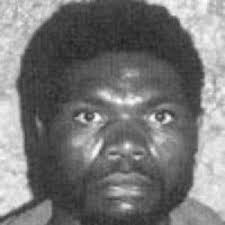 Johannes Mashiane AKA The Beast of Atteridgeville is a South African rapist and serial killer who accounted for 13 victims before committing suicide in 1989. Mashiane started his murderous activity circa 1977 by killing his girlfriend. He was sentenced to five years' imprisonment and was released in 1982. After being released, he immediately started his spate of murder and sodomyaccounting for the deaths of at least 12 young boys by strangulation or stoning. One victim is known to have survived Mashiane's attention.
 -
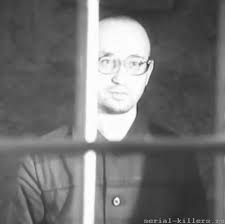 Vasiliy Kulik was born in Irkutsk Oblast, Soviet Union to an aristocratic family. His father was a doctor of Biological Sciencesand writer, his mother a school-headmistress. A few years later, Kulik left home and began work as a medic in the Irkutsk Emergency Station. He married and had three sons. After his arrest, the police interviewed the Kulik family. His mother told the police that her son had grown weak and had developed a limp. She said that her son had tortured animals as a child, and that he had assumed a dominant male persona in his manner of dress and in his interests. His sisters reported that he was selfish and cruel. Kulik grew up in an unstable environment and, when his father died, tried to commit suicide. Kulik became sexually active at an early age and had many girlfriends. In school, he had been involved with a girl but became depressed after she moved to another city. At age 20, he started pursuing older, married women, but was frequently rejected. In 1980, Kulik wrote a novel in which the main character forms a relationship with a nine-year-old girl with the sole purpose of having sex with her. Prior to the murders, Kulik had committed a series of rapes of children. In 1984, he drugged, raped and strangled an elderly woman he encountered on the street. His second victim was an eight-year-old girl. The third was a 53-year-old woman whom he killed with a gun and a kitchen knife. His other victims included six children, the youngest was only 2 years 7 months, and seven elderly women. On 17 January 1986 Kulik was arrested and eventually convicted of 13 murders and near 30 rapes and assaults. He was sentenced to death by firing squad on 11 August 1988. He was executed in 1989.
 -
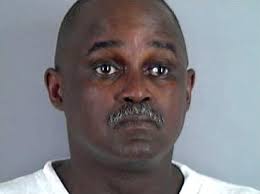 Prosecutors say that while Lorenzo Gilyard was escaping detection as a serial killer for two decades, advances in DNA testing were being made that would eventually link him to seven women who were killed in Kansas City in 1986 and 1987. "The defendant wasn’t counting on the fact that science would catch up with him, but it did," said Ted Hunt, chief trial assistant, during closing arguments in the murder trial. "Twenty years later, a part of his own body is pointing a finger back at him." Six other murder counts, including one stemming from the death of an Austrian national, were dropped last week as the trial got under way, although prosecutors could refile those charges later. Gilyard, a former trash company supervisor, would face life in prison if convicted of any of the slayings. His fate is being decided by Jackson County District Judge John O’Malley. Prosecutors made DNA evidence linking Gilyard to all seven women the centerpiece of their presentation. The cases were connected in April 2004 when the police department’s crime lab tested evidence from unsolved homicides using a federal grant. His semen or seminal fluid was found on six of the women, and his hair was found on the seventh victim. All of the victims were left in sexually compromising positions. But defense attorney Susan Elliott said the lifestyles of the victims - all but one of whom were prostitutes - suggested it was not only probable but likely that they had sexual contact with other men. The defense went through each of the cases suggesting alternatives, including that one victim was killed as retaliation for talking to the FBI about a drug supplier and that another had been threatened by a boyfriend before her death.
 -
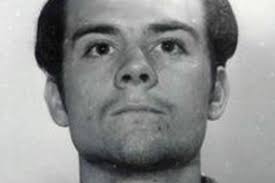 Born into a strict Roman Catholic family, Herbert Mullin began life on April 18, 1947 in Fenton, California. Herbert was a good child, excelling in school quickly and was voted “most likely to succeed” by his high school chums. He was athletic, fit, and very handsome, always helpful and polite to others. His only strange distinction was his oddly close relationship with his best friend Dean Richardson. Just out of high school, at 17, Herbert became engaged to his longtime girlfriend, intending to begin a life with children and a little household. At 18, Herbert’s life suddenly crumbled when Dean was killed in a car accident. Devoted deeply to Dean, Herbert mourned the loss of his friend in bizarre ways. Lovingly setting up a shrine for Dean in his bedroom complete with photographs and trinkets and old toys, Herbert could not seem to get past his grieving for Dean. He broke up with his girlfriend, announcing that he was a homosexual. Dean’s memorabilia was never removed from Herbert’s bedroom from then on. Around this time, Herbert’s family began to discover strange behavior in Herbert. Though it is unknown if there was a history of mental illness in the family, Herbert began having fits of echopraxia, a well known symptom of schizophrenia. His manner became erratic as well. Herbert preferred to be alone as often as possible, talked to himself, believed others were plotting against him and continuously thought he was being followed by someone that wanted to harm him. To calm himself, Herbert turned to hallucinogenic drugs, thinking they might oppose the gradual confusion that was blocking his thought processes. The drugs only worsened his thought patterns, the limb he was desperately clinging to beginning to slip quickly from his grasp. After seeking out a doctor, Herbert disclosed his symptoms, believing he might be going mad. The doctor diagnosed Herbert with severe paranoid schizophrenia, and he was placed in a mental hospital for a year. When treatment proved to be working, Herbert started to feel better and well enough to leave the hospital. Like many sufferers of diseases, especially ones that affect the mind, Herbert must have stopped treatment soon after he left the hospital, for the voices in his head began to haunt his psyche again. This time, it wasn’t just the usual voices telling him to do unpleasant things, it was Satan himself, urging Herbert to kill. On October 13, 1972, Satan sent Herbert out onto the streets to find a suitable person that must be annihilated. The prey was chosen apparently at random, as were all of Herbert’s victims. Herbert found a lowly tramp named Lawrence White, searching thorough a garbage can. Clubbing White to death, Herbert found that Satan was not satisfied with only one kill. Herbert would have to again find another person undeserving of life, and he did, two weeks later. A Santa Cruz University a student named Mary Guilfoyle, enjoying a long walk in a park, found herself face to face with Herbert. Seeming wrong and disagreeable in some way, Guilfoyle attempted escape from the man following her. Herbert produced a long knife and stabbed the girl repeatedly until she was well beyond death. With the comforting words of Satan whispering in his ear, Herbert continued his slaughter by pulling out her insides and leaving them scattered all around her body. Not long after Guilfoyle’s death, Herbert found himself conflicted with what he had done. He understood that something was wrong with killing, but not his intent. Satan had orchestrated all of the horrid acts, and Herbert decided that he must be stopped. To rid his conscious of guilt, Herbert sought out a priest to talk with. He confessed everything he had done, omitting no details. After speaking about what he had done, Herbert was not only horrified with his crimes, but slightly and clearly began to hear Satan’s slow whispering in his ear again. Satan commanded the blood of the priest, and Herbert realized that the priest might go to the police about the recent killings. Herbert, in his diseased mind, had only one choice then. He stabbed the priest to death in the confessional, left the body to be found later, and went on his way. In December of 1972, Herbert began a rampage that shocked all of Santa Cruz. Buying his first gun, Herbert had been told by Satan that this would be a cleaner way of killing, and Herbert could get away with it easily. In one day, Herbert shot five people to death, two of them small children. He was never identified because his victims were his only witnesses. Satan continued to converse with Herbert, telling him that his crimes were for the good of mankind. There was going to be a great earthquake, Satan warned, and Herbert’s victims were grateful to be taken before the disaster could occur. Herbert maintained that what he was doing was good, helpful, and actually a good idea. The next five murders occurred within two weeks of each other, showing the severity of Herbert’s psychotic episodes related to his schizophrenia. After finding four teenagers camping out at Cowell State Park in Santa Cruz, Satan allowed Herbert to shoot them all, assuring Herbert that he was doing a fine job. The final murder that took place was on February 13, 1973. An old man, tending to his garden was shot by Herbert as he passed in his car. Luckily, a neighbor was present at the time and was able to write down the registration number on Herbert’s car. Not long after the police were phoned, Herbert was hauled into questioning by police. Mullin confessed to all 13 murders, telling police that Satan was the mastermind behind it all. The lawyer plead with the judge that Herbert could not be guilty because he was insane. Herbert told the police that he was trying to save California from an earthquake by killing innocent people. The jury saw Herbert fit to stand trial and was charged with 10 murders, found guilty on two counts of two counts of first degree murder and eight counts of second degree murder. In July 1973, Herbert Mullen was sentenced to life imprisonment, eligible for parole in 2025. Classified by professional doctors as a common example of a severely violent paranoid schizophrenic, Herbert Mullin was not given the right or the opportunity to serve out his sentence at a mental hospital, where he could be medicated properly and guarded for any signs of deviance. Without treatment, Herbert’s condition may not only worsen, but ruin him completely. His pal and constant companion, Satan, might continue to hurt and ultimately advise Herbert to kill others or himself.
 -
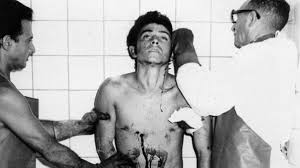 Francisco Antonio Laureana was an Argentine serial killer who raped and murdered 13 women in a six-month period from 1974 to 1975. He would strangle his victims and occasionally shoot them with a handgun. He was killed in a shootout with police on February 27, 1975. A composite sketch had been made of him by a man he had shot at after fleeing from a murder. Laureana was married and had three children.
 -
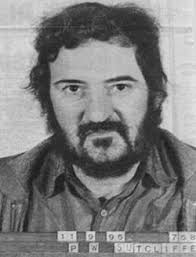 Peter William Sutcliffe was the first of six children born to John and Kathleen Sutcliffe, on 2 June 1946, in Bingley, Yorkshire. As a boy he was reserved, and preferred spending time with his mother, finding it difficult to make friends at school, and he was often bullied. He left school aged fifteen, with no clear career focus, and his early working life was spent in a number of short-lived, menial occupations, which included a stint as a gravedigger. Between November 1971 and April 1973 Sutcliffe worked at the factory of Baird Television Ltd, on the packaging line. He left when he was asked to go on the road as a salesman. Outwardly he presented as a diligent, likeable individual, if a little reserved, and, in 1966, he met the daughter of Czech immigrants, Sonia Szurma, whom he courted and eventually married in August 1974. They moved in with her parents, as his chequered work history meant that they had insufficient funds to buy their own home. During the time of their courtship, Sutcliffe had developed an obsession with prostitutes that he indulged together with a friend, Trevor Birdsall, and they spent a large portion of their spare time cruising red-light districts in the Yorkshire area. This obsession continued after their marriage and the acquisition of his HGV licence in June 1975, and his subsequent work as a lorry driver, took him away from home more than ever, enabling him to indulge his obsession without fear of detection. There is speculation that a bad experience with a prostitute, during one of these forays, which he was believed to have been conned out of money, it was said to be the fuel of his violent hatred of these women that resulted in the death of thirteen women, and the vicious attack of seven others. Sutcliffe committed his first assault on an older prostitute whom he had met whilst searching for the woman who had previously tricked him out of money. He had left his friend’s mini-van and walked up Saint Pauls Road, Bradford, until he was out of sight. When he came back, he was out of breath, as if he had been running. He told his long-term friend Trevor Birdsall, who was the driver of the vehicle that he was in, to drive off quickly. Sutcliffe said that he had followed a prostitute into a garage and hit her over the head with a stone in a sock. According to his statement, Sutcliffe stated, “I got out of the car, went across the road and hit her. The force of the impact tore the toe off the sock and whatever was in it came out. I went back to the car and got in it”. When the police visited his home the next day, they informed him that the woman, who bore no resemblance to the prostitute who had tricked him out of £10, had noted down Birdsall’s mini-van vehicle registration plate. Sutcliffe admitted that he had hit her over the head, but claimed that it was only with his hand. The police told him he was “very lucky” as the prostitute did not want anything more to do with the incident, she was a known prostitute and hercommon-law husband was serving a sentence for an assault. Sutcliffe committed his second assault on the night of 5 July 1975 in Keighley. He attacked Anna Rogulskyj, who was walking alone, striking her unconscious with a ball-peen hammer and slashing her stomach with a knife. Disturbed by a neighbour, he left without killing her. Rogulskyj survived after extensive medical intervention but was emotionally traumatised by this attack. Sutcliffe attacked Olive Smelt in Halifax in August. Employing the same modus operandi he struck her from behind and used a knife to slash her, though this time above her buttocks. Again he was interrupted, and left his victim badly injured but still alive. Like Rogulskyj, Smelt suffered emotional scars from the attack, including clinical depression. On 27 August, Sutcliffe attacked 14 year old Tracy Browne in Silsden. He struck her from behind and hit her on the head five times while she was walking in a country lane. Sutcliffe was not convicted of this attack, but confessed to it in 1992. The first victim to lose her life was Wilma McCann, on 30 October. McCann was a mother of four from the Chapeltown district of Leeds. Sutcliffe struck her twice with a hammer before stabbing her 15 times in the neck, chest and abdomen. Traces of semen were found on the back of her underwear. An extensive inquiry, involving 150 police officers and 11,000 interviews, failed to uncover the culprit. One of McCann’s daughters committed suicide in December 2007, reportedly after suffering years of torment over her mother’s death. Sutcliffe committed his next murder in January 1976, when he stabbed Emily Jackson 51 times in Leeds. In dire financial straits, Jackson had been using the family van to exchange sexual favours for money, a fact which shocked family and neighbours when it was revealed after the murder. Sutcliffe hit her on the head with a hammer and then used a sharpened screwdriver to stab her in the neck, chest, and abdomen. Sutcliffe also stamped on her thigh, leaving behind an impression of his boot. Sutcliffe attacked Marcella Claxton in Roundhay Park, Leeds, on 9 May. Walking home from a party, she was given a lift by Sutcliffe. When she later got out of the car to urinate, Sutcliffe hit her from behind with a hammer. She was left alive and was able to testify against Sutcliffe at his trial. On 5 February 1977 he attacked Irene Richardson, a Chapeltown prostitute, in Roundhay Park. Richardson was bludgeoned to death with a hammer. Once she was dead, he mutilated her corpse with a knife. Tyre tracks left near the murder scene resulted in a long list of possible suspect vehicles. Two months later, on 23 April 1977, Sutcliffe killed Bradford prostitute Patricia “Tina” Atkinson in her flat, where police found a bootprint on the bedclothes. Two months later Sutcliffe committed another murder in Chapeltown, claiming his youngest victim, 16-year-old Jayne MacDonald, on 26 June. She was not a prostitute. In the public perception, her death showed that every woman was a potential victim. Sutcliffe seriously assaulted Maureen Long in Bradford in July. He was interrupted and left her for dead. A witness misidentified the make of his car. More than 300 police officers working the case amassed 12,500 statements and checked thousands of cars, without success. On 1 October 1977 Sutcliffe murdered Manchester prostitute Jean Jordan. Her body was found ten days later and had obviously been moved several days after death. In a later confession, Sutcliffe stated he had realised that the new £5 note he had given her was traceable. After hosting a family party at his new home, he returned to the wasteland behind Manchester’s Southern Cemetery, where he left the body, to retrieve the note. Unable to do so he mutilated Jordan’s corpse and moved the location of the body. The following morning, Jordan was discovered by actor Bruce Jones, who at that time was a local dairy worker. He had an allotment on the land adjoining the site where the body was found and was searching for disused house bricks when he made the discovery.The £5 note, hidden inside a secret compartment in Jordan’s handbag, offered a valuable piece of evidence. The note was new, allowing it to be traced to branches of the Midland Bank in Shipley and Bingley. Police analysis of bank operations allowed them to narrow their field of inquiry to 8,000 local employees who could have received it in their wagepacket. Over three months the police interviewed 5,000 men, including Sutcliffe, whom they did not connect to the crime. On 14 December Sutcliffe attacked another Leeds prostitute, Marilyn Moore. Moore survived and provided police with a description of her attacker. Tyre tracks found at the scene matched those from an earlier attack. The police discontinued the search for the person who received the £5 note in January 1978. Although Sutcliffe was interviewed about the £5 note, he was not investigated further (he would ultimately be contacted, and disregarded, by the Ripper Squad on several further occasions). That month, Sutcliffe killed again. His victim was 21-year-old Bradford prostitute, Yvonne Pearson. Sutcliffe hid her body under a discarded sofa and it was not found until March. He killed 18-year-old Huddersfield prostitute Helen Rytka, on the night of 31 January. Her body was found three days later. On 16 May, Sutcliffe killed again after a three-month hiatus. The victim was Vera Millward whom he killed during an attack in the car park of Manchester Royal Infirmary. Almost a year passed before Sutcliffe attacked again. During this period, in November 1978, his mother Kathleen died, aged 59. On 4 April 1979 Sutcliffe killed a 19-year-old building society clerk, Josephine Whitaker. He attacked her on Saville Park Moor, Halifax, as she was walking home. Despite new forensic evidence, police efforts were diverted for several months following receipt of a taped message purporting to be from the murderer. The message taunted Assistant Chief Constable George Oldfield who was leading the investigation. The tape contained a man’s voice saying “I’m Jack. I see you’re having no luck catching me. I have the greatest respect for you, George, but Lord, you’re no nearer catching me now than four years ago when I started.” Based on the recorded message police began searching for a man with a Wearside accent, which was narrowed down to the Castletown area of Sunderland. The message was much later revealed to be a hoax. The hoaxer, dubbed “Wearside Jack”, sent two letters to police in 1978, that boasted of his crimes. The letters, signed “Jack The Ripper”, claimed responsibility for the murder of 26-year-old Joan Harrison in Preston in November 1975. (On 20 October 2005,John Samuel Humble, an unemployed alcoholic and long-time resident of the Ford Estate area of Sunderland, a mile from Castletown, was charged with attempting to pervert the course of justice for sending the hoax letters and tape. He was remanded in custody. On 21 March 2006 Humble was convicted and sentenced to eight years in prison.) On 1 September Sutcliffe murdered 20-year-old Barbara Leach. Leach was a Bradford University student killed and her body dumped at the rear of 13 Ash Grove, under a pile of bricks, close to the university and her lodgings. It was his sixteenth attack. The murder of a woman who was not a prostitute again alarmed the public and prompted an expensive publicity campaign, which emphasised the Wearside connection. Despite the false Wearside lead, Sutcliffe was interviewed on at least two further occasions in 1979. Despite matching several forensic clues and being on the list of 300 names in connection with the £5 note, he was not strongly suspected. In total, Sutcliffe was interviewed by the police on nine occasions. In April 1980 Sutcliffe was arrested for drunk driving. While awaiting trial on this charge, he killed two more women. In April 1980 Sutcliffe was arrested for drunk driving. While awaiting trial on this charge, he killed two more women. He murdered 37-year-old Marguerite Walls on the night of 20 August, and 20-year-old Jacqueline Hill, a student at theUniversity of Leeds, on the night of 17 November. He also attacked two other women who survived. They were Dr. Uphadya Bandara, attacked in Leeds on 24 September, and 16-year-old Theresa Sykes, attacked in Huddersfield on the night of 5 November. On 25 November, Trevor Birdsall, an associate of Sutcliffe reported him to the police as a suspect. This information vanished into the enormous amount of paperwork already creates. Hill was to be the Ripper’s last victim. Over the second half of 1980, police became increasingly sceptical of the accuracy of the “Wearside Jack” profile, and forces were instructed not to discount potential suspects purely on the grounds of their accents. Millgarth Police Station in Leeds city centre, where the Yorkshire Ripper police investigation was conducted. On 2 January 1981, Sutcliffe was stopped by the police with 24-year-old prostitute Olivia Reivers in the driveway of Light Trades House, Melbourne Avenue, Broomhill, Sheffield, in South Yorkshire. A police check revealed the car was fitted with false number plates and Sutcliffe was arrested for this offence and transferred to Dewsbury Police Station, West Yorkshire. At Dewsbury he was questioned in relation to the Yorkshire Ripper case as he matched so many of the physical characteristics known. The next day police returned to the scene of the arrest and discovered a knife, hammer and rope he had discarded when he briefly slipped away from the police after telling them he was “bursting for a pee”. Sutcliffe had hidden a second knife in the toilet cistern at the police station when he was permitted to use the toilet. The police obtained a search warrant for his home at 6 Garden Lane in the Heaton district of Bradford and brought his wife in for questioning. When Sutcliffe was stripped of his clothing at the police station he was wearing a V-neck sweater under his trousers. The sleeves had been pulled over his legs and the V-neck exposed his genital area. The front of the elbows were padded to protect his knees as, presumably, he knelt over his victims’ corpses. The sexual implications of this outfit were held to be obvious, but it was not communicated to the public until the 2003 book, Wicked Beyond Belief: The Hunt for the Yorkshire Ripper, written by Michael Bilton. After two days of intensive questioning, on the afternoon of 4 January 1981 Sutcliffe suddenly declared he was the Ripper. Over the next day, Sutcliffe calmly described his many attacks. Weeks later he claimed God had told him to murder the women. He displayed emotion only when telling of the murder of his youngest victim, Jayne MacDonald, and when he was questioned about the murder of Joan Harrison, which he vehemently denied. He was charged at Dewsbury on 5 January. At his trial, Sutcliffe pleaded not guilty to 13 counts of murder, but guilty to manslaughter on the grounds of diminished responsibility. The basis of this defence was his claim that he was the tool of God’s will. Sutcliffe first claimed to have heard voices while working as a gravedigger, that ultimately ordered him to kill prostitutes. He claimed that the voices originated from a headstone of a deceased Polish man, Bronisław Zapolski,and that the voices were that of God. He also pleaded guilty to seven counts of attempted murder. The prosecution intended to accept Sutcliffe’s plea after four psychiatrists diagnosed him with paranoid schizophrenia. However, the trial judge, Mr Justice Boreham, demanded an unusually detailed explanation of the prosecution reasoning. After a two-hour representation by the Attorney-General Sir Michael Havers, a 90-minute lunch break and a further 40 minutes of legal discussion, he rejected the diminished responsibility plea and the expert testimonies of the four psychiatrists, insisting that the case should be dealt with by a jury. The trial proper was set to commence on 5 May 1981. The trial lasted two weeks and despite the efforts of his counsel James Chadwin QC, Sutcliffe was found guilty of murder on all counts and sentenced to life imprisonment.The trial judge said that Sutcliffe was beyond redemption, and that he hoped that he would never leave prison. He recommended a minimum term of 30 years to be served before parole is considered. This recommendation meant that Sutcliffe would have been unlikely to be freed until at least 2011, at the age of 65. On 16 July 2010 this sentence was extended to a full life term, meaning that Sutcliffe will not leave prison alive, barring any judicial developments to the contrary. After his trial, Sutcliffe admitted two further attacks to detectives. It was decided at the time that prosecution for these offences was “not in the public interest”. West Yorkshire Police have made it clear that the female victims wish to remain anonymous.
 -
 Kaspars Petrovs (born 1978) is a Latvian serial killer. He was convicted of the murder of thirteen elderly women by the Riga Regional Court on May 12, 2005 and sentenced to life in prison. He was also convicted of robbery and inflicting serious bodily injury. He had been charged with robbing and strangling 38 women between 2000 and 2003, but the Riga Regional Court said murder could only be proved in 13 of the cases. Many of the other women were initially thought to have died of natural causes and were buried without undergoing autopsies, Vitolina said. During the trial, Petrovs admitted robbing the women but said he strangled them only so they would lose consciousness. It was not immediately clear whether he would appeal. Investigators said Petrovs, who had been homeless in Riga for three years, followed his victims home and entered their apartments by force or by posing as a worker with the country's state-owned natural gas company. Once inside, they said, Petrovs would kill his victims and rob them. At several of the crime scenes, there were no obvious signs of struggle and police initially assumed some victims had died of natural causes. He apologized to victims' families in court Thursday and asked for their forgiveness, Baltic news agency BNS reported. "I can not return the victims to life by words, but I wish they were still alive, that nothing had happened and I wasn't here. I would rather be sitting on the street, subsisting on bread and water," he was quoted as saying.
 -
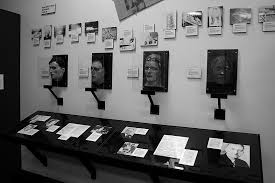 The Mad Butcher of Kingsbury Run remains unidentified to this day, as do the majority of his victims, but the first canonical victim was found on September 23, 1935, and it was estimated that he had been killed three to four weeks earlier. The last two canonical victims were found on August 16, 1938. All of the victims had been at their dump sites for various periods of time before being found. The first outstanding suspect was Dr. Francis E. Sweeney, the alcoholic first cousin of Congressman Martin L. Sweeney. Though the authorities felt that he was a viable suspect, Congressman Sweeney found out about it and, it has been suspected, made a deal with the investigating sheriff to find a better suspect. At this point, Frank Dolezal, a Cleveland resident, was arrested. He confessed to having killed Flo Polillo, the third victim, in self-defense, but later recanted on the grounds that he had been beaten into confessing by the sheriff’s jailer. As of today, the case remains unsolved. A profile made by the original investigators said that the offender was a psychopath, though probably not obviously insane. He would have had some knowledge of anatomy, maybe having worked as a physician, butcher, or hunter, and the cuts showed that he would have been very skilled at cutting flesh. As decapitations are very messy, it was believed that he had access to some private space where the murders were performed. If this was correct, the fact that the bodies would then have been carried for a long distance indicated that the killer was probably very large and strong. The killer may also have been familiar with the Kingsbury Run area. It was also theorized that the choice of victims and gruesome mutilations were a way to ensure that the victims were never identified. If this was true, the killer would profile as an organized offender. The age and sex of all the Butcher's victims varied, but they were typically drifters or people from the lower class of society. He would usually kill them by decapitating them, sometimes after tying them up, and then mutilate the body severely post-mortem, sometimes dismembering the arms and/or legs, cutting off the genitals and removing organs, and then burn the bodies, either by using oil as an accelerant or using acid or some chemical. It was believed by the investigators that, since decapitations are very messy, the killer performed the murders someplace private and then carried the bodies to their dump sites and burned them there. In some cases, the heads were never recovered, making it possible that the Butcher kept them as a trophy or for some other purpose.
 -
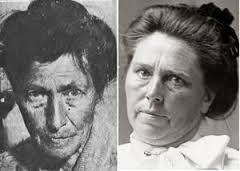 Belle Gunness was a physically strong woman and a Serial Killer reported to have murdered more than 40 people between 1884 and 1908 before disappearing without a trace. When she immigrated to the U.S. in 1881. A series of suspicious fires and deaths, mostly resulting in insurance awards, began. Belle also began posting notices in lovelorn columns to entice wealthy men to her farm, after which they were never seen again. Authorities eventually found the remains of over 40 victims on her property. Born Brynhild Paulsdatter Strseth on November 22, 1859 in Selbu, Norway. The daughter of a stonemason, Belle Gunness immigrated to America in 1881 in search of wealth. What followed were a series of insurance frauds and crimes, escalating in size and danger. Not long after Gunness married Mads Albert Sorenson in 1884, their store and home mysteriously burned down. The couple claimed the insurance money for both. Soon after, Sorenson died of heart failure on the one day his two life insurance policies overlapped. Though her husband’s family demanded an inquiry, no charges were filed. It is believed the couple produced two children whom Gunness poisoned in infancy for the insurance money. Several more unexplained deaths followed, including the infant daughter of her new husband, Peter Gunness, followed by Peter Gunness himself. Her adopted daughter Jennie’s body would also be found on Belle’s property. Gunness then began meeting wealthy men through a lovelorn column. Her suitors were her next victims, each of whom brought cash to her farm and then disappeared forever: John Moo, Henry Gurholdt, Olaf Svenherud, Ole B. Budsburg, Olaf Lindbloom, Andrew Hegelein, to name just a few. In 1908, just when Hegelein?’s brother became suspicious and Gunness’ luck seemed to be running out, her farmhouse burnt to the ground. In the smoldering ruins workmen discovered four skeletons. Three were identified as her foster children. However the fourth, believed to be Gunness, was inexplicably missing its skull. After the fire, her victims were unearthed from their shallow graves around the farm. All told, the remains of more than forty men and children were exhumed. Ray Lamphere, Gunness’ hired hand, was arrested for murder and arson on May 22, 1908. He was found guilty of arson, but cleared of murder. He died in prison, but not before revealing the truth about Belle Gunness and her crimes, including burning her own house down to hide the body that was recovered was not hers. Gunness had planned the entire thing, and skipped town after withdrawing most of her money from her bank accounts. She was never tracked down and her death has never been confirmed.
 -
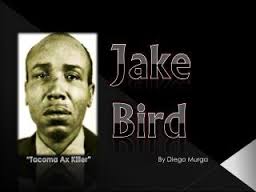 Jake Bird was a convicted murdererand self-confessed serial killer. He started roaming in his nineteenth year and never settled anywhere for long, spending much of his time as a manual laborer and "gandy dancer" on various railroads. It was backbreaking work, but it built up Jake's strength and kept him in motion, trolling for human targets. By the time of his arrest in 1947, he would claim a body-count approaching one victim for each year of his life. On October 30, 1947, Bird was prowling through Tacoma, Washington, when he stopped at the home occupied by Bertha Kludt, 52, and her teenage daughter Beverly. Finding an ax in the woodshed, Bird reportedly stripped off his clothes before breaking into the house and hacking both victims to death. Their dying screams alerted neighbors, and police were just arriving on the scene as Bird emerged from the backyard, shoes in hand. Violently resisting arrest, he slashed two officers with a knife before he was finally beaten into submission and dragged off to the county hospital for treatment of various injuries. In custody, Bird first pled innocence, then dropped his pose when blood and brain tissue were found on his trousers. Sentenced to die for the slayings, he stalled execution for nearly two years, regaling police with his intimate knowledge of 44 deaths nationwide. At least eleven crimes were solved through Bird's confessions , starting with the ax murders of two women at Evanston, Illinois, in 1942. Other victims were confirmed in Louisville, Kentucky; Omaha, Nebraska; Kansas City, Kansas; Sioux Falls, South Dakota; Cleveland, Ohio; Orlando, Florida; and Portage, Wisconsin. Police in Houston suspected Bird of murdering Mrs. Harry Richardson there, and Chicago authorities were curious about a weighted body retrieved from Lake Michigan, five miles south of Kenosha. Los Angeles detectives had their eyes on Jake for murdering a black youth and a Jewish grocer, while in New York City he was tentatively linked to the robbery and murder of a delicatessen owner. Psychiatrists examined Bird in jail and labeled him a psychopath , deriving satisfaction from the sight of women cowering in terror. In the verified cases, most of his victims were female, most were white, and the majority had been killed with hatchets or axes in their homes. (Bird also put a "hex" on several enemies from prison, journalists reporting that some half a dozen of them subsequently died.) Inevitably, Jake ran out of stories, and he climbed the gallows on July 15, 1949, in the Washington state prison at Walla Walla.
 -
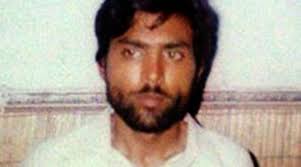 Amir Qayyum was born in Pakistan. As a child, Qayyum was abandoned by his father and went to live with his uncle Dr. Shahid. Qayyum displayed violent tendencies at a young age and was thrown out of school. He would also be thrown out of his house by his brothers and sisters after he would beat them up. On September 25, 2003, Shahid and a friend were murdered by unidentified assailants. On February 28, 2004 a suspect named Hafiz Abid was arrested but shot and killed himself in a police van after taking a gun from a sleeping policeman. His uncle's murder caused Qayyum to want to take revenge against society. From June to July 2005, Amir Qayyum killed 14 homeless men with bricks or stones and was known as "The brick killer". He was caught after assaulting a man with a stone. He was sentenced to death on May 10, 2006.
 -
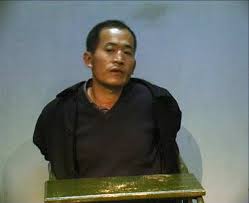 Hua Ruizhuo was a Chinese serial killer who was convicted of killing 14 female prostitutes from July 1998 to June 2001 in Chaoyang District, Beijing. He picked his victims up from the The Great Wall Sheraton Hotel in Beijing, handcuffed them in his van, raped them, beat them to death and left their bodies in garbage dumps. He began killing when he discovered that his girlfriend was a prostitute. He was executed by a single gunshot to the head on January 31, 2002.
 -
Serial Killer: Marcelo Costa de Andrade (The Vampire Of Niterói)
Midnight Man posted a article in Celebrity
 Marcelo Costa de Andrade, "The Vampire of Niterói", is a Brazilian serial killer convicted of raping and killing 14 boys. This mama’s boy and religious psychopath of inoffensive appearance is Brazil’s most notorious serial killer. The son of poor migrants from the Northeast, Marcelo grew up in the Rocinha slum in Rio de Janeiro. He lived without running water and was beaten with regularity by his grandfather, his stepfather and his stepmother. When he was 10 he was sexually abused. At 14 he began to prostitute himself for a living. He was sent to a reform school, but escaped. Still hustling at 16, he began a long lasting homosexual relationship with an older man. By 17 he tried to rape his 10-year-old brother. When he was 23 his lover left him and he moved in with his mother and brothers in Itaborai, another slum on the other side of the polluted Guanabara Bay. There he found a low-paying job distributing flyers for a shop in the district of Copacabana. He also joined the Universal Church of the Kingdom of God and started going to church four times a week. Despite some idiosyncrasies and his odd and incoherent laughter, his life seemed normal. That is, until April 1991, when he started to kill. Over a nine-month period Marcelo tallied 14 deaths. His victims of choice were poor street urchins whom he attracted to deserted areas, to rape and strangle. He also practiced necrophilia, decapitated one of the boys, crushed the head of another, and, on two occasions, drank the victim’s blood. Later he confessed his vampiric thirst was merely an attempt “to become as beautiful as them.” Violence in Rio is common and the daily body count is so high that authorities never suspected the growing number of disappearing street urchins were the handywork of a serial killer. Usually street children are the victims of choice for warped vigilante groups trying to clean up the streets. Quite the humanitarian Andrade later confessed, “I preferred young boys because they are better looking and have soft skin. And the priest said that children automatically go to heaven if they die before they’re thirteen. So I know I did them a favor by sending them to heaven.” In December of 1991 his killing spree came to an end when he “fell in love” with ten-year-old Altair de Abreu and spared his life. Marcello met the young beggar and his six-year-old brother Ivan in the Niteroi bus terminal. He offered them money if they helped him light candles for a saint in Saint George’s church. The lucky survivor later told police, “We were heading for a church, but as we crossed a vacant lot, Marcelo suddenly turned on Ivan and started strangling him. I was so paralyzed by fear I could not run away. I watched in horror, tears streaming down my cheeks, as he killed and then raped my brother. When he was finished with Ivan, he turned to me, hugged me, and said he loved me.” Then he asked Altair to live with him. Scared to death, the boy agreed to spend the night with Marcelo in the bushes. The next morning, the lovestruck killer took Altair to work with him. When they arrived the office was closed. While they waited for it to open, the terrified youngster was able to escape. He hitchhiked his way back home and told his mother that he had lost his brother. A few days later, pressed by his sister, the boy told the truth. In the meantime Marcelo, a truly considerate killer, had returned to the crime scene to tuck the hands of his victim inside his shorts, “so that the rats couldn’t gnaw the fingers.” When young Ivan’s family went to the police, Marcelo, who had maintained his daily routine, was calmly arrested in the Rio shop where he worked. “I thought you would come yesterday,” he told the arresting officers. At first, police thought Ivan’s murder was an isolated case. However, two months later Marcelo’s dotting mother was called to testify about her son’s strange behavior. One night, she said, he left home with a machete “to cut bananas.” He returned the next morning with no bananas and the machete covered in blood. Eventually Marcelo did confess to 14 killings and led police to the remains of his other victims. As Brazil’s star killer, he asked police if anywhere in the world there was a case like his, and stated he killed because: “I liked the boys and I didn’t want them to go to hell.” On January 24, 1997, Marcelo escaped from the Heitor Carrilho Psychiatric Hospital Rio de Janeiro when a guard accidentaly left a door open while sunbathing. He then hitchhikked and begged his way to the town of Guaraciaba do Norte to see his father on his way to the Holy Land. He was rearrested on February 5 carrying a bag with toiletries, a piece of cheese and a bible under his arm. According to the arresting officer, Andrade told him that he “was going to the Holy Land because he was purified by killing and raping children and drinking their blood.”
 -
 The Doodler is an unidentified serial killerbelieved responsible for 14 slayings and three assaults of men in the gaycommunity of San Francisco, California between January 1974 and September 1975. To the extent the case has been written about, the Doodler has been credited with fourteen victims. One encounters this figure in the era’s press accounts and books of recent vintage. But it is far more likely there were, in fact, five or six. (The larger figure may be due to the frequency with which gay men were murdered in those years; it’s possible that several distinct cases were conflated and the Doodler given too much credit.) Five men were contemporaneously identified in the newspapers as Doodler victims, but the count shouldn’t be considered definitive. It’s a fool’s errand to say any single victim is definitely the work of the Doodler, or to rule out the possibility of others. As a veteran detective once said, “Anyone in my position who tells you otherwise, especially when there hasn’t even been an indictment, is either untrustworthy or lying.” Forty years after the fact, the story of the Doodler killings has not been even cursorily told. Unlike cases with similar body counts this one was quickly forgotten. It was, perhaps, somewhat a matter of timing. When the killings began, it had been just a year since the American Psychiatric Association Board of Trustees ceased classifying homosexuality as a disorder. Most media outlets, just maybe, did not consider gay men sufficiently sympathetic to rate coverage. And then, four and half years after the killings ended, San Francisco’s own Ken Horne, a ballet school dropout, was reported to the Centers for Disease Control with Kaposi’s Sarcoma. Five murdered men would become, relative to what followed, a statistical blip. It is believed the Doodler would sketch his victims nude before murdering them. Though 3 victims survived, and a suspect was identified, none were willing to "out" themselves in open court in order to convict the suspect. This is one of the reasons gay men have been the focus of several serial killers, not only are they gay and needed to be secret about it, but often would the serial killer also be gay and quite uneasy about it and being secret about it. Easy prey when they have nowhere to go. Sad and scary, almost the same scinario with many prostitute serial killings.
 -
Serial Killer: Arthur Shawcross (The Genesee River Killer)
Midnight Man posted a article in Celebrity
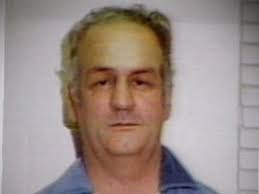 Arthur Shawcross was an American serial killer, also known as the Genesee River Killer in Rochester, New York. His parents dispute his claims that he was molested as a child, but it's clear that he was troubled. In 1972, he confessed to killing two children and went to prison. His records were sealed so he could settle in a new town without causing a panic. But from 1988 to 1990, Shawcross killed 11 women in upstate New York, earning the nickname "The Genessee River Killer." He died in prison. He was born on June 6, 1945, and died on November 10, 2008 while serving a life sentence for the murder of 11 women. From his birthplace of Kittery, Maine, his family moved to Watertown, a small town near Lake Ontario in New York State, when he was still a child. Shawcross claims that his adolescence was turbulent, and cites a difficult relationship with both parents, particularly his domineering mother, for his later troubles. He says he also exhibited behavioral problems at an early age, including bed-wetting and bullying. He also made extreme reports about his early sexuality. He claimed his aunt sexually molested him when he was 9, and that he had sexual relations with his younger sister. He also admitted to his first homosexual encounter at the age of 11, which he says was followed by experimentation with bestiality. In contrast to these claims, however, his parents and siblings maintain that he had a normal childhood, and the described events were largely the product of his imagination. There is no way of knowing whose version represents the reality of his upbringing, but what became clear, later on, was that Shawcross would change his stories at will, as he was interviewed by various professionals in the course of their investigations. From school records it can be independently verified that he was an inveterate truant, with a particularly low IQ, a tendency to bullying and violence and that he came under suspicion for a series of juvenile arson attacks as well as burglaries. He dropped out of school after failing to pass the ninth grade, and the next few years were punctuated with violence and jail sentences. He received his first probationary sentence in December 1963 for smashing a shop window. Shawcross married first wife, Sarah, in September 1964. The couple produced a son in October 1965. But another probationary charge for unlawful entry in November 1965, proved the last straw for his marriage and he was divorced soon after. His second marriage, following drafting into the Army in April 1967, was also tainted by violence and was equally short-lived. He served a tour of duty in the Vietnam War in October 1967, and he later claimed that he murdered and cannibalized two young Vietnamese girls and several children while there. There is no corroborating evidence to support this, however. He also claimed a "combat kill" total of 39 which, when investigated later, was also discounted as fabrication; authorities claim he killed no one on his tour of duty. On his return from military duty in 1968, he landed in trouble yet again when he was caught and convicted for an arson attack. Shawcross served two years of a five-year jail term. He was released in October 1971 and returned to Watertown again. A year later, on April 7, 1972, he claimed his first victim: 10-year-old neighbor Jack Blake. Shawcross took him fishing just a few days before he disappeared, but denied any knowledge of the disappearance. Several weeks later on April 22, 1972, he married his third wife, Penny Sherbino, who was pregnant with his child. Five months later, his victim's body was finally located. He had been sexually assaulted and suffocated, but police had no leads to the identity of the killer. Jack Blake would be the first of many more victims. In September 1972, the body of 8-year-old Karen Ann Hill was found under a bridge. She had been raped and murdered. Police found mud, leaves and other debris had been forced down her throat and inside her clothing. Neighbors remembered that Shawcross had been seen with Karen in the vicinity of the bridge before her disappearance, and he had a history of minor run-ins with local children. Shawcross came under immediate suspicion. He was arrested on October 3, 1972, and finally confessed to both killings, although he was only charged with Karen Hill's killing, given the lack of evidence tying him to Jack Blake's death. He received a 25-year jail sentence, and third wife Penny divorced him shortly thereafter. After serving less than 15 years of this sentence, he was released on parole in April 1987. The well-publicized resettlement of a child killer in the Binghamton area of New York State was greeted by a public outcry, and he was forced to leave the area after a few months along with his new girlfriend, Rose Whalley. His past meant that he would be unwelcome almost anywhere, and the authorities made the decision to seal his criminal record in order to prevent a recurrence of the public alarm in Binghamton. They moved Shawcross and Whalley to Rochester, New York, where she became his fourth wife. In Rochester, Shawcross took on a succession of menial jobs. His lackluster marriage to Whalley meant that he was soon seeking solace elsewhere, both from prostitutes as well as his new girlfriend, Clara Neal. It did not take long for Shawcross to return to his murderous ways. Hunters discovered his next victim, 27-year-old prostitute Dorothy Blackburn, on March 24, 1988. Her body was found in the Genessee River, dumped there following a vicious attack, which included bite marks in the groin area and strangulation. With little evidence, and no public impetus to solve the murder of a prostitute, her case languished for over a year. There were other murders of prostitutes in that time but, given the danger of the profession, nothing untoward was noticed that linked any of the cases. The discovery of the body of another prostitute, Anna Steffen, on September 9, 1989, linked several of the victims. She died of asphyxia, and her body had been dumped in a similar manner to Blackburn's corpse. Her body, however, was found far from the original murder scene, so again the possibility that a serial killer was at work was not recognized. On October 21, 1989, the body of homeless woman Dorothy Keeler, aged 59, was discovered followed six days later by another prostitute, Patricia Ives, in the same area. Both had been asphyxiated and the press started to show an interest as the cases were linked. They nicknamed the offender "The Genessee River Killer." In all the previous cases at least some attempt at concealment had been made, which police felt indicated previous criminal or military experience. They began to advise prostitutes working in the area to exercise caution, and sought as much information as possible about strangers operating in the area. They also began checking criminal records for offenders who might be living in the immediate area. Shawcross' sealed criminal record meant that he shielded him from police scrutiny. As prostitutes continued to disappear, it became apparent that the killer must be someone familiar to the women who worked in the area. Police were able to piece together a description of a regular client called "Mitch" or "Mike." Women said this particular john was prone to violence. Then the body of 26-year-old June Stott, who was neither a prostitute nor drug user, was found on Thanksgiving Day. She had been strangled, anally mutilated after death, had her labia removed, and was gutted from throat to crotch like a wild animal. With the body count mounting, the police sought assistance from FBI profilers. They divided the 11 unsolved prostitute murders into sub-groups according to method and position. They developed a profile that described the killer as a white male in his 20s or 30s, who was strong, probably with a previous criminal record, familiar with the area, and comfortable enough with the victims that they would enter his vehicle without question. The lack of sexual interference indicated it might be someone with sexual dysfunction. The post-mortem injury inflicted on June Stott, and not on any other victim, indicated that the killer was becoming more comfortable around corpses, probably returning to the crime scene again later to relive the attack. The discovery of the body of Elizabeth Gibson, on November 27, brought a breakthrough: suspect "Mitch" had been seen with her shortly before her disappearance, but they seemed no closer to establishing his identity. Police tried various tactics, including canvassing all the local bars, to no avail. When a pair of discarded jeans was discovered near the river on December 31, 1989, containing an ID card for a girl named Felicia Stephens, police began an aerial search of the surrounding area. On January 2, 1990, a helicopter spotted what appeared to be a naked female body lying on the ice surface of the river by a bridge in the forest. The body was not Felicia Stephens but that of missing prostitute June Cicero. She had also been mutilated post-mortem, as well as sawn practically in half. Even more importantly, the helicopter spotted a man standing on the bridge next to a small van. He appeared to be either masturbating or urinating. Fortunately for the authorities, Shawcross had, as speculated, returned to the scene of one of his crimes to relive the pleasure of the attack. Patrol teams on the ground were alerted to the vehicle, which had sped away. They finally tracked down Shawcross via the car's registration, which was in the name of his girlfriend Clara Neal. When approached, Shawcross agreed to assist the police with their enquiries. When they asked for his driver's license, he admitted he did not have one and then revealed that he had been in jail for manslaughter. Police were confident they had their killer, and further questioning revealed the earlier child deaths and a grandiose account of his Vietnam War service, which was later discounted. A photo taken of him during the initial questioning soon confirmed his identity as "Mitch," and official enquiries unearthed the reason for Shawcross' sealed record, which prevented the police from tracking him down sooner. Still, police were unable to get Shawcross to admit to the murders—until they confirmed that a piece of jewelery he had given to Clara Neal previously belonged to victim June Cicero. When police threatened to implicate her in the killings, Shawcross capitulated and admitted to most of the murders, giving detailed excuses about why he had been "forced" to kill each one. He even admitted to the killing of two undiscovered bodies, those of prostitutes Maria Welsh and Darlene Trippi, leading investigators to their bodies. His formal confession was nearly 80 pages long. In November 1990, Shawcross went on trial for the 10 murders that had occurred in Monroe County. The last victim, Elizabeth Gibson, had been killed in neighboring Wayne County. The trial was a national media event, extensively televised and widely viewed. Shawcross' defense team tried to build a case based on an insanity plea, citing various mitigating factors, such as his upbringing, post-traumatic stress as a result of military service, a cyst on the brain and a rare genetic defect. The prosecution was quick to dispute the claims about his childhood and military service, casting doubts on Shawcross' testimony. The physiological evidence about brain science and genetic factors was, at best, spurious and beyond the understanding of the jury. It was also hindered by poor presentation on the part of the expert witnesses called to testify. Shawcross was declared sane—and guilty of 10 instances of second-degree murder. The judge sentenced him to 25 years for each count, a total of 250 years imprisonment. A few months later, Shawcross was taken to Wayne County to be tried for Elizabeth Gibson's murder. Rather than claim insanity this time, he pleaded guilty and received a further life sentence. Shawcross was held at the Sullivan Correctional Facility in New York State until November 10, 2008, when he complained of pain in his leg. He was transferred to a hospital where he died later that day of cardiac arrest.
 -
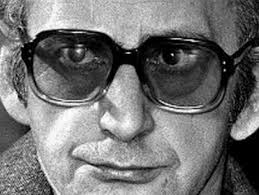 Joachim Georg Kroll was a German serial killer,child molester and cannibal. He was known as the Ruhr Cannibal, and was very particular about where he killed, only killing in the same place on a few occasions years apart. This, and the fact that there were a number of other killers operating in the area at the time, helped him to evade capture. Kroll would surprise his victims and strangle them quickly. Afterward he would strip the body and have intercourse with it, often masturbating over it again. He would then mutilate and cut off pieces to be eaten later. Upon returning home, he would have intercourse again with a rubber sex doll he had for the purpose. Kroll said that he often sliced portions of flesh from his victims to cook and eat them, claiming that he did this to save on his grocery bills. A small class of serial killers are the mentally retarded who usually are caught quickly by authorities because they are unable to conceal their crimes sufficiently. But Joachim Kroll of was an extreme example of a man suffering from mental retardation who was able to evade police discovery for nearly twenty one years. The classification of the mentally retarded offender is described as one who has limited vocabulary, difficulty answering questions, prefers young children as friends, acts impulsively, is incapable of understanding consequences, and has limited ability of recalling events that might have taken place. Notoriously incompetent, mentally retarded serial killers cannot commit their crimes without an accomplice who can help them rape victims, hide bodies and construct a viable alibi. Most killers with low IQ’s, such as Otis Toole, are able to commit their crimes primarily with another smarter and more capable person, such as Henry Lee Lucas. Joachim Kroll, one of the few exceptions, was able to do all of these things by himself, perhaps out of sheer luck. Police investigations were looking for a multitude of killers who were intelligent enough to kill for twenty years without being caught. This is a classic example of police searching for someone they believed was very smart, but in fact, they were seeking a seriously below average individual who was of a third grade intelligence. Once in custody, he believed that he was going to get a simple operation to cure him of his homicidal urges and would then be released from prison. Instead he was charged with eight murders and one attempted murder. In April 1982, after a 151-day trial, he was convicted on all counts and was given nine life sentences.
 -
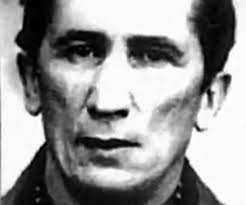 He was born in 1927 to a lower-class family. His father went through five marriages in which four children were born - three brothers and a sister - all of whom were later charged along with Zdzisław for criminal conspiracy, robbery and obstructing justice. He committed all of his killings in the following areas: in the neighbourhoods of Czeladź, Będzin, and adjoining towns in Zagłębie Dąbrowskie and Upper Silesia. The murders started in 1964 and continued, with occasional breaks, until late 1970. Having been arrested in early 1972, Marchwicki was charged with the murder of fourteen women and the attempted murder of another six, but one attempted murder charge was not proven. After a highly publicized show trial which lasted for 10 months, Marchwicki received the death sentence in July 1975. His execution took place in 1977. His brother Jan Marchwicki also received the death penalty, while his third brother Henryk was sentenced to 25 years for taking part in a conspiracy to commit murder. The half-sister, Halina, got a three-year prison sentence for receiving stolen things such as watches and pens that she knew came from Zdzisław's victims. Criminal penalties were given out to Halina's son, also called Zdzisław, for failing to inform the police about the murder conspiracies. In the course of the trial, and afterwards, there was much dispute whether Marchwicki was the real vampire. He did not show typical serial killer behaviour, remaining rather passive and demure during the criminal trials. While in prison waiting for the results of the appeal, he reputedly wrote a diary in which he described the killings in minute details, along with all the associated emotional ups and downs. It is firmly established today that the diary was dictated to him by police officers through a fellow prisoner. It seems barely possible that Marchwicki, who dropped out of school at an early age and had a low IQ, would write using a style that used complex sentences and included police slang terms. One of Marchwicki's murder victims was the niece of Edward Gierek, who was then the Upper Silesian communist party leader. However, the prosecution and the police investigators denied being pressured by political forces in the criminal prosecution of Zdzisław Marchwicki.